Please log in to access this page.

US Agency for Global Media USAGM

News and Information from Around the World

73 Items
8 Sep 2026, 17:38 GMT Alex Raufoglu

WASHINGTON -- The United States has imposed sanctions on all of Iran's remaining active airlines, sharply escalating pressure on Tehran's aviation sector as part of a broader campaign aimed at cutting the Islamic republic off from international trade and finance. The US Treasury Department on September 8 sanctioned 36 targets, including 27 Iranian airlines, as well as foreign companies and an individual accused of helping Iran's sanctioned aviation networks procure aircraft, aircraft parts, and other technology. The action marks the first time Washington has used a new August 24 determination targeting Iran's aviation sector to sanction the country's remaining airlines. Treasury said the sector is used by the Iranian government to move weapons, personnel, and illicit cargo. "Let this be a warning to anyone doing business with Iran's remaining airlines, all of which we sanctioned today: You are at risk of being cut off from the global financial system," Treasury Secretary Scott Bessent said. "We will not relent in our campaign to shut down the Iranian regime's financial lifelines, including the aviation sector," State Department spokesman Tommy Pigott said in a statement. US Launching 'Economic Onslaught' On Iran, Demands Countries Cut 'Lifelines' That Sustain Tehran The sanctions come under President Donald Trump's so-called Operation Economic Outcast, announced by Bessent on August 24 as part of a campaign to sever what Washington describes as the Iranian regime's remaining economic lifelines. Among the airlines designated are Iran Aseman Airlines, Iran Airtour, Kish Airlines, Qeshm Air, Karun Airlines, Sepehran Airlines, Taban Airlines, Varesh Airlines, Zagros Airlines, Chabahar Airlines, Fly Persia, and Saha Airlines, formally known as the Armed Forces Air Transport Service. Other carriers sanctioned include Air Shiraz, Ava Airlines, Fly Kish, Mehr Airways, Raimon Airways, and Soroush Air. There was no immediate public response from Iran to the September 8 measures. Targeting Iran's Aviation Lifelines The Treasury action goes beyond Iranian carriers, targeting a network of foreign companies that Washington says helped sanctioned Mahan Air acquire aircraft and operate international flights. Mahan Air has been under US counterterrorism sanctions since 2011. Washington accuses the carrier of providing logistical support to Iran's Islamic Revolutionary Guards Corps (IRGC), including by transporting personnel, weapons, and military equipment. The Treasury said Mahan Air received at least three Boeing 777 aircraft this summer through a route involving the United Arab Emirates and Oman. The UAE-based ECT Aviation Support and Turkey-based Sky Phoenix were identified as intermediaries in what Washington described as a scheme to transfer US-origin aircraft to Mahan Air. ECT Aviation Support's owner and chief executive, Egyptian national Mahran Ibrahim Ali Mohamed Mahran, was also sanctioned. Crashes, Bankruptcy Litter Iran's Runway For Passenger-Plane Production Other foreign companies targeted include Malaysia-based iCargo, Kazakhstan-based Tour Invest, and Turkish firms MES Cargo and S Sistem Logistics. Treasury said the companies provided general sales, cargo, logistics, or other services to Mahan Air. S Sistem, for example, was accused of coordinating shipments of unmanned aerial vehicle components and industrial equipment destined for Iran. Treasury said iCargo had coordinated shipments of US-origin parts to Iran on Mahan Air's behalf. Kerri Bitsoff, a former senior official at the US Treasury's Office of Foreign Assets Control, told RFE/RL that the measures could have a broad impact because of the extent to which international aviation relies on US-origin equipment and technology. "Treasury's action today designated every remaining Iranian airline and pulled the authorizations that let foreign carriers fly US-origin aircraft into Iran," Bitsoff said. "Nearly every commercial plane in the world is US-origin or flies on US-controlled engines and avionics, so that reaches almost the entire global fleet," she added. For Iranians Seeking A Way Out, Even The English Test Is Becoming A Barrier Bitsoff said direct air links had been among Tehran's remaining channels to the outside world and accused the Iranian government of using them to move "gold and hard currency," IRGC personnel and weapons, as well as aircraft parts and dual-use components. She said the pressure was particularly significant amid what she described as a broader tightening of economic routes around Iran, with maritime routes restricted, European governments backing the pressure campaign, and Persian Gulf countries reducing trade. "These designations force a choice on every fuel supplier, ground handler, and bank that still touches an Iranian airline," Bitsoff said. Pressure On Intermediaries Treasury also suspended three Iran-related aviation authorizations, including permissions concerning overflights and the operation of US-origin or US-controlled commercial aircraft in Iran by non-US airlines. Requests related to aviation safety will be considered on a case-by-case basis, the department said. Brett Erickson, a sanctions expert at Obsidian Risk Advisors, described the move as a major escalation of Washington's pressure campaign. "This is a significant escalation of Operation Economic Outcast," Erickson told RFE/RL. "Washington is pairing a naval blockade with sanctions designed to close off airspace as an alternative economic route and make it harder for Iran to move goods or buffer its economy." Oil Hits 4-Month High As Hormuz, Red Sea Risks Mount The Treasury said foreign companies and individuals that facilitate transactions involving sanctioned Iranian airlines could face serious consequences, including secondary sanctions that could restrict their access to the US financial system. US persons are generally prohibited from conducting transactions involving the blocked entities, while foreign financial institutions can face restrictions on their US correspondent or payable-through accounts for certain significant transactions involving sanctioned parties. Alongside the sanctions, the Treasury's Financial Crimes Enforcement Network, or FinCEN, issued an alert urging financial institutions to watch for Iranian procurement networks seeking aircraft and aircraft parts through front companies and intermediaries in third countries. The department said Iranian airlines have used companies posing as aviation, technology, or logistics businesses in Europe, the Middle East, Africa, and Asia to acquire Western aircraft, components, and dual-use goods while concealing the ultimate Iranian end-user. The new measures extend Washington's campaign from individual airlines and support companies to virtually the entire commercial aviation infrastructure serving Iran, increasing the risks for foreign businesses that continue to provide Tehran with aircraft, parts, cargo services, sales representation, or financial support.

Download options
8 Sep 2026, 08:01 GMT RFE/RL's Ukrainian Service

Ukraine's top prosecutor said he had submitted his resignation as anti-corruption investigators homed in on an embezzlement scheme connected to a top official in the prosecutor's office. Ruslan Kravchenko said his resignation was a political decision, hinting that he was forced to make the move. Earlier, he had said publicly he would not leave his job. "I made it consciously. I do not want the position of Prosecutor General to be used as a tool for political confrontation. My position regarding the accusations remains unchanged," he wrote on Telegram on September 7. The move is the latest in a swirl of corruption allegations and investigations that have cast a pall over President Volodymyr Zelenskyy's government. A top Zelenskyy aide, Andriy Yermak, was forced to resign last year as investigators probed a scheme involving hundreds of millions of dollars in kickbacks from contractors to the state nuclear company, Energoatom. 'What A Nightmare': Zelenskyy's Dismissal Of Defense Minister Sparks Fury In Ukraine Mykhaylo Fedorov, who served as defense minister until he was forced out in July, has publicly and loudly complained about corruption in the defense sector, in what many observers saw as an open challenge to Zelenskyy. The top general overseeing Ukraine's military, General Oleksandr Syrskiy, with whom Fedorov had clashed, was later pushed out. Zelenskyy has not been implicated in the scandals, which earlier resulted in the resignations or firing of justice and energy ministers. In July, Zelenskyy also shook up his entire government, pushing out Prime Minister Yulia Svyrydenko and replacing her with the head of state energy company Naftogaz. He also replaced the country's ambassador to Washington who faces her own graft allegations. Exit 'The Butcher': Zelenskyy Makes Another Shakeup To Ukraine's Military Command But the scandals have tarnished Zelenskyy's popularity, and several opinion polls show him trailing several prominent public figures. Foremost among them is Valeriy Zaluzhniy, the former top general and commander-in-chief of Ukraine’s military. He is now serving as as Kyiv's ambassador to London.

Download options
8 Sep 2026, 07:06 GMT Maryan Kushnir

Russia hammered the Ukrainian capital with ballistic missiles, killing at least two people in a major attack hours after White House envoys left Kyiv amid a renewed push for peace negotiations.

Download Video
RFE/RL logo
Video
Credit: Maryan Kushnir
8 Sep 2026, 07:06 GMT Maryan Kushnir

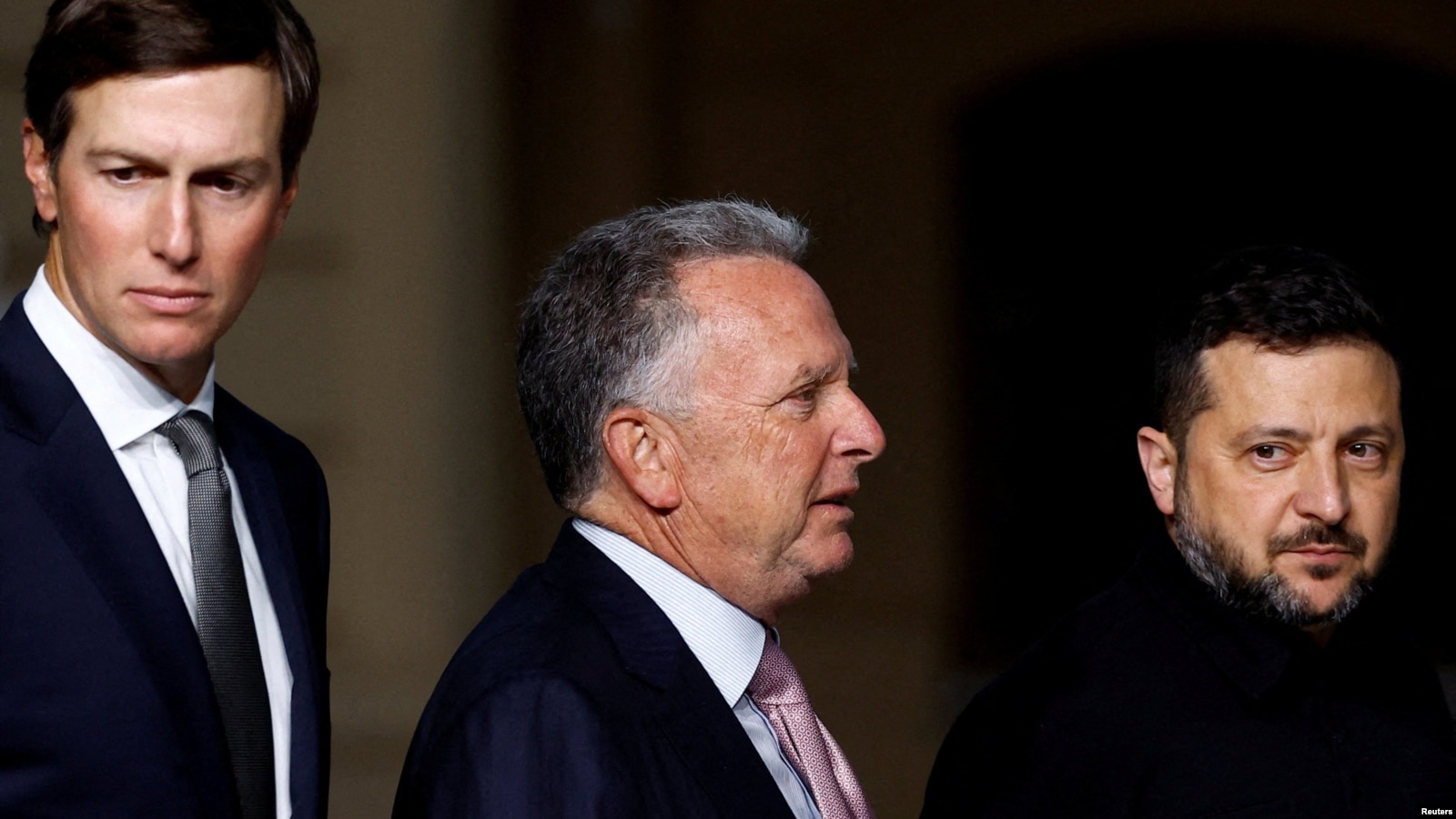
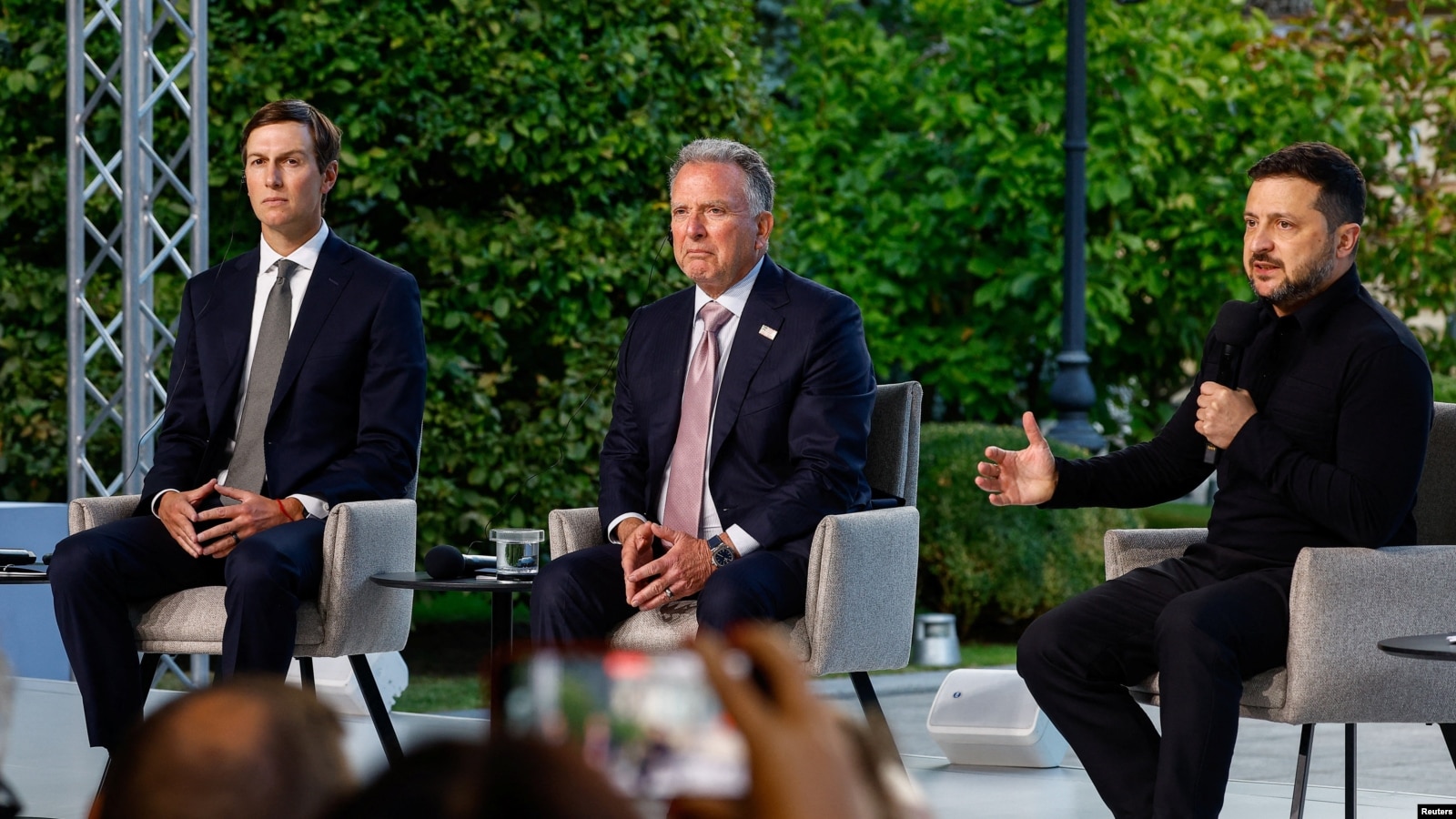
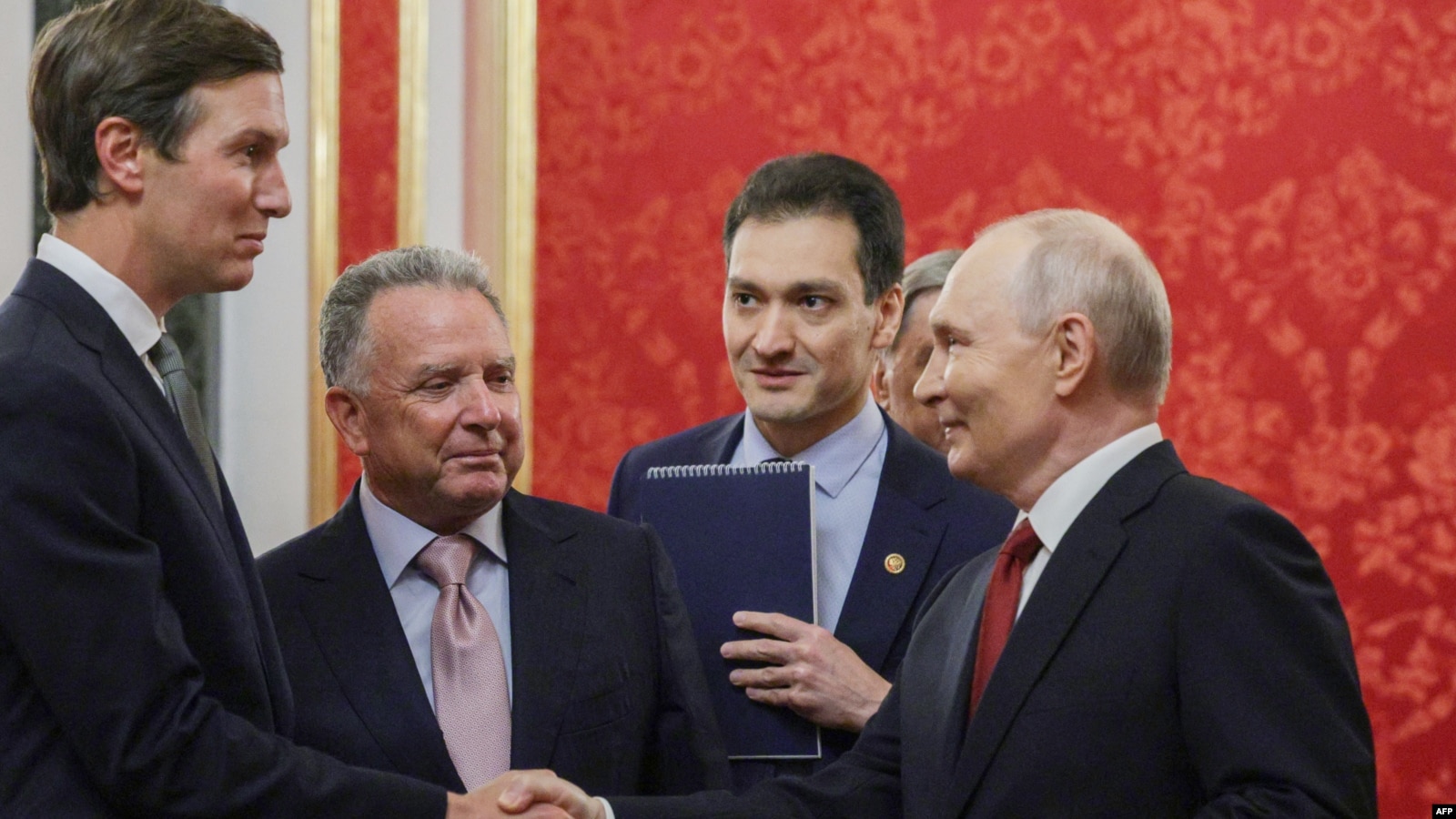
KYIV -- Russia hammered the Ukrainian capital with drones and ballistic missiles, killing at least five people in a major attack hours after White House envoys left Kyiv amid a renewed push for peace negotiations. The September 8 bombardment followed a lull in near daily attacks, underscoring Moscow's intent to press forward in its nearly 4 1/2-year full-scale war on Ukraine despite astronomical casualties. Emergency workers pulled bodies from the rubble in one district of Kyiv while firefighters battled to put out fires from the attack, which also included jet-powered drones -- a relatively new weapon that Ukraine has struggled to defend against. Kyiv Mayor Vitali Klitshcko said five people were confirmed dead, and emergency officials reported at least 16 people were wounded. Russia Pounds Kyiv In Deadly Overnight Attack The Russian attack included dozens of ballistic and cruise missiles along with more than 160 drones, Ukraine's military said. The onslaught came after US envoys Steve Witkoff and Jared Kushner departed Kyiv following meetings with Ukrainian President Volodymyr Zelenskyy and other officials. Prior to Kyiv, the pair visited Moscow for talks with President Vladimir Putin. It was the first time the White House officials had traveled to Kyiv; by contrast, Witkoff has met with Putin eight times since the beginning of 2025. US efforts to push peace negotiations have been dormant in recent months as President Donald Trump's administration has prioritized the war with Iran, now in its sixth month. That conflict has severely depleted stocks of Patriot interceptor missiles, which are the only weapon effective against Russian ballistic and hypersonic missiles. European countries that operate Patriot systems have been working to help make up the shortfall and maintain supplies to Ukraine. In recent months, Ukraine’s ability to defend against the nearly daily Russian assaults has been severely constrained by a lack of missile interceptors, above all US-built Patriots. The European Union will provide Ukraine $3.7 billion "to purchase crucial products for Patriot air defense systems," EU chief Ursula von der Leyen announced hours after the attack. Britain also announced $135 million to help Ukraine boost air defenses including Patriot missiles. US Renews Ukraine Peace Push, But Former Ambassadors See No Breakthrough Trump and Putin spoke by telephone on September 8, and Putin gave his assessment of the battlefield, Kremlin foreign policy adviser Yury Ushakov said. He also said Putin stated that Russia had no hostile plans toward Europe, something a growing number of European nations have voiced concern about. Trump, Ushakov said, told Putin that he wanted a swift end to the war, which he said would allow Russian-US ⁠ties to be fully restored. The White House had no immediate comment on the phone call. Ukrainian Foreign Minister Andriy Sybiha called on Kyiv's allies to "to act and increase pressure on the aggressor." Russia's Defense Ministry said the attack on September 8 targeted Ukrainian defense and military logistics facilities. EU Ambassador Katarina Mathernova said she spent the night in a shelter as "Kyiv was exploding and burning." "What happened in Kyiv last night was hell," she wrote on X. "I would not wish it on anyone who lives in peace and falls asleep safely in their own bed." After meeting Zelenskyy, Witkoff described discussions as constructive and said Washington had heard "new ideas" from Moscow. Kushner said the United States was working on a broader "peace package." Zelenskyy, for his part, called his discussions with the Americans "very substantial" and said Ukraine was prepared to move toward trilateral talks involving Kyiv, Washington, and Moscow. National-security advisers from Britain, France, and Germany also joined part of the Kyiv discussions. The Kremlin has shown no indication it has softened its hard-line position on its war aims. In comments to reporters after the September 5 meetings with Putin, Ushakov said Russia would press forward to "eliminate" the "root causes" of the conflict. "Root causes" is a phrase representing a grab bag of Russian grievances dating back to before the 2022 invasion, including the assertion that Zelenskyy is not a legitimate president and the Ukrainian government was oppressing native Russian speakers in Ukraine.

Download options
7 Sep 2026, 19:02 GMT RFE/RL's Radio Farda

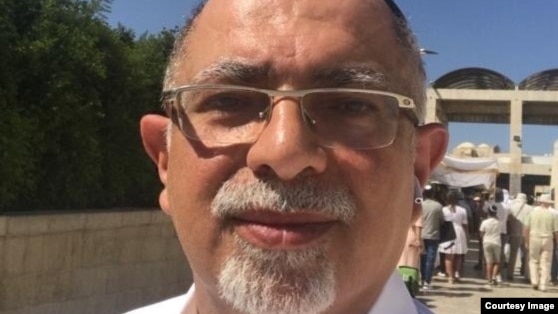
An Iranian-American citizen, Kamran Hekmati, has been released from Tehran's notorious Evin Prison, sources told RFE/RL's Radio Farda, but he is unable to leave the country due to a travel ban. The release has not yet been officially confirmed by Iranian authorities but was welcomed by US authorities on September 8. “We welcome Mr. Hekmati’s release from detention and continue to call on the Iranian regime to lift the exit ban so that he may return home," the State Department told Radio Farda. Hekmati, who was designated as a wrongfully detained person by US Secretary of State Marco Rubio in March, is believed to have been released on September 5. The 71-year-old traveled to Iran to visit relatives on his Iranian passport in May 2025 and was detained by the authorities two months later. Tehran's Revolutionary Court subsequently sentenced him to four years in prison for having traveled to Israel for a religious ceremony over a decade earlier. Holders of Iranian passports are barred from traveling to Israel. His sentence was later reduced to two years after a change in the law governing such travel. Oil Hits 4-Month High As Hormuz, Red Sea Risks Mount Hekmati's family has repeatedly raised concerns over his health, saying he suffers from aggressive bladder cancer and has been denied access to proper specialized treatment in detention. The case is one of several involving Iranian-American dual nationals caught up in Iran's use of arbitrary detention as diplomatic leverage against the West, a practice critics have called "hostage diplomacy." Dena Karari, another Iranian-American, was briefly detained in Shiraz in 2024 and released on bail but was barred from leaving Iran for about 19 months. She faced accusations including "collaboration with a hostile government" and espionage but was eventually allowed to leave the country in July this year. Shortly after her departure, a Zahedan court convicted her in absentia and sentenced her to five years in prison. Reza Valizadeh, a former Radio Farda correspondent, remains imprisoned at Evin. "The regime should immediately release Reza Valizadeh and all Americans unjustly detained in Iran,” the State Department said. In a recorded phone call from inside the prison this past June, he appealed to the US government to secure medical assistance for himself and other detained Americans, saying four US citizens held at Evin were suffering from various illnesses without access to real medical care. Valizadeh resigned from RFE/RL in November 2022, returned to Iran in March 2024 to see his family, and was arrested that September. He was convicted of "collaborating with the hostile American government" and sentenced to 10 years in prison, along with a ban on residing in Tehran and neighboring provinces, a travel ban, and a two-year prohibition on joining political parties or groups. His appeal was rejected.

Download options
7 Sep 2026, 08:51 GMT RFE/RL's Balkan Service

Families who lost loved ones in the 1995 Srebrenica massacre and in the siege of Sarajevo say the death of former Bosnian Serb military commander Ratko Mladic on August 27 does little to ease decades of grief. But one man says what matters most is that Mladic was held accountable for his crimes, which included genocide and crimes against humanity. Mladic died in prison at the age of 84 while serving a life sentence for his role during the 1992-95 Bosnian War.

Download Video
RFE/RL logo
Video
Credit: RFE/RL's Balkan Service
7 Sep 2026, 08:51 GMT RFE/RL's Balkan Service

Thousands attended the Belgrade funeral for convicted war criminal Ratko Mladic, who died while serving a life sentence for genocide, war crimes, and crimes against humanity. The public honors surrounding the burial of the former Bosnian Serb commander have angered survivors and relatives of victims of the 1995 Srebrenica massacre, who say the continued glorification of Mladic is deeply painful and dangerous. He was convicted by The Hague tribunal for war crimes in Bosnia-Herzegovina and died in prison on August 27 at age 84. The funeral, held with state and military honors, has also been condemned EU and US officials.

Download Video
RFE/RL logo
Video
Credit: RFE/RL's Balkan Service
7 Sep 2026, 08:51 GMT RFE/RL's Balkan Service

Former Bosnian Serb Army commander Ratko Mladic, who was convicted by The Hague tribunal for war crimes in Bosnia-Herzegovina, has been buried with state honors in Belgrade on September 7 despite international condemnation.

Download Video
RFE/RL logo
Video
Credit: RFE/RL's Balkan Service
7 Sep 2026, 08:51 GMT RFE/RL's Balkan Service

BELGRADE -- Former Bosnian Serb Army commander Ratko Mladic, who was convicted by The Hague tribunal for war crimes in Bosnia-Herzegovina, has been buried with state honors in Belgrade on September 7 despite international condemnation. In the presence of members of the Serbian Army, Serbian officials, and the political leadership of the Republika Srpska entity, many of those gathered at the Belgrade cemetery chanted Mladic's name and greeted the arrival of his coffin with applause. Mladic, who died at the age of 84 on August 27 in The Hague while serving a life sentence for genocide and crimes against humanity, had lain in state at the Church of St. Luke in the Serbian capital. Serbia Honors 'Butcher Of Bosnia' Ratko Mladic, Drawing Outrage Over Glorification During the ceremony, the head of the Serbian Orthodox Church, Porfirije, said the Hague convict's name "will remain deeply embedded in the memory and prayers of the majority of the Serbian and Orthodox people." Mladic was honored on September 7 by numerous officials from Serbia, Republika Srpska, and Montenegro, despite warnings from the United States and the European Union that glorifying convicted war criminals was unacceptable. During the funeral service, a prayer was offered that "General Ratko be forgiven for his voluntary and involuntary sins" as an honor guard from the Serbian armed forces stood watch. Veterans from the former Bosnian Serb Army are taking turns to stand beside the coffin. Thousands of people waited in lines outside the church to pay their respects, with some wearing T-shirts with Mladic's image or symbols related to the 1992-95 Bosnian War. Four buses carrying demobilized members of the former Bosnian Serb Army traveled to Belgrade from Banja Luka, the administrative center of Bosnia's Serb-majority Republika Srpska, for the funeral. The transportation was organized by the Republika Srpska Veterans Organization. Ratko Mladic: The 'Butcher Of Bosnia' Who Was Convicted Of Genocide Politicians from Serbia attending the funeral, included Culture Minister Nikola Selakovic and Public Investment Minister Darko Glisic. Defense Minister Bratislav Gasic and Justice Minister Nenad Vujic also paid tribute to Mladic. Serbian President Aleksandar Vucic said he could not attend because the president of Uzbekistan, Shavkat Mirziyoev, was visiting Belgrade. The ceremony was also attended by Zeljka Cvijanovic, the Serb member of Bosnia's Presidency, and former Republika Srspka leader Milorad Dodik. Russian Ambassador to Serbia Aleksandr Botsan-Kharchenko also led a delegation to the funeral. Reporters from RFE/RL's Balkan Service say numerous media crews were outside the church during the ceremony but were not allowed to enter the cordoned-off area or the site itself. Nearby streets were closed to traffic ahead of the funeral, and police patrolled the area. 'A Mirror Of Serbia' Mladic took command of the Bosnian Serb Army in 1992 and led a campaign that seized large parts of Bosnia. His forces laid siege to Sarajevo and carried out the 1995 Srebrenica massacre killing more than 8,000 Bosniak men and boys. 'Only The Truth Matters': Families Of Srebrenica, Sarajevo Victims React To Mladic's Death In 2017, the UN-backed International Criminal Tribunal for the former Yugoslavia convicted Mladic of genocide, crimes against humanity, and violations of the laws or customs of war. Speaking to RFE/RL's Balkan Service, Fazila Efendic, president of the Mothers of Srebrenica association that represents families of victims, lamented that Mladic had been buried "as if he were a statesman." "This is terrible for me. But there it is. This is a mirror of Serbia, let the whole world see," said Efendic, who lost her son, husband, and 22 other family members in the massacre. Earlier, the association had said the funeral "threatens to become the largest fascist gathering in Europe in the past 70 years." US lawmaker Joe Wilson (Republican-South Carolina) wrote on social media that the funeral was "a rogue's gallery of anti-American Vucic and Russian regime figures." Bosnia's foreign minister, Elmedin Konakovic, announced on September 7 that the country was downgrading its diplomatic relations with Serbia and recalling a majority of the diplomatic staff from the embassy in Belgrade. He justified the decision by citing developments in Serbia following Mladic's death, including the funeral, the commemoration, and the public messages that emerged. "If I could, I would sever diplomatic relations with Serbia today. What I can do, I will work on reducing relations to the absolute minimum," Konakovic said. In the days since Mladic's death, tributes have been held across Serbia and Republika Srpska. A banner describing Mladic as a "hero" has been put up on a wall near the Church of St. Luke. A post on X shared by the Red Star Belgrade soccer team showed fans unfurling a tifo with a portrait of Mladic next to a banner with the words "Direction Potocari." Potocari, a village just outside Srebrenica, was the site of the Dutch UN base where thousands of civilians fled in July 1995 and where Bosnian Serb forces separated men and boys from women and children. It is now home to the Srebrenica Genocide Memorial. On August 27, Denis Becirovic, chairman of Bosnia's presidency, issued an official statement saying the Hague judgment placed Mladic among the most brutal killers of the 20th century. In a statement on September 4, Becirovic condemned the granting of Serbian state and military honors to Mladic, saying they represented an "unacceptable act of institutional glorification" of a convicted war criminal and constituted an insult to the victims of the Srebrenica genocide. Politicians in the United States and Europe joined in the condemnation of the public glorification of Mladic in Serbia. Serbia Draws International Criticism For Honoring War Criminal Mladic Ahead of the funeral, US Senators Jeanne Shaheen, Chuck Grassley, and Keith Self released a joint statement, calling on the authorities in Republika Srpska and Serbia to distance themselves from Mladic's funeral. "It is deeply concerning that Serbia has announced Mladic will be buried with state and military honors. The coming days will be a test of whether Serbia and RS are ready to break with the past and move toward European Union membership and Euro-Atlantic integration," the statement reads. On September 4, EU Enlargement Commissioner Marta Kos canceled a planned visit to Serbia after a government plane flew Mladic's body to Belgrade, where soldiers carried his Serbian flag-draped coffin from the aircraft. The US Embassy in Bosnia said two US representatives, Greg Murphy (Republican-North Carolina) and Marc Veasey (Democrat-Texas), "traveled to Srebrenica to honor the victims of the 1995 genocide." In a statement, the diplomatic service of the European Union said, "Any glorification of war criminals, genocide denial, and revisionism contradict the most fundamental European values and have no place in the EU or in EU candidate countries." Serbia is an official candidate for membership of the EU.

Download options
6 Sep 2026, 22:57 GMT Alex Raufoglu

WASHINGTON -- The Trump administration has revived its diplomatic drive to end Russia's war in Ukraine, as US envoys Steve Witkoff and Jared Kushner traveled from Moscow to Kyiv in a high-profile effort to restart negotiations. But after separate meetings with Russian President Vladimir Putin and Ukrainian President Volodymyr Zelenskyy, the central question remains: Has Moscow changed its position enough to make a settlement possible? Judging by a statement from a top Putin aide, no. Three former US ambassadors to Ukraine interviewed by RFE/RL also said they saw no sign of any concession from the Kremlin. Zelenskyy Calls For Trilateral Negotiations With Russia After 'Substantial' Talks With US Envoys The weekend marked the first time Witkoff and Kushner traveled to Kyiv together for talks with Zelenskyy, after meeting Putin in Moscow the previous day. Witkoff, who has met Putin eight times, described discussions as constructive and said Washington had heard "new ideas" from Moscow. Kushner said the United States was working on a broader "peace package." Zelenskyy, for his part, called his discussions with the Americans "very substantial" and said Ukraine was prepared to move toward trilateral talks involving Kyiv, Washington, and Moscow. National security advisers from Britain, France, and Germany also joined part of the Kyiv discussions. The diplomatic activity is significant. But the former ambassadors cautioned against confusing movement with progress. Former US Ambassador to Ukraine William B. Taylor Jr. William Taylor, who served twice as US ambassador to Ukraine, said the Kyiv visit was "good news" but argued the crucial test lies elsewhere. "The real problem in diplomacy is not Kyiv. The real problem in diplomacy is not Washington. The real problem in diplomacy is Moscow," Taylor told RFE/RL. He said he had heard nothing from the Kremlin suggesting that Putin had moved away from his maximalist demands. In comments late on September 6, Putin's foreign policy adviser, Yury Ushakov, said Putin told Witkoff and Kushner that Russia was confident of achieving its goals, and stressed the necessity of addressing "all the root causes of the conflict." "Root causes" is a phrase representing a grab bag of Russian grievances dating back to before the 2022 invasion, including the assertion that Zelenskyy is not a legitimate president and the Ukrainian government was oppressing native Russian speakers in Ukraine. It's a signal that Moscow's position is unchanged. John Herbst, who preceded Taylor as ambassador under President George W. Bush, offered a similar assessment. He said the current effort is arguably the most substantial US diplomatic initiative in months simply because there had been little comparable activity since January. "The question is: Is there something serious here? And the answer is: We don't know," he said. That uncertainty is likely to dominate the next phase of the diplomacy. Geoffrey Pyatt, who served as US ambassador to Ukraine from 2013-16, also welcomed the renewed American engagement while warning that the fundamental obstacle remains Russia's willingness to de-escalate. The Missing Piece The most intriguing claim emerging from the weekend is Witkoff's assertion that the Americans heard "new ideas" in Moscow. Neither he nor Kushner has publicly explained what those ideas are. That leaves a crucial distinction between new language and a new Russian position. John Herbst, former US ambassador to Ukraine. For Taylor, the test would be concrete military de-escalation. A Russian agreement to a cease-fire along the current lines, a halt to long-range strikes, an end to attacks on energy infrastructure, and an understanding covering shipping would represent a genuine departure from Moscow's current position, he said. Without such steps, the word "new" risks describing proposals that merely repackage existing Russian demands. Herbst also pointed to a history of unfulfilled expectations. American officials have previously suggested that Moscow was prepared to compromise, only for the substance of those supposed compromises to remain unclear or fail to materialize. That history makes the details of this weekend's meetings particularly important. Geoffrey Pyatt, former top US diplomat in Kyiv A senior US administration official briefed on the visit told RFE/RL that Washington remains ready and optimistic about the possibility of another round of negotiations involving Moscow and Kyiv. The official said the administration will assess the outcome of the envoys' meetings before determining concrete next steps, while the coming weeks will be important for developing a more detailed road map. The official also pointed to the upcoming UN General Assembly as a potentially useful opportunity to continue the work, saying it could allow the sides to "pick up from where Jared and Steve have left off" over the weekend. Territory, Security Remain Key Kushner's reference to a broader "peace package" raises the question of what such a package would actually contain. The former ambassadors' answers converge around two fundamental issues: territory and Ukraine's future security. Russia and Ukraine remain far apart over territory. Moscow has demanded Ukrainian concessions that Kyiv has rejected, while Ukraine continues to regard Russian-occupied land as sovereign Ukrainian territory. Taylor outlined one possible solution: Ukraine and its Western partners could acknowledge the fact that Russia controls roughly 19 percent of Ukrainian territory without recognizing that control as legitimate or permanent. Exclusive: A Secluded Russian Island May Hold Bioweapons Secrets In such a framework, the territorial issue would effectively be frozen rather than settled. Russia would retain de facto control while abandoning demands for international recognition of permanent Russian sovereignty over the occupied areas. But Taylor stressed that there is no indication Putin is prepared to accept it. Zelenskyy himself has said the territorial question remains unresolved and ultimately requires decisions at the highest political level. Herbst takes the broader view that Putin's objectives extend beyond territory. In his assessment, the Kremlin seeks substantial control over Ukraine's territory and political direction -- objectives that would be incompatible with a durable settlement based on Ukrainian sovereignty and independence. Cease-Fire Still Far From Peace The distinction between ending the fighting and resolving the war is becoming increasingly important. Taylor said the first step toward a lasting settlement should be a comprehensive cease-fire covering land, air, and sea. Herbst similarly argued for a cease-fire along the existing lines, combined with security guarantees and a reconstruction effort designed to leave Ukraine economically and militarily capable of defending itself. The security question may ultimately prove even more consequential than territory. Ukrainian President Volodymyr Zelenskyy and US envoy Jared Kushner visit St. Sofia Cathedral in Kyiv on September 6. Kyiv has repeatedly sought guarantees strong enough to deter Russia from attacking again after any agreement. Taylor said a credible arrangement could involve European troops deployed in Ukraine under a coalition of willing countries, supported by the United States through air power, intelligence, and other capabilities. He also pointed to Ukraine's eventual integration into the European Union and, ultimately, NATO as longer-term elements of its security. That would require substantial Western commitments at a moment when Washington has shown reluctance to undertake open-ended military obligations. For Ukraine, therefore, a cease-fire without credible deterrence could simply create a pause before another war. For Russia, meanwhile, such Western guarantees could be precisely what Moscow seeks to prevent. Europe Moves Closer To The Table The participation of British, French, and German national security advisers in the Kyiv talks was one of the more consequential developments of the weekend. Witkoff said their presence demonstrated that "collaboration is critical" to reaching a settlement. Taylor argued that European involvement is essential because European countries would likely be the principal providers of any security arrangement for Ukraine. Europe is also a major source of financial and military assistance to Kyiv. Aggressive Recruiters Are Rounding Up Russians To Fight In Ukraine. In One Town, They're Pushing Back For now, the Europeans appear to have been brought into consultations rather than given a formal negotiating role. Whether that will change depends in large part on what Washington eventually puts on the table and what Moscow is prepared to accept. The diplomacy is also taking place against a backdrop of continued and, in some respects, intensified fighting. If Moscow and Kyiv cannot sustain even limited military restraint while talks are under way, reaching agreement on a comprehensive cease-fire will be considerably harder. The Test Is Moscow Ukraine has already signaled it is prepared for another trilateral meeting. Zelenskyy said Kyiv wants to do everything possible to make such talks involving Ukraine, the US, and Russia happen. Putin has said such a meeting could take place only once a deal has been worked out. For Taylor, that is the immediate benchmark. "What we need to hear is 'yes,'" he said -- a clear indication from Putin or the Kremlin that Moscow is prepared to meet with Zelenskyy and the US president. Herbst said the first test over the coming days will be whether details of what was discussed in Moscow and Kyiv begin to emerge, and how Washington, Kyiv, and Moscow respond to them.

Download options
5 Sep 2026, 22:03 GMT RFE/RL's Ukrainian Service

The city of Druzhkivka in Ukraine's eastern Donetsk region is being battered by Russian strikes as the front line moves closer. A few thousand civilians remain in the city, many without water, electricity, or gas, while evacuations are becoming increasingly difficult. RFE/RL's Yevhenia Rusetska visited the embattled city, where some say they want to leave but have nowhere to go and no way to get out.

Download Video
RFE/RL logo
Video
Credit: RFE/RL's Ukrainian Service
5 Sep 2026, 22:03 GMT RFE/RL's Ukrainian Service

KYIV -- Ukrainian President Volodymyr Zelenskyy called for resumption of trilateral negotiations between the United States and Russia as US envoys Steve Witkoff and Jared Kushner concluded talks in Kyiv and Moscow, including with Russian leader Vladimir Putin, as part of efforts to end the conflict, now in its fifth year. Both Zelenskyy and Witkoff described the September 6 talks as "substantial," with the Ukrainian president telling reporters that, among other things, the sides discussed security and economic guarantees for Kyiv, supplies of urgently needed air-defense missiles, as well as a support package for Ukraine, as another wartime winter looms. At the same time, Witkoff stressed that the United States was seeking a diplomatic resolution to the conflict rather than a kinetic one, while Kushner supported the idea of renewing trilateral negotiations between Kyiv, Moscow, and Washington. "It's going to take both sides to make some compromises and narrow the issues between them and we think we have the ingredients to get to that place," Witkoff said. "It is very difficult but we are committed." Separately, as the Kyiv talks were unfolding, Zelenskyy wrote on his Telegram page that representatives of Britain, France, and Germany had also joined the discussions. Zelenskyy offered some guarded remarks following the talks, suggesting no immediate breakthrough. "We had three rounds of talks today. All of them were very substantive," he wrote on social media as Ukrainian officials told reporters that Zelenskyy, Witkoff, and Kushner met again following the formal sessions. "We hope we will have the opportunity to reach an agreement with our American partners, and we hope for the support of our European partners." "If the war continues in the winter, we are very much counting on the winter [aid] package, which I discussed in detail with Steve, Jared, and our European partners today." Zelenskyy said Ukraine is "counting on support for both air defense and energy, and for a serious volume and possibilities of using American [liquid natural gas]." A year ago, Ukraine suffered through a brutal winter as Russia targeted the country's energy infrastructure, leaving hundreds of thousands of residents without heating. The Ukrainian railway said in the early hours of September 7 that the American envoys departed Kyiv by "special train," likely headed to Poland for a flight back to the United States. The US envoys had arrived in Kyiv by train from Poland early on September 6 hours after they held a three-hour meeting with Putin in Moscow late the night before. Russian state news agency RIA Novosti quoted Putin as saying the three men would have to address a "difficult situation" during their Kremlin discussions. A White House official told RFE/RL that "the two sides discussed substantive plans for next steps, which will be announced in the coming weeks" and that the envoys "look forward to equally productive meetings" in Ukraine. Kremlin aide Yury Ushakov, who participated in the session, called the talks "substantive, very frank, and constructive." He added that the envoys stated the US position and promised to present Putin's views to Ukrainian leaders during their talks in Kyiv. Ukraine Accuses Russia Of 'Winter Genocide' After Fresh Strikes On Energy Sites "They not only expressed their traditional interest in bringing the hostilities to a quick end, they put forward a number of ideas on possible routes to a settlement," he said. Ushakov insisted Russia would achieve its goals and that the "root causes" of the conflict must be resolved, Kremlin code for putting an end to Ukraine's hopes of NATO membership and steps to effectively disarm the Ukrainian military, among other historical grievances -- items Kyiv has long rejected. Even as the diplomatic push continued, Russian forces launched another large-scale drone attack on Ukraine overnight into September 6. Ukraine's Air Force said Russia launched 108 drones , including Shahed attack drones and jet-powered variants. It said air defenses had shot down or suppressed 88 drones by 9:30 a.m., while strikes were recorded at 11 locations and falling debris at seven. Ukraine, meanwhile, said its forces had struck a number of targets inside Russia overnight, including the Ryazan oil refinery and a military airfield in the Rostov region. Aftermath of Russian drone strike in the Ukrainian city of Chuguiv near Kharkiv on September 5. Ukraine's General Staff said on September 6 that a fire was recorded at the Ryazan refinery , one of Russia's largest, and that the facility was involved in supplying the Russian military. It also said Ukrainian forces struck a radar station and two Pantsir-S1 air-defense systems in the Rostov region. RFE/RL could not independently verify the claims. Russian officials acknowledged drone attacks and fires but did not confirm that the facilities identified by Ukraine had been hit. Ryazan regional Governor Pavel Malkov reported a fire at "one of the enterprises," while Rostov Governor Yury Slyusar said around 30 drones had been destroyed and three people were injured. The latest attack on Ukraine followed a day of Russian strikes across the country that killed seven people and left 57 others injured or otherwise affected in five regions, according to regional military administrations. Four of those killed were in the Kharkiv region, including an 11-year-old boy. 'Apocalyptic Scenes' In Druzhkivka As Ukrainian Civilians Struggle To Leave As the United States pressed ahead with its latest effort to end the war, President Donald Trump had said his envoys would be presenting a peace deal to the Russians and then would relay the offer to Ukraine the next day. Trump said Washington had "an idea for peace" and that his envoys were "bringing with them a proposal to end the war," now in its fifth year since Putin launched the full-scale invasion of Ukraine in February 2022. "I sent them over to see whether or not we can get something done, and there may be a good chance that we'll do it," Trump told reporters on September 4. 'Diplomatic Activities' The US envoys' visit to Kyiv marks their first visit to Ukraine since taking leading roles in the administration's efforts to end the war and comes amid a renewed diplomatic push aimed at reaching a peace agreement. New EU Sanctions To Hit North Korean Camp Where Russia Sends Abducted Ukrainian Kids Trump made ending the largest war in Europe since 1945 a priority when he took office in January 2025, but an agreement has been elusive, and diplomacy had been largely stalled since the start of the US-Israeli war with Iran in late February. Putin has shown no sign of compromise in recent comments, among other things insisting that Russia must control all of eastern Ukraine's Donetsk region, including the parts its forces have failed to capture in years of heavy fighting. At a joint news conference with US envoys in Kyiv following their talks on September 6, Zelenskyy called the issue of the Donetsk region "the question of this war," suggesting it remains one of the central obstacles to a diplomatic resolution of the conflict. With reporting by RFE/RL senior Washington correspondent Alex Raufoglu, Reuters, and AFP

Download options
5 Sep 2026, 13:54 GMT RFE/RL

US special envoys Steve Witkoff and Jared Kushner have ended their meeting in Moscow with President Vladimir Putin as the White House renews efforts to end Russia's war against Ukraine, with the US pair set to visit Kyiv afterward. Russian state news agency RIA Novosti reported that talks lasted approximately three hours, with the US envoys leaving the Kremlin at about 11 p.m. on September 5. There was no official Kremlin or US comment immediately after the meeting. As the session started, RIA Novosti quoted Putin as saying the three men would have to address a "difficult situation" during their discussions at the Kremlin. Earlier, Kremlin spokesman Dmitry Peskov said Putin had ordered a three-day halt to Russian strikes on Kyiv starting at midnight ahead of the US envoys' planned visit to the Ukrainian capital, which Russia has hammered with attacks for a week. Russian presidential envoy Kirill Dmitriev (center) walks with US special representatives Jared Kushner (left) and Steve Witkoff (right) in Moscow on September 5. Ukrainian President Volodymyr Zelenskyy had accused Russia of deliberately targeting Kyiv's two airports in September 4-5 overnight attacks in an attempt to disrupt the US envoys' visit. Other Russian attacks across Ukraine killed at least five people. Prior to the envoys' arrival, US President Donald Trump said Washington had "an idea for peace" and that his team was "bringing with them a proposal to end the war," now in its fifth year since Putin launched the full-scale invasion of Ukraine in February 2022. "I sent them over to see whether or not we can get something done, and there may be a good chance that we'll do it," Trump told reporters at the White House. He gave no details. Putin has shown no sign of compromise in recent comments, among other things insisting that Russia must control all of eastern Ukraine's Donetsk region, including the parts its forces have failed to capture in years of heavy fighting. Alleged Confession Video Raises More Questions About Ukrainian Security Agencies' Shoot-Out Responding to increasing concerns in the West that Russia could attack a NATO member to test the alliance's resolve, Trump again said he doesn't believe Putin is planning such a move. "I speak to him. I know him very well. Putin's not looking to attack NATO territory," Trump said. Zelenskyy said on September 4 that "today it has been clearly determined that American representatives will be in Ukraine and in Russia in the coming days" and he called for a pause in air strikes by both sides to facilitate any meetings. He added that the US team had informed him that Witkoff and Kushner would visit Kyiv on September 6, a day after their talks in Moscow. Zelenskyy Calls For Pause In Air Strikes Zelenskyy said Ukrainian forces would "ensure the normal functioning of Russia airspace so that the negotiators can arrive there safely" and demanded that Moscow reciprocate. "There will be no air strikes from our side, and Russia must also refrain from conducting air strikes for the time needed to hold these negotiations." Putin's order for a halt to strikes on Kyiv from September 6-8 came the following day. Peskov made no mention of other parts of Ukraine when he told Russian media about the decision, which came amid reports that Russia continued its attacks elsewhere in Ukraine ahead of the planned pause. Zelenskyy said on September 5 that Russian forces had targeted Kyiv's Zhulyany and Boryspil airports, accusing Moscow of seeking to create uncertainty over the US envoys' planned journey to Ukraine. "Clearly, these Russian strikes on the airports are a reaction to the discussions and preparations for the possibility of the US side using an aircraft to travel to Ukraine," Zelenskyy said on X , adding there would be "no threats to diplomacy" from the Ukrainian side. How Much Can Ukraine Disrupt Civilian Flights In Russia? Flying into Kyiv would be highly unusual. Ukrainian airspace has been closed to regular civilian flights since Russia launched its full-scale invasion in 2022, and visiting foreign leaders and officials have generally reached the capital by train. The visit would come just days after a Russian drone strike hit the headquarters of Ukraine's domestic security service -- known as the SBU and a key agency that would be responsible for the US envoys' safety during a visit. Despite Zelenskyy's call for a mutual pause ahead of a fresh round of diplomacy, Russia continued to target places across Ukraine on September 5, killing five people and wounding five at an industrial facility in the Dnipropetrovsk region, according to regional authorities. Two people were also wounded in the Kyiv region and two others in the southern Mykolayiv region, according to reports. The Ukrainian military said that, in its overnight strikes, Moscow used Iskander-M ballistic missiles and at least 167 drones, around half of which were jet-powered. Russia's Jet-Powered Drones: A Major New Threat To Ukraine Amid Speeding Arms Race New Diplomatic Push The US envoys' visit to Kyiv would mark their first visit to Ukraine since taking leading roles in the administration's efforts to end the war and come amid a renewed diplomatic push aimed at reaching a peace agreement. Trump made ending the largest war in Europe since 1945 a priority when he took office in January 2025, but an agreement has been elusive and diplomacy had been largely stalled since the start of the US-Israeli war with Iran in late February. Despite the renewed diplomacy, fundamental differences between Moscow and Kyiv remain. The Kremlin said on September 4 that Putin's position that Ukraine should cede the entirety of the four mainland regions claimed by Russia -- Donetsk, Luhansk, Zaporizhzhya, and Kherson -- and abandon its ambition to join NATO remained "unshakeable." Kyiv has voiced willingness to hold talks with the front lines frozen in place, but has repeatedly rejected giving up its territory to Russia and has insisted on security guarantees as part of any peace settlement. Ratcliffe's Moscow Warning: What We Know A Week Later, According To Ex-CIA Officers CIA Director John Ratcliffe on August 25 met with the heads of the Russian intelligence and security services in Moscow. The US spy agency did not disclose the full agenda, but the Kremlin said Ratcliffe did not meet with Putin. Analysts say Washington's broader approach to the conflict remains difficult to discern. Heather Conley, a senior fellow at the American Enterprise Institute (AEI) and a former senior State Department official, said "it's not clear if the US is willing to place pressure, more pressure on Russia," citing confusion over a Russian sanctions bill currently on an uncertain course in the US Congress and uncertainty over potential licensing of the production of Patriot missiles to Ukraine. "There's just a lack of clarity right now on on how the US is planning to proceed," she added. With reporting by RFE/RL senior Washington correspondent Alex Raufoglu, RFE/RL's Ukrainian Service, Reuters, AFP, and dpa

Download options
5 Sep 2026, 08:19 GMT RFE/RL

Russia has been sending abducted Ukrainian children to a summer camp in North Korea, according to a European Union document seen by RFE/RL outlining a new round of planned sanctions. The document lists people and entities to be included in new EU sanctions on Russia to be approved next week. The people proposed for sanctioning are mainly leading officials in Russian-occupied territories in Crimea and Donbas but perhaps the most remarkable entry on the list is the Songdowon International Children’s Camp, which is run by the North Korean authorities. The document notes that this camp “participates in organized programs involving the transfer of Ukrainian children from temporarily occupied territories of Ukraine to North Korea.” The North Korean Missiles Russia Is Using Against Ukraine A firefighter (center left) works under the light of a burning building after strikes on Zaporizhzhya on August 11. A missile and drone attack on the city included a strike on a metalworking plant that killed seven people . Ukrainian President Volodymyr Zelenskiy claimed Russia used North Korean ballistic missiles in the Zaporizhzhya strikes. If the Zaporizhzhya attack is confirmed to have included North Korean missiles, it will mark a resumption of Pyongyang’s weaponry being fired into Ukraine from Russia. This January 2024 image shows the remnants of what Ukraine later identified as a North Korean missile after it impacted a site in the eastern city of Kharkiv. In an April 2026 report , Ukraine’s Defense Ministry identified two models of North Korean ballistic missiles it says have been used against Ukraine. According to the report, those missiles are the Hwasong-11A and Hwasong 11B, known under US naming conventions as KN-23 and KN-24 missiles, respectively. A July 2019 photo of a KN-23 ballistic missile undergoing tests in North Korea. The KN-23 is a vehicle-launched missile similar in appearance to Russia’s Iskander, but Ukraine’s military forensics analysis concluded that the weapons “are not direct copies of Soviet/Russian models.” The Ukrainian report describes them as being some 50 percent longer than Iskanders, allowing them to achieve a similar range despite using less efficient fuel. KN-23 missiles paraded on their launch vehicles in Pyongyang in July 2023. The KN-23 missile is believed to carry a warhead of some 500 kilograms and have a range of up to 600 kilometers. The weapon features fins that enable it to swerve in flight, complicating the work of interceptor missiles. Ukraine’s forensic analysis of the weapon found that the missile was made using outdated production techniques resembling those used some 50 years ago. The second model of missile used by Russia against Ukraine is reportedly the KN-24, pictured here during tests at an unknown date. The KN-24 resembles the US ATACMS system in form and role. It was first tested in 2019 and features an estimated range of around 400 kilometers. Pyongyang describes the missile as a “tactical guided weapon.” KN-24 systems pictured during a parade in Pyongyang in January 2021. KN-24s are reportedly able to “pull up” near the final phase of flight to orient and evade air defense systems. The missiles are believed to carry warheads of 400-500 kilograms. Ukrainians lay flowers at the site of what Ukraine says was a Russian-launched North Korean missile strike on a residential area in Kyiv in April 2025 that killed several people. According to the Institute For The Study Of War (ISW), Russia paused its use of North Korean missiles against Ukraine last year due to issues with accuracy. A photo released in December 2025 showing a missile production facility in North Korea that appears to include KN-23 missiles. According to the ISW, recent reports that Russia has returned to using North Korean projectiles may indicate it is “testing the missiles" after working with Pyongyang to improve them over the past year. The transfers are coordinated by Russian officials and, while it is supposed to be “a cultural exchange,” the paper notes that it "serves a broader propagandistic function: Ukrainian children are exposed to curated...pro-Russian narratives.” In other words, the document adds, the camp "is directly involved in the unlawful transfer, ideological indoctrination, and militarization of Ukrainian children in coordination with the Russian Federation." The camp is located on the east coast of North Korea, on the Sea of Japan, some 95 kilometers from the border with South Korea. Uri Tours, a North Korean company promoting the camp, says it is the largest in the country and was opened in 1960 for "promoting international friendship." The camp was previously sanctioned by the United Kingdom in May for "providing support for the government of Russia’s program for the forced deportation and re-education of Ukrainian children." North Korea responded by recalling its ambassador to London and downgrading relations. The International Criminal Court (ICC) has issued an arrest warrant for Russian President Vladimir Putin for the "unlawful deportation...of Ukrainian children." The involvement of North Korea in Russia's campaign of abducting children appears to ratchet up its role in the war. North Korea sent an estimated 12,000 troops to fight alongside Russian forces in 2024 following Ukraine's incursion into the Kursk region. South Korean intelligence has reported that around 2,000 North Korean troops have been killed in fighting. Recently, Ukrainian President Volodymyr Zelenskyy said more North Korean troops would be sent to Russia, possibly to operate ballistic missiles manufactured by Pyongyang in attacks on Ukraine. The other entities listed in the EU's sanctions list are other so-called “summer camps” in either Russia or in occupied regions of Ukraine. According to the bloc, children taken there are exposed to programs that push “loyalty to Russia, Russian national identity, adoption of Russian national values, military historical themes, and participation in activities linked to military-patriotic organizations.” The document notes that these sorts of deportations “constitute grave breaches of international law and a violation of the fundamental rights of the child with the aim to erase Ukrainian identity and undermine the preservation of its future generations.”

Download options
4 Sep 2026, 18:16 GMT Alex Raufoglu

WASHINGTON -- The United States has imposed sanctions on a Turkish investment bank and two subsidiaries, accusing them of helping Iran move oil revenue and providing access to the international financial system as Washington intensifies its campaign to squeeze Tehran. The US Treasury Department on September 4 designated Istanbul-based Golden Global Yatirim Bankasi Anonim Sirketi, along with Golden Global Portfoy Yonetimi and Golden Global Varlik Kiralama, under its Iran sanctions authorities. The three entities were added to the Treasury's Specially Designated Nationals list, effectively cutting them off from the US financial system. Treasury also issued a general license allowing transactions involving the entities to be wound down. US Launching 'Economic Onslaught' On Iran, Demands Countries Cut 'Lifelines' That Sustain Tehran The action is part of the Trump administration's newly intensified Operation Economic Outcast, which Treasury Secretary Scott Bessent has said will target financial institutions and other channels that help Iran generate and move revenue. Bessent said financial institutions were continuing to "find out the hard way" that Washington was serious about the campaign. He warned that further action would depend on whether international institutions stopped supporting what he called the "murderous Iranian regime." The Treasury said Golden Global Bank had facilitated tens of millions of dollars in transactions for the Islamic Revolutionary Guard Corps-Quds Force (IRGC-QF) and provided correspondent-banking access that enabled Iranian funds to move internationally. Golden Global Yatırım Bankası rejected the US allegations and said it has complied with local ‌and international banking and compliance requirements Financial Chokepoint -- Not A Knockout Blow The significance of the action may lie less in Golden Global's size than in the role Treasury says it played in Iran's sanctions-evasion network. According to Treasury, the bank was established to help Iran's "rahbar" shadow-banking network transfer oil revenue from China to Turkey, where the proceeds could then be converted into cash and gold. Treasury also said the bank provided services to Iranian financial institutions and accounts controlled by the IRGC-QF and its proxies, including those linked to Turkish businessman Sitki Ayan, whose network was sanctioned by Washington in 2022 over hundreds of millions of dollars in IRGC-QF-related oil sales. That makes the Turkish bank an example of the kind of intermediary Washington is increasingly targeting: not necessarily the ultimate source of Iran's oil income, but a financial hub that can help move, disguise, or convert the proceeds. Iran's Currency Plunges As Washington Readies 'Economic D-Day' Andrew Sobotka, a former senior sanctions coordinator at the Treasury Department's Office of Foreign Assets Control (OFAC) and now a senior adviser at risk-analytics firm Kharon, told RFE/RL that the designation should be viewed as a warning to financial institutions in countries that continue to conduct business with Iran. "Treasury’s designation of Golden Global today, and the proposed 311 of Banque Misr's UAE branches last week...should signal to third-country financial institutions that this administration is serious about using multiple tools in its economic security toolbox to go after Iranian financial flows," Sobotka said. He said US and other G7 correspondent banks could play an important role by pressing their foreign banking partners to strengthen systems for detecting and preventing Iranian transactions. "Third-country financial institutions should be thinking not only about avoiding sanctions or other actions from the US government, but also about what their correspondent banks might increasingly expect from them," Sobotka said. How Much Pressure Can US Really Apply? The broader US objective of such action appears aimed at making banks, money exchangers, and companies in third countries conclude that servicing Iranian business carries risks that outweigh profits. Iran Lurching Toward 'Severe Economic Collapse' As War Takes Its Toll "The real strategy behind the sanctioning of Golden Global may be deterrence. Treasury wants Turkish banks and companies to look at this designation and decide that Iranian business simply isn’t worth the risk," Brett Erickson, a sanctions expert and managing principal at Obsidian Risk Advisors, told RFE/RL. But he cautioned that financial de-risking alone would not necessarily cripple Iran's economy. "Some will. The problem is that de-risking at the margins is still a very long way from breaking the Iranian economy," he said. The choice of a Turkish bank is significant because Turkey is a major regional commercial and financial hub and a NATO member that maintains substantial economic ties with Iran.

Download options
4 Sep 2026, 15:52 GMT RFE/RL's Ukrainian Service

US special envoys Steve Witkoff and Jared Kushner have landed in Moscow as part of the latest White House attempt to end Russia's war against its neighbor, with the two diplomats set to visit Kyiv after.

Download Video
RFE/RL logo
Video
Credit: RFE/RL's Ukrainian Service
4 Sep 2026, 15:52 GMT RFE/RL's Ukrainian Service

US special envoys Steve Witkoff and Jared Kushner have landed in Moscow as part of the latest White House attempt to end Russia's war against its neighbor, with the two diplomats set to visit Kyiv afterward. Their arrival, reported by Reuters and TASS, marks a rare development in effectively stalled negotiations between Kyiv and Moscow came as Russian forces launched a fresh wave of attacks across Ukraine. Earlier, US President Donald Trump said Washington had "an idea for peace," adding that his envoys were "bringing with them a proposal to end the war." "We sent them over to see whether or not we can get something done, and there may be a good chance that we'll do it," Trump told reporters at the White House on September 4 without providing details. Alleged Confession Video Raises More Questions About Ukrainian Security Agencies' Shoot-Out Responding to increasing concerns in the West that Russian President Vladimir Putin could attack a NATO member to test the alliance's resolve, Trump again said he doesn't believe the Kremlin leader is planning such a move. "I speak to him. I know him very well. Putin's not looking to attack NATO territory," Trump said. Zelenskyy said on September 4 that "today it has been clearly determined that American representatives will be in Ukraine and in Russia in the coming days" and he called for a pause in air strikes by both sides to facilitate any meetings. He added that the US team had informed him that Witkoff and Kushner would first visit Kyiv on September 6, a day after their talks in Moscow. Previously, a US official had confirmed to RFE/RL that Witkoff and Kushner would travel to Moscow and Kyiv "in the coming days." Zelenskyy Calls For Pause In Air Strikes Zelenskyy said Ukrainian forces would "ensure the normal functioning of Russia airspace so that the negotiators can arrive there safely" and demanded that Moscow reciprocate. "There will be no air strikes from our side, and Russia must also refrain from conducting air strikes for the time needed to hold these negotiations." The visit would come just days after a Russia drone strike hit the headquarters of Ukraine's domestic security service -- known as the SBU and a key agency that would be responsible for the US envoys' safety during a visit. "Unfortunately, a Russian drone hit the central building of the SBU on Volodymyrska Street in Kyiv, opposite the St. Sophia Cathedral," Ukrainian President Volodymyr Zelenskyy said on Telegram , referring to the main building of the domestic intelligence agency. How Much Can Ukraine Disrupt Civilian Flights In Russia? "The drone was aimed directly at the office of the head of the security service in that building," he said, adding that SBU chief Oleksandr Poklad was not pressent at the time. Prior to calling for a pause in air strikes, Zelenskyy said he had ordered Poklad to "adequately, noticeably and, if possible, to mirror" the Russians' actions "when everything is prepared. " Kyiv Mayor Vitali Klitschko said at least seven people were injured in the strike. It was not immediately disclosed if SBU members were among the injured. The normal high-security measures around the sensitive building prevented journalists from viewing the damage to the sprawling site. Heavy black smoke was seen above the city center following the attack. Despite Zelenskyy's call for a mutual pause ahead of a fresh round of diplomacy, Russia continued to target places across Ukraine on September 5, killing at least four people in Ukraine's industrial city of Kamianske in the Dnipropetrovsk region. Russian attacks were also reported in the Kyiv, Mykolayiv, and Poltava regions. The Ukrainian military said that, in its overnight strikes, Moscow used Iskander-M ballistic missiles and at least 167 drones, around half of which were jet-powered. Russia's Jet-Powered Drones: A Major New Threat To Ukraine Amid Speeding Arms Race Experts See 'Escalation' Heather A. Conley, a senior fellow at the American Enterprise Institute (AEI) and former deputy assistant secretary of state for the Bureau of European and Eurasian Affairs, said the attack signaled a ramping up of the Kremlin's air offensive against Ukraine. "This was a clear escalation of Russia as it follows along six days of intense bombing," she told RFE/RL. "I just believe they are they are accelerating their efforts just as they see Ukraine's drones and so-called long-range sanctions having a significant impact in Russia." Conley said the strike "absolutely contradicts" Putin's statement a day earlier suggesting that he is open to negotiations again. Tressa Guenov, former senior Pentagon and State Department official, told RFE/RL that Russia's "daytime strike on Ukraine’s SBU headquarters in Kyiv is part of an increasingly escalatory dynamic and mounting strikes against the capital." "One can guess that Moscow has always likely had plans on the shelf aimed at SBU targets, but hitting the headquarters today shows that Russia is willing to push new boundaries amidst an uncertain diplomatic situation." "For Ukraine, this attack is case in point why it needs urgent air defense interceptors," added Guenov, who is currently a senior fellow at the Scowcroft Center for Strategy and Security at the Atlantic Council. Attack Follows Street Gun Battle The attack comes two days after a dramatic shoot-out between the SBU and Ukraine's military intelligence agency, the HUR, on the streets of the capital. Their firefight erupted on September 2, but details of the incident and the reasons for the gun battle remain murky. Exclusive: A Secluded Russian Island May Hold Bioweapons Secrets Zelenskyy took swift action, firing the deputy heads of each organization on September 3 -- declaring "both agencies must be held accountable.” He'd previously said the gunfight was "disgraceful." The September 4 strike on the SBU building marked a continuation of Russia's campaign of daytime attack in and around Kyiv -- after four years of almost daily overnight strikes. It comes as Russia's ground offensive in eastern Ukraine stalls amid heavy losses on both sides. Russia has turned to launching jet-propelled drones capable of flying nearly twice as fast as older models, forcing Kyiv to adapt defenses in the battle against high-tech weapons and prompting leaders to plea for additional air defense weapons from Western partners. New Diplomatic Push The visits of the US envoys will mark their first visit to Ukraine since taking leading roles in the administration's efforts to end the war and come amid a renewed diplomatic push aimed at bringing a peace agreement in the increasingly bloody war. Ratcliffe's Moscow Warning: What We Know A Week Later, According To Ex-CIA Officers CIA Director John Ratcliffe on August 25 met with the heads of the Russian intelligence and security services in Moscow. The US spy agency did not disclose the full agenda, but the Kremlin said Ratcliffe did not meet with Putin. Ratcliffe reportedly warned Russian officials against attacking or testing NATO, with particular concern about the Baltic states of Estonia, Latvia, and Lithuania. The AEI's Conley said that "it's absolutely unclear to me the next steps on US policy toward the conflict." "It's not clear if the US is willing to place pressure, more pressure on Russia," she said, citing confusion over a Russian sanctions bill currently on an uncertain course in the US Congress and uncertainty over potential licensing of the production of Patriot missiles to Ukraine. "There's just a lack of clarity right now on on how the US is planning to proceed," she added. With reporting by RFE/RL senior Washington correspondent Alex Raufoglu, Reuters, and AFP

Download options
4 Sep 2026, 15:27 GMT RFE/RL's Balkan Service

BELGRADE -- EU Enlargement Commissioner Marta Kos has canceled a planned visit to Serbia after a government plane flew the body of convicted Bosnian Serb wartime commander Ratko Mladic to Belgrade, where soldiers carried his Serbian flag-draped coffin from the aircraft. Mladic died on August 27 in a UN prison hospital in The Hague at the age of 84. He was serving a life sentence for genocide and crimes against humanity. His remains were handed over to the Serbian authorities on September 3 at Rotterdam The Hague Airport. Writing on X about her decision to cancel her upcoming visit, Kos said: "The glorification ‌surrounding his death ​is incompatible with the values on which the EU path is built. That path requires confronting the past, genuine reconciliation, and respecting the victims of war crimes." "The values that underpin our common future are not negotiable. In this context, I have decided not to proceed with my planned visit to Serbia at this time," Kos wrote. Serbian Justice Minister Nenad Vujic was also on the plane from the Netherlands, along with family and family of Mladic, whose forces laid siege to Sarajevo and carried out the 1995 Srebrenica massacre killing more than 8,000 Bosniak men and boys. Kos was expected to visit Serbia, an official candidate to join the EU, on September 9-10 in a routine trip and to attend an event hosted by the Slovakia-based think tank GLOBSEC. Earlier in the day, Kos warned that the behavior of Serbian authorities regarding the burial of Mladic will be a big test for official Belgrade. Speaking in Dublin, Kos said, “It's not only about the technical part, [about] what they are doing in the accession process...it is about how they align with our values." Mladic took command of the Bosnian Serb army in 1992 and led a campaign that seized large parts of Bosnia-Herzegovina. His forces held Sarajevo under a siege lasting more than three years, shelling and sniping civilians. In 2017, the UN-backed International Criminal Tribunal for the former Yugoslavia convicted Mladic of genocide, crimes against humanity, and violations of the laws or customs of war. Speaking at a press conference in Belgrade on September 4, Justice Minister Vujic responded to Kos's criticism, saying that Serbia would "ensure that everything takes place peacefully and with dignity." Will Mladic Have A State Funeral? The circumstances of Mladic's funeral are still unclear. Vujic had previously said that Mladic would be buried with highest state honors. Asked about those earlier comments, Vujic said that he respected the Mladic family's wishes. Speaking at the same press conference, Mladic's son, Darko, said his father would be buried at the Topcider cemetery in the Serbian capital. He also asked supporters to use public transport and keep the funeral “peaceful and dignified,” without provocations. Politicians in the United States and Europe have condemned the possibility of Serbia holding a state funeral for Mladic. Posting on X on August 31, Representative Joe Wilson (Republican-South Carolina) said: "It is unconscionable that Vucic should plan to bury war criminal Mladic with honors. This is like Germany giving state honors to Hitler." Thomas Byrne, Ireland’s Europe minister, whose country currently holds the EU presidency, said on September 4 that "a state funeral would be unacceptable" as would "senior figures from government memorializing" Mladic. "It is certainly time to bury the past and to work and continue reconciliation in that region," Byrne said. "But make no mistake, what's happening [in Serbia] continues to hurt people particularly in the region but also in some member states of the European Union." The Council of Europe's human rights commissioner, Michael O’Flaherty, said on September 4 that he abhorred the public glorification of Mladic. "I call on all authorities to counter the glorification of convicted war criminals, and to fulfill their legal obligations to ensure accountability, protect victims' rights, and uphold justice," he said in a statement.

Download options
4 Sep 2026, 12:58 GMT RFE/RL's Ukrainian Service

Russian officials alleged that a group of Ukrainian saboteurs crossed into western Russia and fired on civilians in villages in the Bryansk region. A group calling itself the Russian Volunteer Crops claimed responsibility. Kyiv suggested Moscow might be seeking a "false flag" pretext to stage new attacks on Ukraine.

Download Video
RFE/RL logo
Video
Credit: RFE/RL's Ukrainian Service