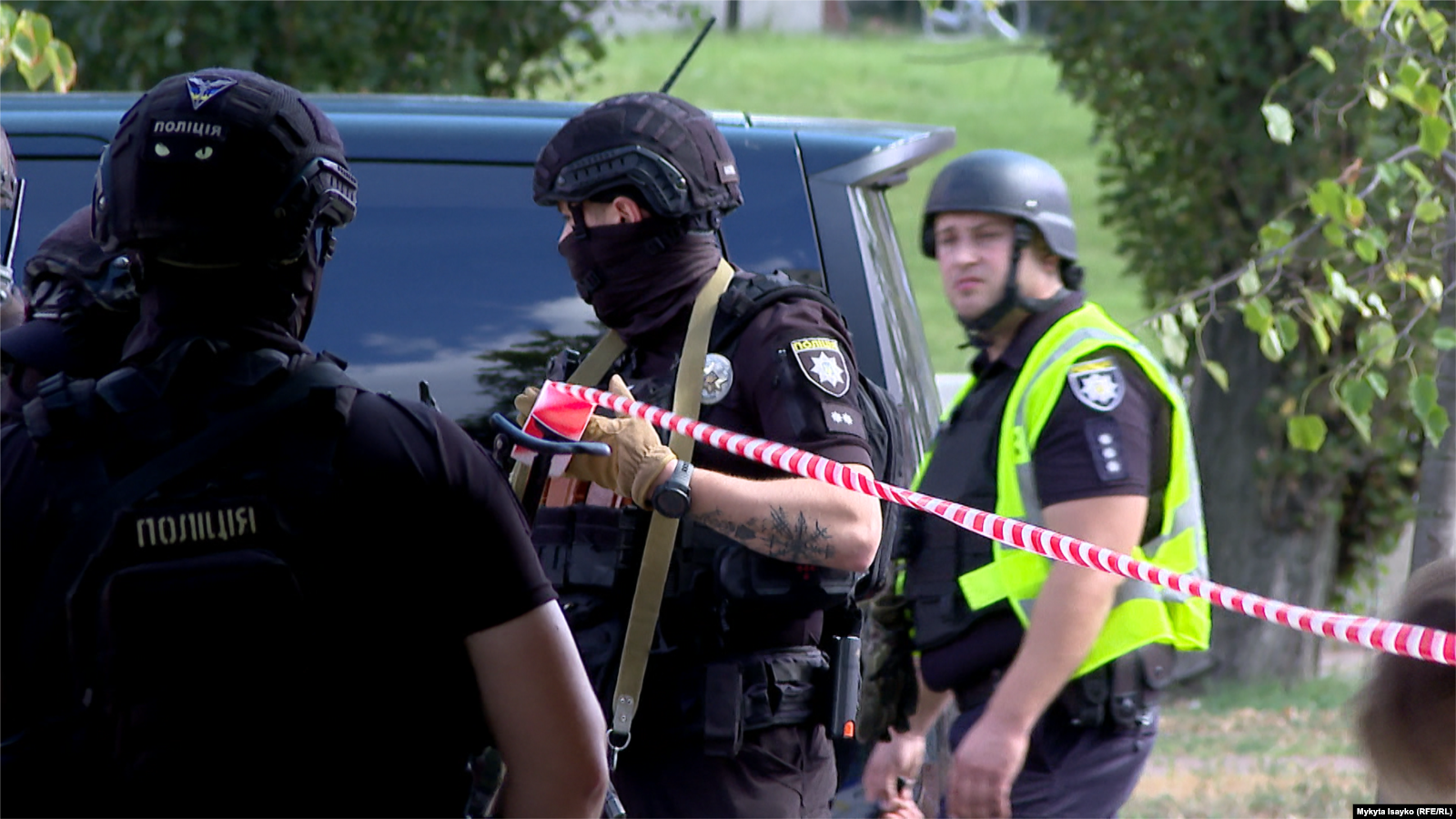
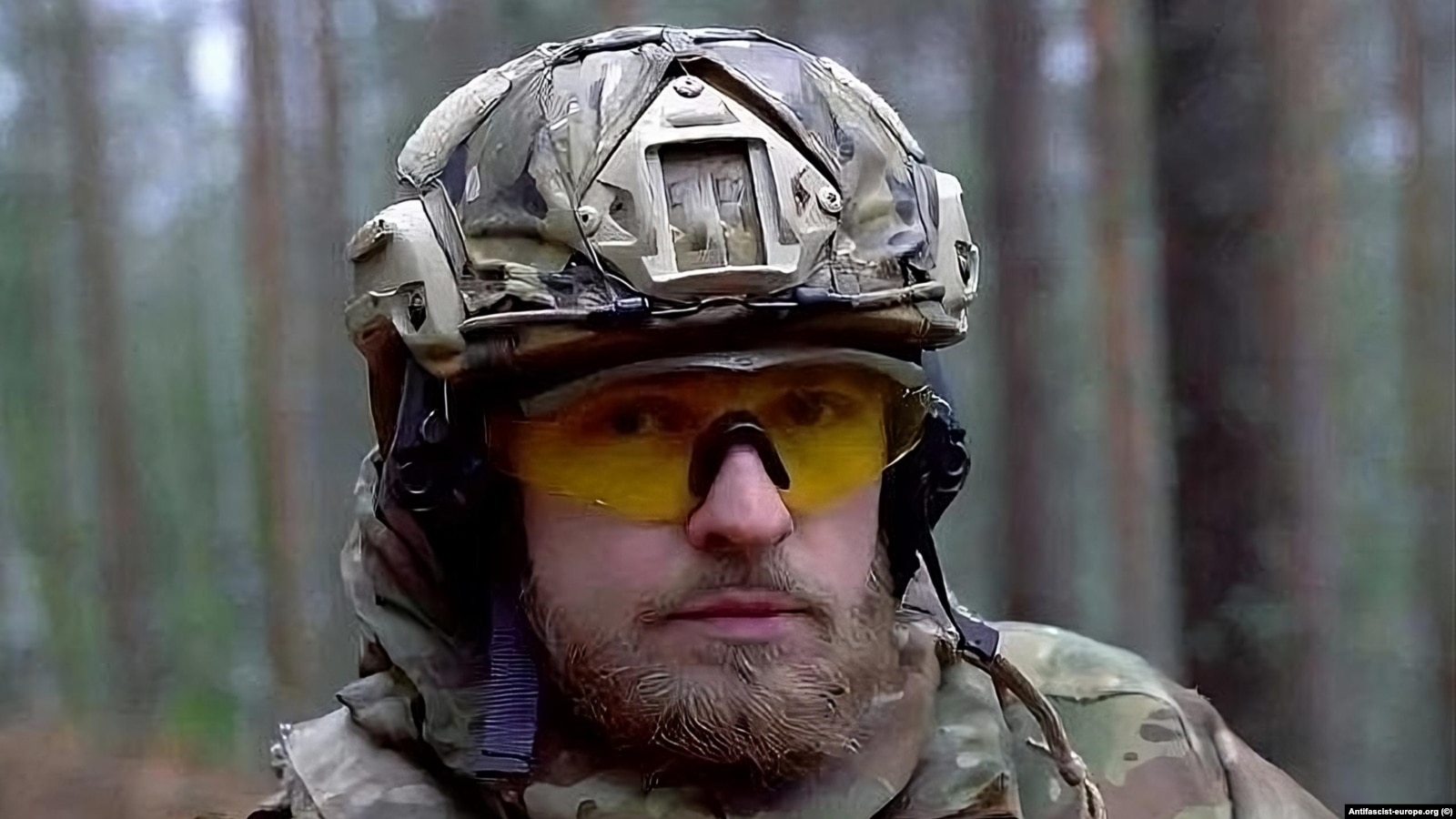
An armed clash between Ukraine’s military intelligence and security service left three officers wounded in Kyiv. Both sides gave conflicting accounts, while President Zelenskyy called the incident “absolutely disgraceful.”
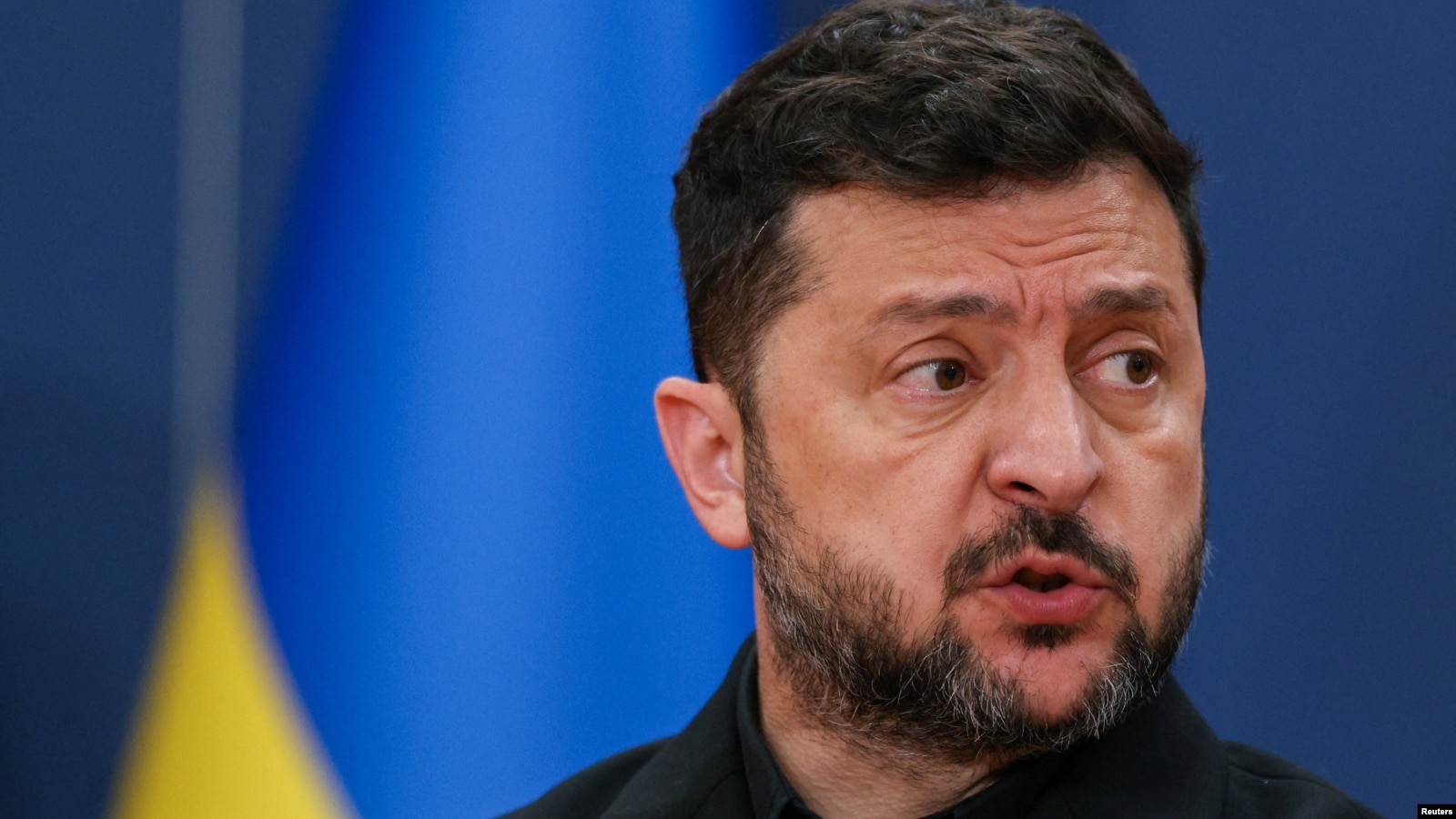
A shoot-out between Ukraine’s two leading security agencies on the streets of Kyiv has caused concern among residents already coming under intense Russian drone and missile attacks. Days later, there are still more questions than answers about what happened and why. A video showing a man confessing to being a Russian spy -- which he has since said was recorded under duress -- has added to the confusion. President Volodymyr Zelenskyy has taken swift action, firing the deputy heads of each organization on September 3 -- declaring "both agencies must be held accountable.” He'd previously said the gunfight was "disgraceful." Who Was Involved? The gun battle pitted Ukraine’s main domestic intelligence agency, known as the SBU, against the country’s military intelligence outlet, the HUR. Both have been carrying out armed operations against Russian forces. Their firefight erupted on September 2, as the Ukrainian capital was targeted by Russian air strikes for the sixth day in a row. Why Was There A Shoot-Out In Kyiv Between Security and Intelligence Agents? “Both acted in a way that is absolutely unacceptable,” Zelenskyy said, adding that “two individuals implicated in the shooting” had been formally named as suspects amid an ongoing investigation. Still, the details of the incident known to the public remain murky. The jarring shoot-out appears to be connected to the earlier arrest of Stepan Kaplunov, deputy commander of the notorious Ukrainian-backed paramilitary group the Russian Volunteer Corps. The corps first came to prominence with cross-border raids inside Russia in 2023. Effectively overseen by the HUR's Tymur's Special Unit, it is mostly made up of Russian nationals. A Murky Incursion: Who Are The Russian Volunteer Corps? 'Kidnap' And 'Confession' Kaplunov was "abducted" on August 23, without a detention record or legal counsel present, his lawyer, Taras Borovskiy , told RFE/RL. Borovskiy said Kaplunov’s whereabouts were unknown until the early hours of September 2, when SBU officials brought him to his apartment to conduct a search. HUR representatives were already waiting at the scene. As the developments unfolded, “comrades and supporters of the HUR’s Tymur’s Special Unit began arriving” in the area as well, the lawyer added, saying that it was then that “the first groups that came here were attacked.” Local residents told RFE/RL they were afraid to leave their apartments, having no idea what was going on in their street: Armed men wearing no identifying insignia were moving between the buildings, with the only way to tell them apart being the green and blue tapes they wore. Blood on the street in Kyiv’s Borovky district following a shoot-out on September 2. According to Borovskiy, three HUR servicemen were injured in the incident, with one suffering a bullet wound that severed an artery in his leg. The SBU said the search of Kaplunov's apartment was part of a pretrial investigation into a "terrorist attack" allegedly organized by Russian special services and that an armed group of people was trying to disrupt measures being taken to collect and document evidence. According to the agency, Russia was planning an assassination attempt against one of the leaders of the Russian opposition movement. During what it called “counter-sabotage efforts,” the SBU said it uncovered contacts between Kaplunov and Russia’s Federal Security Service (FSB). On September 3, the SBU published a video of Kaplunov confessing that he had been “approached by an agent acting in the interests of the [FSB] with the aim of recruiting him to carry out active measures to eliminate Ukrainian Defense Forces personnel.” Kaplunov, who had earlier been released, said in an interview with Ukraine's Radio NV that he had agreed with the SBU version of events only "under psychological pressure.” Back From The Dead: Ukraine Unveils Ruse On Death Of Anti-Putin Neo-Nazi Militia Leader Inter-Agency Rivalry Kaplunov's commander, Denis Nikitin, earlier told RFE/RL the SBU did not find anything compromising in their search of his apartment. The HUR claimed that there was a “targeted disinformation campaign” aimed at discrediting its combat units. While the investigation into the incident is yet to unfold, it's been widely suggested that the clash lifted the lid on an ongoing rivalry between the two agencies. Indeed, this is not the first time they have clashed. On March 5, 2022, just 12 days after Russia began its full-scale invasion of Ukraine, Denys Kiryeyev, a member of a Ukrainian delegation to negotiate with Russia in Belarus, was found dead on a Kyiv sidewalk. The SBU did not publicly disclose its own version of the circumstances surrounding Kiryeyev’s death. But later that month, the agency reported that it had eliminated a Russian agent without naming him. A 2023 report by The Wall Street Journal , citing then-head of the HUR Kyrylo Budanov, said Kiryeyev had been working with Ukrainian intelligence and had provided it with Russia’s invasion plans. Following the incident, there were changes to the leaderships of both agencies. Budanov was recently appointed head of Zelenskyy's office.
Thomas Melia, a former senior State Department official and a leader of the Free Russian Foundation NGO, told RFE/RL that US sanctions are causing real harm to the Russian economy, and that the sanctions bill currently being debated in Congress is not necessary to continue pressuring Moscow.
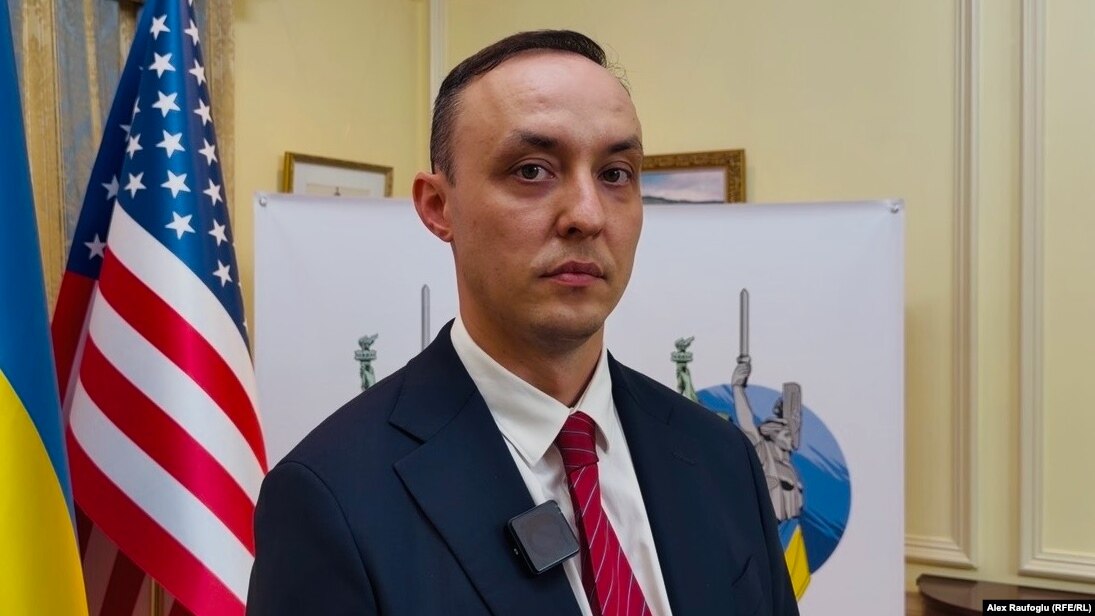
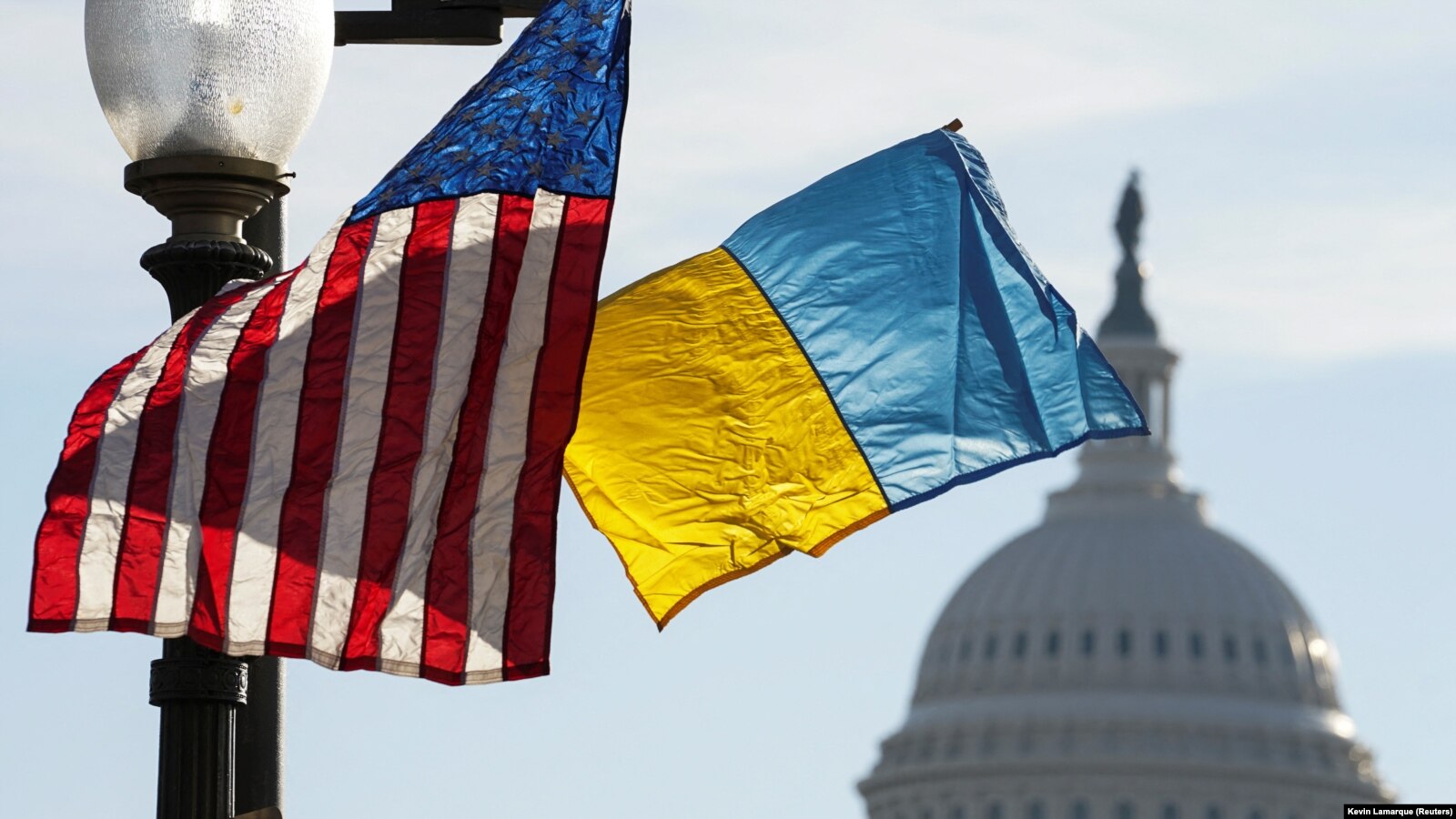
WASHINGTON -- Ukraine's top sanctions official says he remains optimistic about prospects for a sweeping Russia sanctions bill in the US Congress despite growing uncertainty over when the House of Representatives will take it up, as lawmakers face a sharply shortened legislative calendar ahead of the November midterm elections. Vladyslav Vlasiuk, Ukrainian President Volodymyr Zelenskyy's sanctions commissioner, spent this week in Washington meeting lawmakers and congressional staff as Kyiv presses Congress to advance the Lindsey O. Graham Sanctioning Russia and Iran Act of 2026. The legislation passed the Senate on August 7 by an overwhelming 86-11 vote, reflecting rare bipartisan agreement. The bill would give the president additional authority to impose punitive tariffs on countries that continue buying Russian fossil fuels. It also includes provisions targeting Iran, which Vlasiuk said is engaged in close military-industrial cooperation with Moscow. Russia Expert Melia Points To 'Evidence That Sanctions Are Working' But the measure faces a more complicated path in the House, where some Democrats have expressed reservations about provisions that would give President Donald Trump additional authority to impose tariffs. Republican leaders announced on September 3 that the final two weeks of the pre-election House session are canceled, severely curtailing what had been a full legislative calendar for September. House members are expected to leave Washington no later than September 17 and not return until mid-November. The House will reconvene for one additional week of business after next week's Labor Day break. The compressed calendar has increased pressure on supporters of the sanctions legislation. Senior Republican aides told RFE/RL that the bill remains a GOP priority, provided Democrats "get their ducks in a row." Democratic aides, in response to RFE/RL inquiries, expressed cautious optimism about the measure, underscoring uncertainty over whether Speaker Mike Johnson will bring it to the floor. Vlasiuk: 'Good Chance' Vlasiuk said he held roughly 20 meetings with lawmakers and congressional staff during his Washington visit, including discussions with members of both parties. He said the Ukrainian delegation encountered broad support for increasing pressure on Russia and that no lawmaker told him outright they would oppose the legislation. EU, NATO Seek Stronger Response To Russian Threat After Leipzig 'Escalation' "Everyone agreed that it was necessary to increase pressure on Russia," Vlasiuk said at a briefing at the Ukrainian Embassy in Washington. "No one said that he definitely would not support this bill." He described Ukraine as "quite optimistic" about the level of support for the legislation, including among Democrats. One potentially important route would be for the House to consider the bill under suspension of the rules, a fast-track procedure generally used for legislation expected to command broad support. Vlasiuk said that was among the realistic scenarios for moving the bill forward. "I think that there is really good chance that this bill will be brought onto the floor," he said. Vlasiuk has previously identified the week after next as Kyiv's preferred window for a House vote. With the House calendar now compressed, that period could provide one of the last opportunities for a vote before lawmakers leave Washington. Asked by RFE/RL whether the momentum surrounding the bill was still there, Vlasiuk pointed to what he characterized as continued bipartisan backing for Ukraine. "There is a lot of support for Ukraine on the Hill," he said, adding that Kyiv has been "very vocal" in stressing the urgency of passing the bill. "At the same time, well, I mean, let's wait and see," Vlasiuk said. Democrats Wary Of Trump Powers The principal obstacle is not broad disagreement over confronting Russia, according to Thomas Melia, a former senior State Department official and Senate Foreign Relations Committee deputy staff director who is currently with the Free Russia Foundation. In an interview with RFE/RL, Melia explained that Democratic leaders have several reasons for hesitating. One is that the legislation is not strictly necessary for the administration to impose sanctions, he said. Trump already possesses significant authority to sanction Russian individuals and entities. US Lawmakers Examine Growing Russia, China Ties To Iran-Backed Houthis The bill's principal value, in Melia's assessment, is therefore partly political and symbolic: Its bipartisan backing would demonstrate congressional resolve to increase pressure on Moscow. But Melia said the House Democratic leadership was not sufficiently involved in negotiating the version that ultimately emerged from the Senate. That concern is particularly relevant to Representative Gregory Meeks of New York, the senior Democrat on the House Foreign Affairs Committee, who has expressed general support for tougher pressure on Russia but has raised concerns about provisions of the legislation. There is also a substantive concern: The final version of the legislation gives the president additional tariff authority. Melia said that has created hesitation among Democrats who are wary of giving Trump another instrument that could be used broadly against US trading partners. Melia also emphasized another change from the bill’s earlier form: The final version makes the sanctions optional rather than mandatory. That distinction matters, he said, because the original legislation's political force came in part from its mandatory sanctions provisions and overwhelming bipartisan support in the Senate. After the death of Senator Lindsey Graham, the administration backed a version of the legislation but sought changes that made sanctions nonmandatory and added tariff authority, Melia said. The result, in his view, is a weaker measure than the original. Melia said the final version nevertheless retains substantial political significance because of the broad bipartisan support that surrounded the tougher proposal. Kyiv Backs Tariffs Vlasiuk defended the tariff provisions, arguing they could make sanctions substantially more effective. "This is a powerful instrument which will allow to amplify the effect of the sanctions," he said. He argued that tariffs and sanctions can have similar economic effects but differ in their ability to be circumvented. Russian President Vladimir Putin (left) Chinese President Xi Jinping in 2014. US legislation could target trade in Russian energy assets by countries such as China. "Sanctions can be adapted, sanctions can be evaded. Tariffs cannot be adapted or evaded," Vlasiuk said. He also rejected concerns that countries could be arbitrarily targeted under the bill, saying the legislation establishes criteria based on purchases of Russian fossil fuels. In particular, he pointed to China and India, which Ukraine considers central to Russia's continued ability to sell its energy exports. Vlasiuk said the pressure could represent "a huge blow" to Russia's ability to finance its war against Ukraine. Ukraine also supports the bill's inclusion of Iran, he said, citing Tehran's close military cooperation with Moscow. "Everyone understands how close cooperation is between the military-industrial complex of these countries," Vlasiuk said. "Therefore, Iran is very well-deserved." House Vote Window Narrows The political stakes are heightened by the House's decision to cancel its final two weeks of pre-election legislative work. The chamber is expected to depart Washington no later than September 17, although Republican leaders have said members could be recalled if the Senate advances a party-line budget reconciliation package. That scenario is not currently expected. Representative Don Bacon of Nebraska, a Republican who has supported the sanctions effort, described the lack of congressional action as a serious failure. "This is a real shame. It passed 86-11 in the Senate," Bacon said. "Congressional inaction on Russia's invasion of Ukraine and on Putin’s crimes is a real failure. The history books will not be kind." Ukraine is facing another potentially tough winter as Russia steps up missile and drone attacks. For Kyiv, the urgency is not simply legislative. Vlasiuk warned that Ukraine faces another difficult winter after months of Russian missile and drone attacks. He said 160 people had been killed in missile and drone strikes in recent months. "We have to increase the pressure over Russia to make them change their plans, to make them really negotiate," he said. He argued that passing the sanctions bill now would have two effects: It could eventually increase economic pressure on Russia, while immediately sending a political signal to both Ukraine and the Russian government. There is, he said, an element of inertia in sanctions policy. Even after legislation passes, implementing measures can take days, and producing a significant effect on Russia’s economy can take weeks. "But at the same time, the very fact of passing this sanction bill," Vlasiuk said, would send a "strong signal of support to Ukrainian people" and a "really strong signal to Russian government."
Thousands of mourners filled the streets of Minab in southern Iran to grieve for more than 100 students who were killed in a strike on a girls' school on February 28. The United States says it would not deliberately strike a school, but Iranian authorities are blaming the US and Israel.
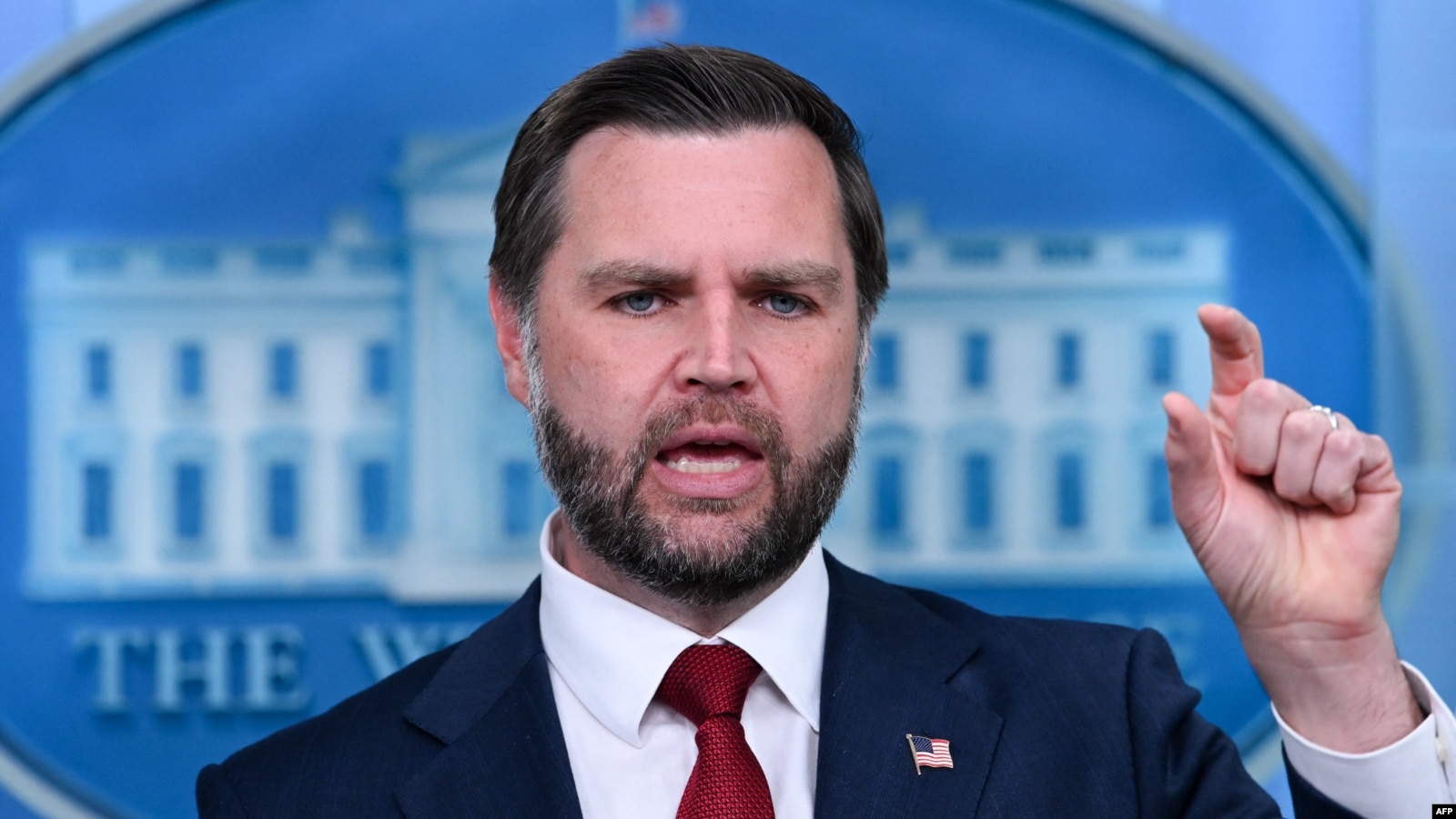
US Vice President JD Vance said that the United States is investigating Iranian claims that an air strike hit a wedding party, but that he is "skeptical" of reports coming out of Tehran. "We're investigating it because obviously we care. We want to know," Vance told reporters at the White House on September 3. "I know that we're investigating, I will say that the Iranian state media has not been a very good scribe about what's happened in the conflict thus far. So I'm extremely skeptical of this." "If we do make mistakes, again, this is a big difference between us and Iran, when our military makes mistakes, they learn from them to try to get better from them," he added. What We Know About Iran's Claims Of US Strike Hitting Wedding Party Tehran said the strike hit a home during a wedding ceremony in the village of Kuhestak in Sirik County in southern Iran, killing four people and injuring 70. Iranian media said a fifth person -- a 22-year-old woman -- later died in a hospital. Iranian mourners gathered on September 3 outside the village, with some carrying caskets for a funeral ceremony. The US military has not addressed the strike directly. US Central Command (CENTCOM) spokesman Tim Hawkins said it was aware of the reports, adding that "the US military never targets civilians, unlike the IRGC," referring to Iran's Islamic Revolutionary Guards Corps. Iran has accused the United States of several deadly attacks on civilians during the war. Tehran said the deadliest incident was an air strike on a girls' elementary school in the southern city of Minab, which it said killed as many as 165 schoolgirls and teachers. UN experts have expressed "deep concern" about the incident. The Pentagon announced an investigation but has yet to report its findings. Thousands Mourn Victims Of Strike On Iranian School Separately, when Vance was asked by reporters during his White House remarks how long he thought the war would last, he did not answer directly. "I wouldn't call it a war," he said. "Right now, there is no active shooting." "I recognize there have been places where this has flared up," he added, but said that major combat operations only lasted for six weeks after the US-Israeli war with Iran started on February 28 and that the US had "made it harder for them to rebuild that nuclear program." Vance also said that the US is not planning to conduct talks with Tehran unless Iran ceases its attacks on commercial shipping in the Strait of Hormuz. "They've got to stop. It's that simple," he said.
On a Norwegian island high in the Arctic Circle, there is a small outpost of Russia. Barentsburg is home to about 500 people and a single, loss-making coal mine -- but Russia appears determined to keep it going.
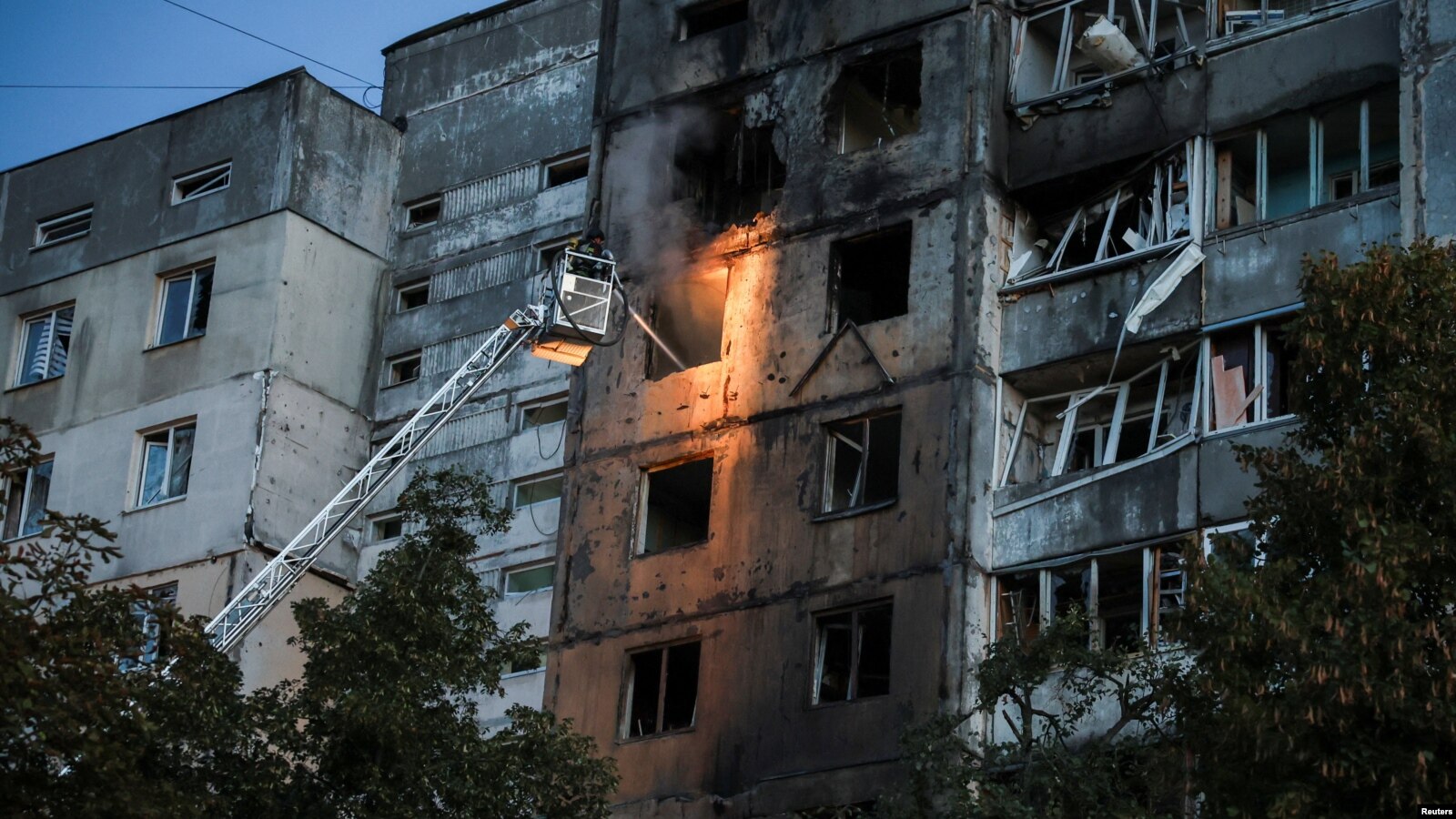
Ukrainian President Volodymyr Zelenskyy said he spoke on September 3 with two key US special envoys, who told him they will visit Kyiv "in the coming days" and will also travel to Moscow for talks, even as Russia contimued to pound the Ukrainian capital with air strikes. "I have just held a meeting with the team that is engaged in negotiations with representatives of the president of America," Zelenskyy wrote on Telegram. "We are in communication with them 24/7 and are now preparing for meetings," he wrote, adding that "there are preliminary dates" for a face-to-face meeting. Ship-Spotting Photos Highlight Ferocity Of Black Sea Drone War This September 1 image showing the severely damaged Anna S being towed through the Bosphorus Strait is one of several recent photos snapped from the Turkish coast that highlight the escalating war on shipping in the Black Sea. The Greek-owned bulk carrier was reportedly targeted by five aerial drones as it neared the Russian port of Novorossiysk to fill up with grain on August 17. All 20 Filipino sailors and its Romanian captain were able to escape the vessel unhurt. The Russian-flagged Omskiy-107 photographed on September 1 after running aground near Istanbul. The cargo ship's crew had abandoned the vessel after it was attacked by drones near Novorossiysk at an unknown date in August. Tomas Alexa, a senior analyst with maritime risk management firm Ambrey , told RFE/RL that attacks on shipping in the Black Sea have surged since Ukraine launched Operation Molochka in early July. The drone campaign aims to disrupt maritime trade routes that Russia relies on for revenue. The Liberian-flagged bulk carrier Great Ocean, showing damage from an apparent drone strike, is towed through the Bosphorus on August 20. Alexa said the list of apparent targets has recently expanded "from tankers to dry-cargo vessels," and the danger for seamen has intensified. Aerial drone strikes targeting accommodation blocks, he said, “were rare before [Ukraine's Operation Molochka]. He added that "Russia has responded in kind, but with fewer merchant ships available as targets it has concentrated more on ports." An aerial drone shown attacking the Turkish-owned cargo vessel Nadezhda, near Novorossiysk on August 3 in a strike that seriously injured three sailors . The UN's International Maritime Organization condemned the recent surge in attacks on shipping in the Black Sea in which several merchant seamen have been killed . "Seafarers should never become casualties of conflicts to which they are not a party," the organization's head, Arsenio Dominguez, said in a statement. Some ships operating on the Black Sea, such as the Caruzo oil tanker (pictured) that passed through the Bosphorus on August 11, have been photographed with anti-drone netting draped from crew quarters. Mehmet Yapici , an Istanbul-based marine photographer, told RFE/RL that among shipspotters, "the general consensus is that equipping ships with anti-drone nets would not be effective" against attack drones. Water tanks dangle from the rear of the hull of the Caruzo as it steams through the Bosphorus. The tanks are believed to be an effort to shield the engine of the ship from marine drone attacks. A recent Ambrey report said the Russia-Ukraine conflict on the Black Sea "is increasingly spilling beyond its traditionally recognised high-risk zones," in part due to explosives-packed marine drones drifting into the body of water after losing power or communications. An unidentified marine drone seen near the Romanian coast on August 20 after its operators apparently lost control of the vessel. The drone was later destroyed by Romanian fighter jets. With the Black Sea viewed as an increasingly risky location for merchant vessels, Alexa said the number of port calls along both Russian and Ukrainian coasts "are significantly down." War risk insurance premiums have jumped as much as tenfold since the beginning of the year, the analyst added. A ship burns after a reported drone strike off the coast of Odesa on July 14. Risk perception has "hardened" among those who once made their living from the Black Sea, Alexa said. "Owners are refusing to send ships into the northern Black Sea, and crews are reluctant to sail there." "We expect to see representatives...here in Kyiv. This has been confirmed by them, who also said they will have meetings in both Moscow and Kyiv." "It is important that America remains active. We are ready to meet them in Ukraine for meaningful discussions," Zelenskyy stated. Steve Witkoff and Jared Kushner have been acting as the lead negotiators as US President Donald Trump seeks to mediate a peace agreement to end Russia's full-scale invasion of Ukraine, which began in February 2022. Trump has confirmed he will send Witkoff and Kushner to Kyiv in the coming weeks in what would mark their first visit to Ukraine since taking leading roles in the administration's efforts to end the war. Witkoff and Kushner have traveled to Moscow and met with Russian representatives in the US multiple times during Trump's second term. "We will see what the US president's envoys can accomplish," Zelenskyy wrote on Telegram on August 31 after holding a "detailed and constructive" previous call with the two Americans. But Thomas Melia, a former senior State Department official and currently chairman of the board of the Free Russia Foundation, said it is difficult to see evidence that Moscow is genuinely interested in a negotiated settlement. “Putin's military continues to inflict unbelievable damage on Ukrainian civilians, blowing up schools and residences and churches," Melia told RFE/RL. "There doesn't seem to be a lot of desire for finding common ground right now.” Zelenskyy Blasts 'Disgraceful' Kyiv Shoot-Out Between Ukraine's Security Agencies Fresh Attacks On Kyiv The comments came as authorities in Kyiv reported new Russian strikes on the Ukrainian capital. The Kyiv military administration initially said one person was killed, but later said that had not been confirmed. Kyiv Mayor Vitali Klitschko said nine people were injured. He said said one daytime attack hit a high-rise residential building, causing a fire and badly damaging the structure. Unverified social media videos showed a large fireball rising from an apartment building. Russia has been ramping up daytime attacks on Ukraine, frequently targeting the capital, often causing mass casualties as its battlefield progress appears to have slowed amid heavy losses. Kyiv residents who had grown accustomed to overnight strikes are now attempting to deal with a growing number of Russian attacks during the daytime hours. Russia has been blasting Ukraine with jet-propelled drones capable of flying nearly twice as fast as older models, forcing Kyiv to adapt defenses in the battle against high-tech weapons. The Russian Geran-4 drone is yet another modification of the Iranian-origin Shahed, which was provided to Moscow by Tehran in the early stages of Russia's full-scale invasion of Ukraine in 2022. In one of the most deadly attacks in the war, a Geran-4 drone struck a munitions warehouse in Myla, a village outside Kyiv, setting off explosions that led to the deaths of at least 38 people near the facility. Rubio Confirms Ukraine Patriot Talks As Experts Warn Production Is Years Away Zelenskyy and other officials blasted the authorities who allowed a building storing ammunition to be built so near a residential area. "A terrible situation and terrible negligence on the part of those who stored explosives right next to people," Zelenskyy said on August 29. Trump Wants Payback Away from the battlefield, Trump said he would ask European nations to compensate the US for military aid and munitions previously sent to Ukraine and appeared to suggest further sales of weapons to Kyiv’s allies could be curtailed. The comments come amid media reports -- denied by Trump -- that US forces are suffering a shortages of munitions because of those utilized in the war with Iran. "We are stockpiling and preparing for any contingency that could happen. We are taking them [munitions] for ourselves, the U.S.A., rather than selling them to others, but the sales to Allies will soon again, begin." "The Biden Administration gave far more Munitions away to Ukraine, at no cost to them, whatsoever, than we have used in Iran. Hundreds of Billions of Dollars was given to Ukraine and NATO, free of charge, that Europe would have paid for -- If they were only asked, but we will be asking for that money, though somewhat belatedly!" On September 2, however, US Secretary of State Marco Rubio said Washington and Kyiv are negotiating a license that could allow Ukraine to produce missiles for the US-made Patriot air defense system, reviving an idea that Trump appeared to downplay in early August. Meanwhile, Norwegian authorities seized a Russian ship in the Arctic on behalf of Ukrainian energy company Naftogaz, which is seeking to enforce a $4.2 billion compensation award for assets that Moscow took when Russia occupied and seized Ukraine's Crimean Peninsula in 2014. Russia's Norwegian Colony Officials said the Professor Molchanov vessel was seized late on September 2 in Barentsburg, a coal mining settlement that Russia operates on the Norwegian Arctic archipelago of Svalbard under the terms of a 1920 treaty. The Kremlin called the ship seizure an act of piracy and said it had summoned the Norwegian ambassador to deliver a protest, setting up another potential flashpoint between NATO and Russia. "Svalbard...is increasingly becoming a hotspot of geopolitical tensions," the Arctic Institute think tank wrote in November 2025. "A build-up of forces in the region, military exercises in the Barents Sea and covert operations targeting Svalbard all suggest that the Russian threat is as serious in the High North as it is on the Eastern flank." With reporting by RFE/RL's Ukrainian Service, RFE/RL senior Washington correspondent Alex Raufoglu, The Washington Post, and Reuters
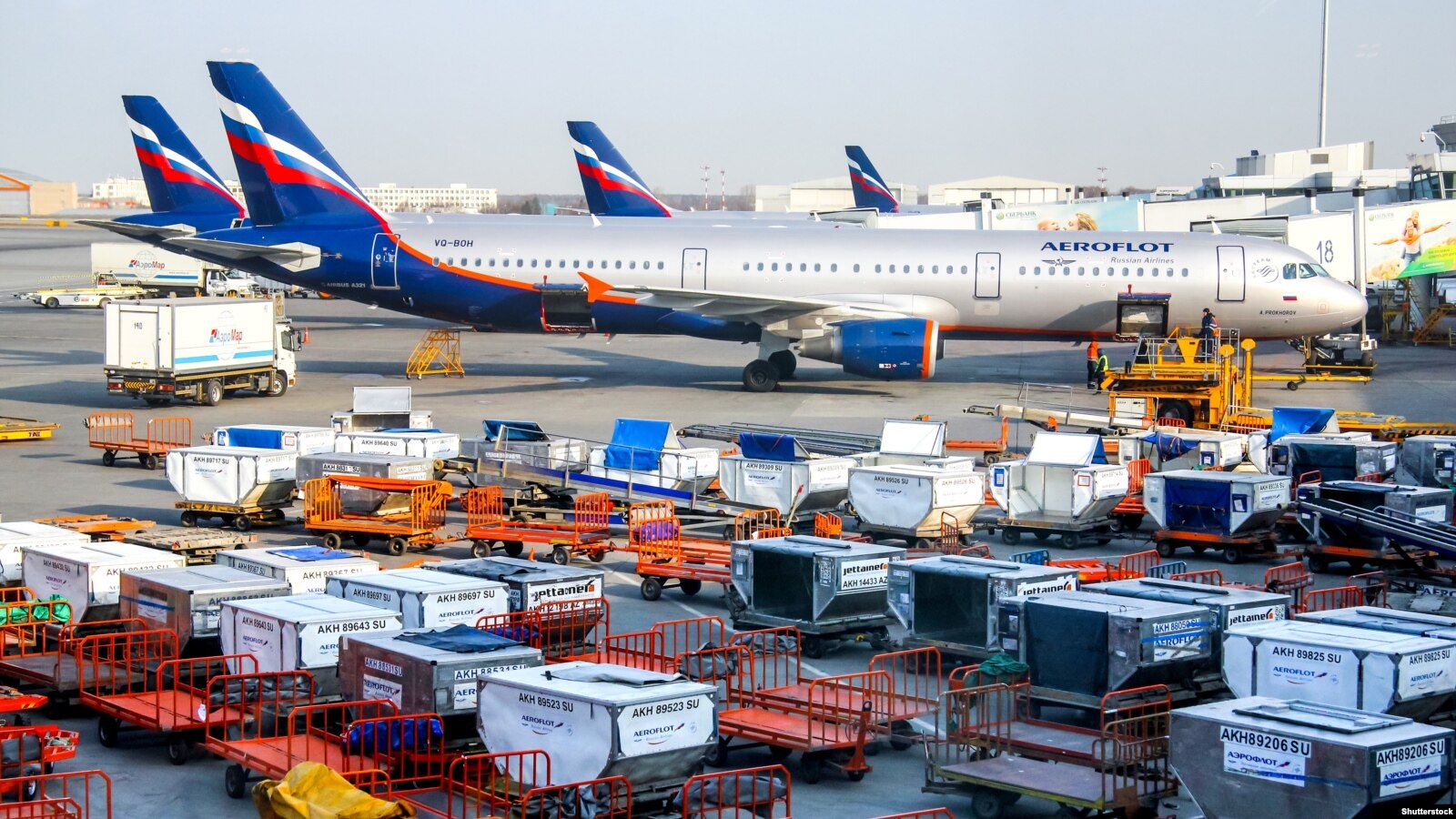
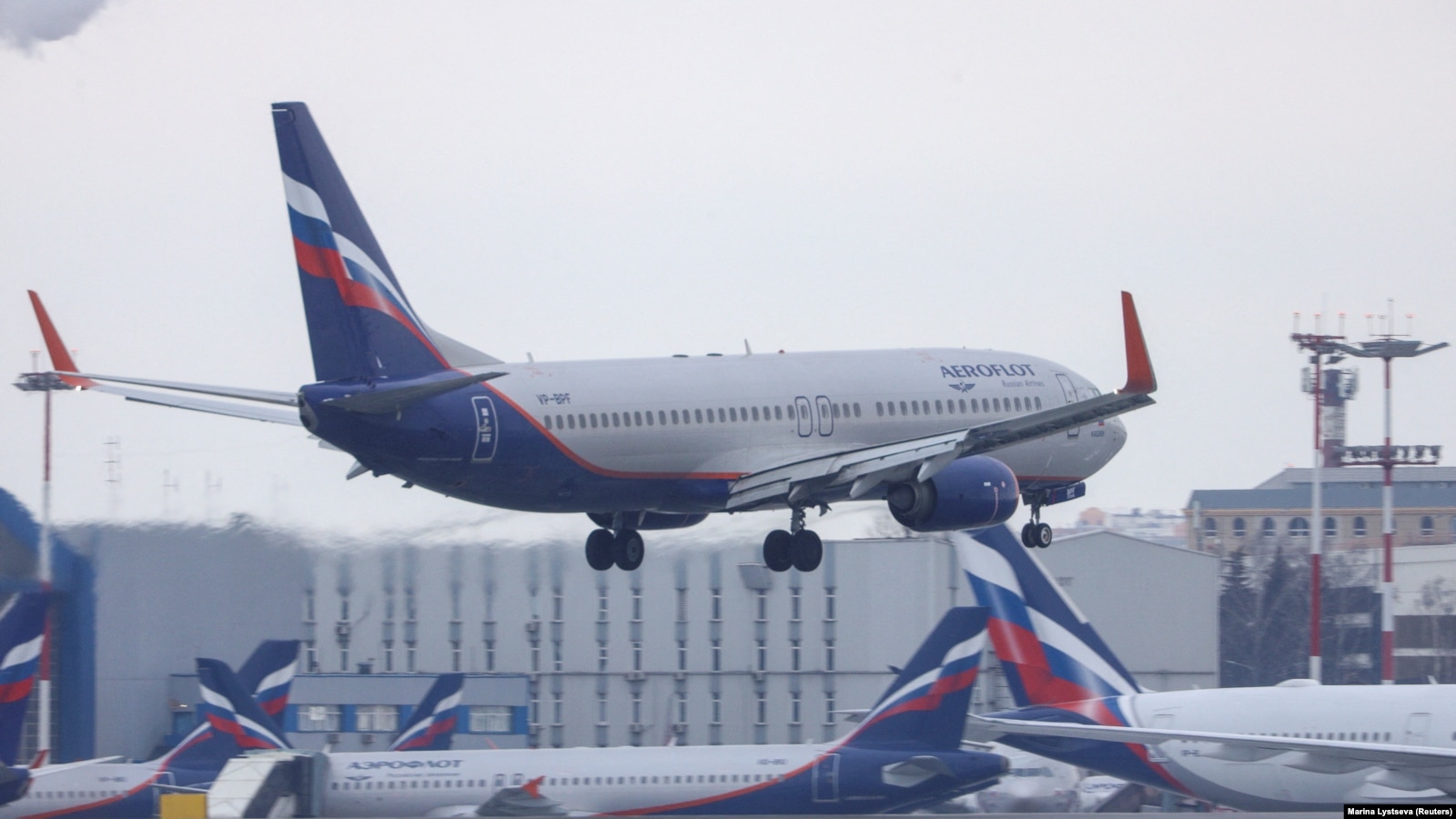
Two days after Ukrainian President Volodymyr Zelenskyy warned civilian airlines of the dangers of using Russian airspace, numerous flight cancellations, airport closures, and other disruptions were reported in the country. Ukraine's increasingly bold drone campaign against Russia has been causing problems like this for some time and it was not clear that anything specific had changed. But Zelenskyy's hint that Kyiv was about to up the ante has raised the question of just how difficult it can make things for Russia. “We are not talking now about the temporary disruption of operations, but about blocking them 24/7. In other words, the strategy is to make these airports unusable,” Valeriy Romanenko, from Ukraine's Museum of Aviation, told RFE/RL's Ukrainian Service . “Such an operation is possible; it is realistic. It would divert a large number of Russian air defense assets, while on our side it would be carried out using small drones,” he added. Zelenskyy Warns Russia's Airspace 'Becoming Completely Dangerous' 'Completely Dangerous' The backdrop to this was Zelenskyy's nightly video address on September 1. "Today, we want to warn every airline that uses Russian airspace, every insurer, everyone who still uses key Russian airports: The Russian sky is becoming completely dangerous," he said. Following Zelenskyy’s warning, Ukraine formally notified the International Civil Aviation Organization (ICAO) on September 2, warning of what it described as growing risks to civil aviation in Russian airspace. This was underlined by events on September 3. Moscow’s Vnukovo Airport temporarily suspended operations, while the other major airports serving the city, Sheremetyevo and Domededovo, also announced restrictions. Moscow Mayor Sergei Sobyanin said 548 Ukrainian drones flew toward the Moscow region between September 2 and 3. The same day, Russia’s Transport Ministry said it had provided foreign airlines with clarifications on safety measures at Russian airports and in Russian airspace following requests from carriers. Transport Minister Andrei Nikitin said Russia was working with the Defense Ministry and National Guard to minimize the impact. “I believe that we will not allow any significant disruption to civil aviation,” he said. At 5:11pm Moscow time on September 3, Flightradar24’s live flight-tracking map showed very limited air traffic at Moscow’s three major commercial airports. But Flightradar24 data showed four Russian airports among the world’s five most disrupted on September 3. New Targets Mass Ukrainian drone attacks have caused mass disruption at Russian airports before, but it has not been sustained for a protracted period of time. Romanenko suggested that increasing the pain levels without attacking civilian aircraft -- something Zelenskyy has explicitly ruled out and which could be a war crime -- could involve additional measures. “The targets will be Russia’s air-traffic-control infrastructure: control towers, automated landing systems at airports, glide-path equipment, and radar systems for air-traffic control. These are the systems that ensure flight safety. These systems will be struck,” he predicted. As Ukrainian Strikes Hit Hard, Moscow Seeks Deeper Defense Ties With Central Asia Alexander Lanetsky, CEO of Friendly Avia Support, an aircraft brokerage in Lithuania, told Current Time that shutting down Moscow's airspace would impact aviation across the country, the world's largest by surface area. “If the Moscow aviation hub were paralyzed for a week, the entire country would absolutely feel it. Constant drone activity in this area would lead to no-fly zones being declared, and the operation of airports, and indeed the entire aviation sector in this region, would be paralyzed,” he said. On September 3, flight data suggested much of the disruption related to domestic flights. This is economically painful in a country spanning 11 time zones -- and underlines the cost of Russia's war to ordinary passengers. Much of Russia's international traffic, particularly to Europe, has long been canceled due to Western sanctions following its full-scale invasion of Ukraine in 2022. But there are still many flights to other countries, with Turkey, Uzbekistan, the United Arab Emirates, China, and Egypt accounting for 72 percent of Russia’s international passenger traffic, according to data from the Association of Tour Operators of Russia (ATOR), an industry umbrella group. “When deciding whether or not to fly to Russia, these airlines will assess the threats, because the loss of an aircraft in Russian airspace would be solely the responsibility of Russia and the respective airline,” Bohdan Dolintse, an aviation and defense technology expert, told RFE/RL.
Russian officials alleged that a group of Ukrainian saboteurs crossed into western Russia and fired on civilians in villages in the Bryansk region. A group calling itself the Russian Volunteer Crops claimed responsibility. Kyiv suggested Moscow might be seeking a "false flag" pretext to stage new attacks on Ukraine.
An armed clash between Ukraine’s military intelligence and security service left three officers wounded in Kyiv. Both sides gave conflicting accounts, while President Zelenskyy called the incident “absolutely disgraceful.”
KYIV -- Ukrainian President Volodymyr Zelenskyy called for "accountability" and "personnel decisions" after a shoot-out in Kyiv involving the country's major security services. In his daily evening video address, Zelenskyy said the incident took place between Ukraine's Security Service, known as the SBU, and the country's military intelligence agency, the HUR, calling it "absolutely disgraceful." "The only people anyone should be shooting at are the Russian occupiers, in defense of Ukraine," he added. "No other exchange of gunfire will ever be treated by our state as something anyone is permitted to engage in." Why Was There A Shoot-Out In Kyiv Between Security and Intelligence Agents? Gunfire woke residents in Kyiv's Bereznyaky district early on September 2, with witnesses saying they saw wounded people and traces of blood at the scene of the incident . Shortly after the stand-off had ended, conflicting reports of what had happened emerged. The SBU issued two contradictory statements: first, saying it was working alongside the HUR to avert a Russian "terrorist attack," and then, saying it had resisted a "group of individuals" who had tried to block a search effort. In a later comment to RFE/RL's Ukrainian Service, a commander of HUR's "Tymur" special forces unit said the SBU agents were "detaining HUR personnel and opening fire without warning" at them. The Russian Volunteer Corps The shoot-out appears to be connected to earlier reports concerning the arrest of Stepan Kaplunov, deputy commander of the Russian Volunteer Corps , a Ukrainian-backed paramilitary group affiliated with the HUR. A Murky Incursion: Who Are The Russian Volunteer Corps? Taras Borovskiy, Kaplunov's lawyer, told RFE/RL's Ukrainian Service his client was "abducted" on August 23 and that his whereabouts remained unknown until September 1. He added the SBU had not responded to his requests for comment. From here, the details of the story get even murkier. According to Borovskiy, overnight on September 2, the SBU brought Kaplunov to his apartment to conduct a search. But HUR representatives and his friends were already present there. The HUR commander said he reached an agreement with the SBU unit commander but "other SBU personnel" then opened fire. Separately, Denis Nikitin, the commander of the Russian Volunteer Corps, told RFE/RL the SBU did not find anything compromising in Kaplunov's apartment. Later, Zelenskyy said prosecutors would investigate the incident.
BRUSSELS -- The recent incident at Leipzig Airport in which explosive-laden drones interrupted flights is the "new normal," European Commission President Ursula von der Leyen said on September 2, vowing more restrictive measures on Moscow. "Leipzig marks a new escalation on European soil, directly attributed to Russia," she said. "Every loophole Russia exploits is one we must close. We are looking at ways to cut even deeper into Russia's war chest." Von der Leyen was speaking alongside NATO Secretary General Mark Rutte a day after Germany officially blamed Russia for the August 4-5 drone incident and as the European Union and several member states summoned Moscow's ambassadors in protest. "Europeans are faced with a hard truth that this is the new normal," she said. Rutte said Russia had grown "increasingly reckless" with "more drones and missiles crossing into our airspace along our eastern flank, creating increased risk.". Ratcliffe's Moscow Warning: What We Know A Week Later, According To Ex-CIA Officers On September 1 German authorities said they would close the Russian Consulate in Bonn and terminate the lease on a Russian cultural center in Berlin as a result of the attempted drone attack. France, Belgium, Portugal, and the Netherlands announced on September 2 that they were summoning Russian ambassadors over the incident, and the European Union said it would summon Moscow's representative to Brussels. Europe Seeks A Response Alexander Astrov, a political analyst and associate professor at the Central European University in Vienna, told RFE/RL's Current Time that Europe faces the issue of responding to Russia's actions while remaining within international law. "How do you respond to what is now being called out as Russia's hybrid actions while remaining within the legal framework?" he asked, saying that the diplomatic steps taken so far are an attempt to do that. He added, though, that while "these attacks are part of the broader process of escalation of the war....all sides are interested in ensuring that this escalation remains a controlled one." European Commission President Ursula von der Leyen (right) and NATO Secretary General Mark Rutte hold a press conference in Brussels on September 2. Patriots For Ukraine? Von der Leyen also said that Ukraine had made a formal request for PAC-3 Patriot air defense systems following Russia's increasing attacks on Ukrainian cities and mounting civilian casualties. "Member states are currently looking at Ukraine's request, but I can say that it is going in the right direction," Von der Leyen noted. Several EU diplomats have told RFE/RL under condition of anonymity that Brussels is also currently pushing other allies such as Japan and South Korea to deliver air defenses to Kyiv ahead of the United Nations General Assembly in New York later this month. Separately, German Foreign Minister Johann Wadephul was briefing his EU counterparts at an informal gathering in Ireland on September 2 that is looking at levying further sanctions against Russia. Baltic States Arm For Russian Threat As Leaked Letter Shows Growing Fears With German media reporting that the alleged perpetrator of the Leipzig incident entered into the bloc using a Schengen tourist visa issued by Italy, EU foreign ministers also discussed an earlier proposal to curb their use . This something that Mediterranean countries heavily dependent on summer vacationers previously have opposed, with numbers of approvals of Schengen tourists visas for Russian nationals surging last year. Speaking after the meeting, the EU foreign policy chief Kaja Kallas, said there was “broad support” for the move but not unanimity. “Many member states have flagged this before that actually these kinds of tourist visas are used for the sabotage acts because these people need to get into the European Union so, if it is true, I hope that this also convinces certain member states who have been against moving on the visa restrictions,” she said. Ahead of the meeting, the EU foreign policy corps, the European External Action Service, sent out a proposal to EU capitals to impose visa bans and asset freezes on 1,600 Russian individuals and companies largely involved in the country's defense sector with a view to adopt the measures next month. The EU is also expected next week to prolong its current blacklist of 3,000 people and entities that the bloc has imposed sanctions on since Russia's full-scale invasion of Ukraine in 2022. Most EU member states want an extension by 12 months as opposed to the regular six months but Slovakia, whose government is considered Moscow-friendly, is still pushing for a six-month rollover and for some Russian oligarchs to be removed from the list.
Ukrainian President Volodymyr Zelenskyy warned airlines using Russian airspace about the threat posed by Ukrainian drones, saying the skies above Russia are no longer safe amid Moscow's continued escalation. "Today, we want to warn every airline that uses Russian airspace, every insurer, everyone who still uses key Russian airports: The Russian sky is becoming completely dangerous," Zelenskyy said in his daily evening video address on September 1. "Drone-infested skies are no place for civilian aviation," he said, providing no additional details on the scale of drone activity that should be expected in Russian airspace or when the threat would intensify. Zelenskyy's comment came as Kyiv has stepped up long-range strikes inside Russia, targeting military sites, oil and gas facilities, and retail logistics centers in an effort to push the Kremlin toward peace negotiations. Ukraine's Refinery Attacks Force Russia To Turn Abroad To Process Its Oil The Ukrainian president stressed that Kyiv was not threatening any civilian aircraft but said "there will simply be drones in Russia's skies on a scale that has to be taken into account." Asked about Zelenskyy's claim at a news conference in Kyrgyzstan, Russian President Vladimir Putin said Moscow would respond in case of any incidents, adding that such statements amount to "state terrorism." Commercial flights do not operate in or cross Ukraine during the full-scale war that Putin launched against Russia's neighbor in February 2022. In July 2014, early in the war pitting Kyiv's forces against Russian and Russian-backed forces in Ukraine's eastern Donbas region, a Russian missile shot down a Malaysia Airlines jet flying from Amsterdam to Kuala Lumpur, killing all 298 passengers and crew aboard. Earlier on September 1, Russian forces pounded regions across Ukraine as children across the country headed to school for their first day of classes. One of the strikes left at least four people dead and 13 others injured in the city of Boryspil in the Kyiv region, when a Russian missile struck near a residential building. Russian Strikes Pound Kyiv Region As Ukrainian Children Head Back To School “There is nothing left,” Natalya, a resident of Boryspil in the Kyiv region, told RFE/RL's Ukrainian Service as she surveyed what remained of her sister’s apartment in a building damaged by a Russian missile strike following a deadly attack on September 1. The strike took the lives of at least four people and injured at least 13 others, including Natalya's sister, her sister's husband, and their child. "My sister’s husband is being operated on right now," she said standing near the crater left from the strike. "[My sister's] child was admitted to intensive care." A total of 48 people were evacuated from the building following the attack. Natalya said she could barely recognize her sister's place, adding that the wall separating it from the neighboring apartment was gone. "There wasn’t even any wallpaper left. You can’t even tell where you are anymore," she said. "The ceiling, the walls -- everything has been blown out." As RFE/RL captured images of the aftermath in Boryspil, the personal belongings of local residents were scattered across the scene, including a child’s toy. Following the attack, Kyiv Regional Governor Tymur Tkachenko said Russian forces were “again purposely striking" civilian sites and residential buildings. Some local residents stare at what had been a familiar part of their neighborhood before the strike. Tkachenko added that cars, private houses, and a car-repair shop were also damaged in the Russian attack on Boryspil. Other people, like Natalya, were seen trying salvage anything they could from the badly damaged five-story building. “I was climbing around there, trying to find at least something -- some documents, some basic things that might have survived,” she said. In another attack, a Russian drone directly hit a high-rise residential building in the city of Kyiv. The incidents came as thousands of Ukrainian children were preparing to start their first day of classes in the new school year on September 1. "This is nothing but Russian terror against civilians," Zelenskyy said of the latest Russian attacks. He added that "this escalation cannot and will not remain confined to Ukrainian territory." "It is entirely natural and just that its consequences will also extend to Russia -- including Russian airspace, which already is, and will increasingly become, a space for our drones and our missiles that are actively and justly responding to Russia's war."
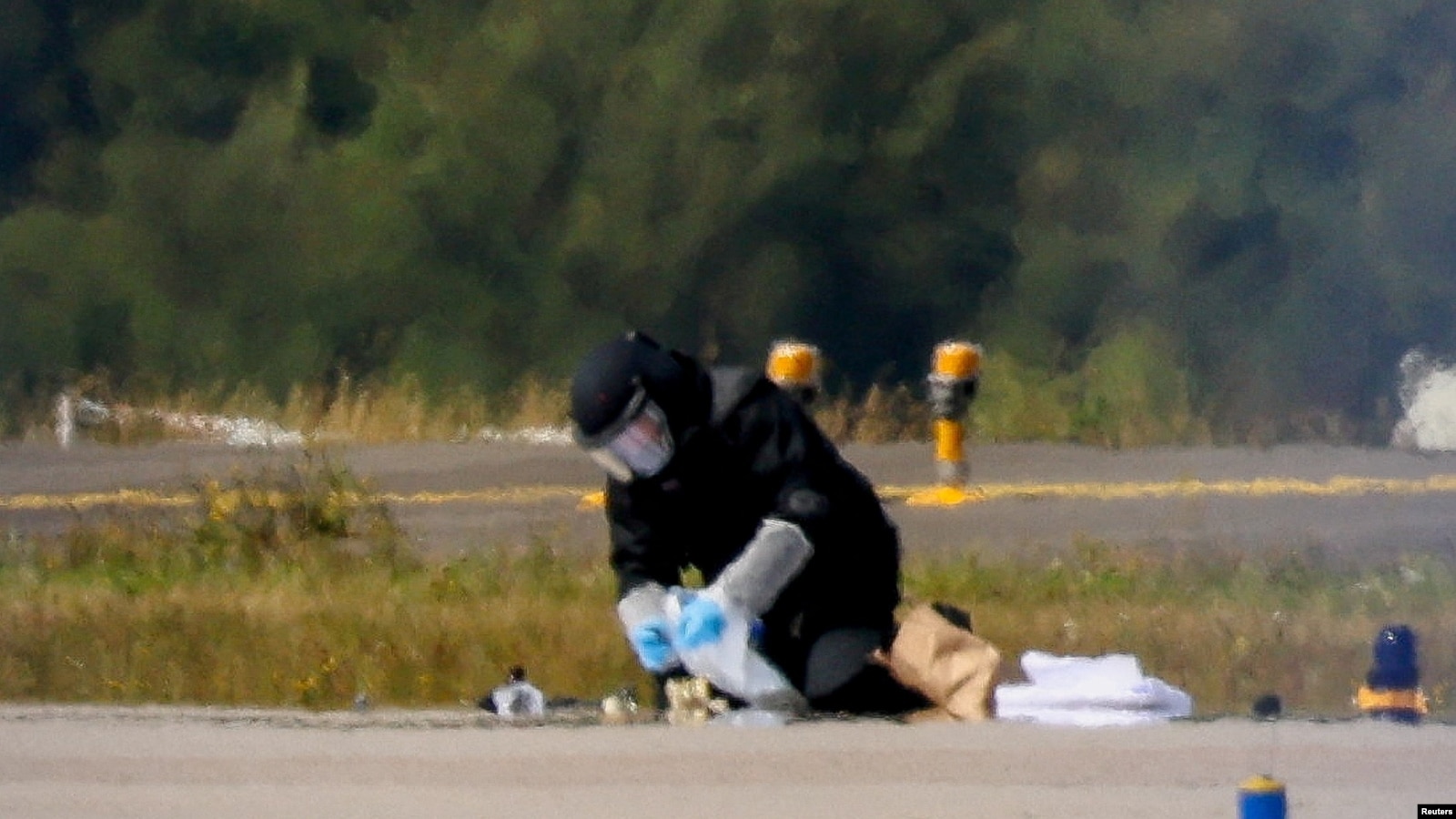
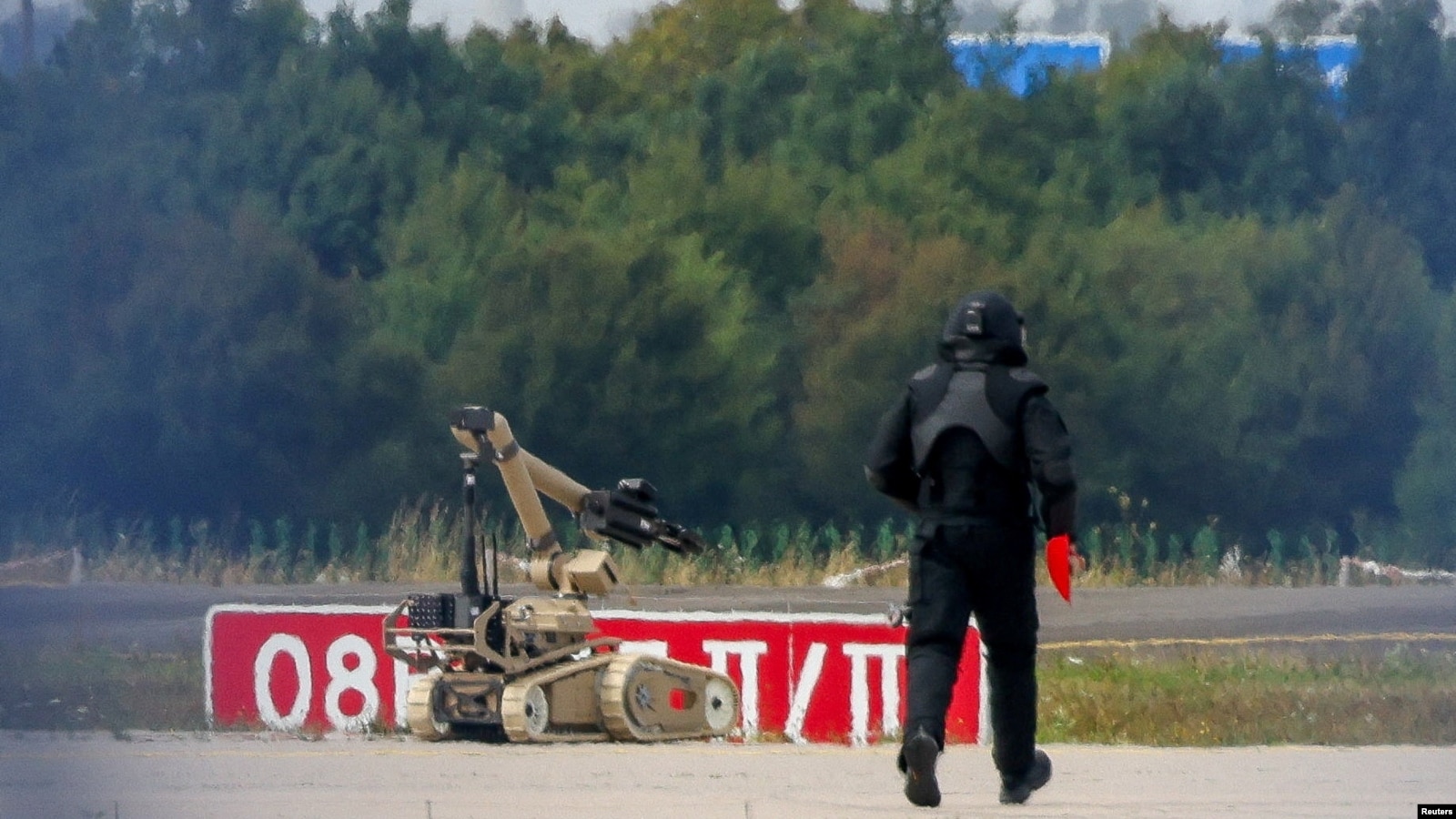
Germany has accused Russia of carrying out what the country's top police official called a “hybrid attack” involving an explosive-laden drone that disrupted flights at Leipzig airport in early August, saying it was part of a long-term campaign of destabilization operations against Europe. German authorities said they would close the Russian Consulate in Bonn and terminate the lease on a Russian cultural center in Berlin as a result of the attempted drone attack at the Leipzig/Halle Airport. The September 1 statement by German government officials came as authorities responded to what they called a sabotage attack involving a double-digit number of homemade incendiary devices found at a substation near a coal-fired power plant about 100 kilometers southeast of Berlin. No country or group has yet been blamed for that incident, in which officials said at least one of the makeshift devices detonated. Brandenburg state Interior Minister Jan Redmann did not rule out the possibility that a foreign power or left-wing activists were behind the attack. In the Leipzig incident, a drone carrying explosives was found near a Ukrainian cargo aircraft at the airport in eastern Germany on August 4. Germany Probes 'Hybrid Attack' After Explosive Drone Found Near Ukrainian Aircraft "Taken together, police investigations, patterns of the offences, and intelligence findings establish Russian responsibility for the attempted attack at Leipzig airport," German Interior Minister Alexander Dobrindt said. "We do not view the Leipzig incident in isolation, but rather see it in the context of other hybrid actions," he said. "We assume that Germany is the target of further hybrid attacks by Russia." "It fits into a broader pattern of Russian hybrid operations in Europe," Foreign Minister Johann Wadephul said, standing next to Dobrindt. He said that the Russian Consulate in Bonn would be closed later this month and that the lease for the “Russia House” cultural center in Berlin would be canceled. "We are tightening entry controls for Russian nationals," Wadephul said, adding that Germany would propose adding more Russian individuals to lists of those hit with EU sanctions. Russia’s ambassador to Germany, Sergei Nechayev, was seen entering the Foreign Ministry in Berlin around the time of the announcements. The Russian Embassy later said he dismissed the accusation of Russian involvement in the Leipzig incident as "unsubstantiated, absurd, and contrary to common sense." Kremlin spokesman Dmitry Peskov suggested that German officials had not provided evidence and said, "It is obvious that Germany is proceeding down a path of further escalation." Russian Foreign Ministry spokeswoman Maria Zakharova asserted that Germany had "invented a pretext" for shutting the Russia House and said "Moscow will give a response to all anti-Russian decisions." Ratcliffe's Moscow Warning: What We Know A Week Later, According To Ex-CIA Officers The accusation came amid persistent concern over Russian hybrid operations and the possibility that President Vladimir Putin could seek to test NATO resolve with more traditional attacks, potentially against Baltic alliance members. At least one purpose of CIA chief John Ratcliffe's visit to Moscow for meetings with intelligence officials on August 25 was to warn Russia against attacking NATO countries, sources familiar with the visit told RFE/RL and other media on condition of anonymity. NATO and the European Union quickly voiced support for Germany and said Russia’s actions would not cow them into decreasing support for Ukraine, which is defending itself against a full-scale Russian invasion now in its fifth year. NATO Secretary-General Mark Rutte pledged “full solidarity” and said the alliance would “continue to strengthen our ability to deter and defend all Allies against any threat -- including malign actions like those seen in Leipzig and elsewhere.” “Russia’s attempts to intimidate us, to undermine our unity and our willingness to support Ukraine are futile and will fail,” Rutte said on X. “Our support to Ukraine is unwavering, as is our ironclad commitment to NATO’s collective defense.” Also on X, European Commission President Ursula von der Leyen said the EU stands in “full solidarity” with Germany, and asserted that “hybrid attacks will not go without a clear response.” “Russia is seeking to sow distrust and fear among our societies. But it will fail. And we will stand by Ukraine for as long as it takes,” von der Leyen said. She said “additional sanctions” against Moscow would be prepared by EU foreign ministers at a meeting in Ireland on September 1-2. EU Foreign Ministers Meet In Ireland To Address Ukraine's Funding Shortfall For 2027 The EU has already prepared new sanctions on up to 1,600 Russian individuals and entities -- largely in the Russian defense sector -- with the suggestion that EU member states unanimously approve these blacklistings in October. On September 2, EU ambassadors are also due to sanction 10 Russian people and 17 entities involved in the abduction of Ukrainian children and decide to extend the asset freezes and visa bans the bloc has imposed on over 3,000 individuals or entities since the start of Russia’s full-scale invasion of Ukraine in February 2022. The attempted drone attack increased concerns after months of suspicious drone sightings over military and industrial sites in Germany. Police used a robot to defuse the device near a Ukrainian cargo plane. The German military and NATO allies transport military goods via the airport, which also serves as a base for Ukraine's Antonov Airlines. With reporting by RFE/RL Europe Editor Rikard Jozwiak in Brussels, AFP, and Reuters
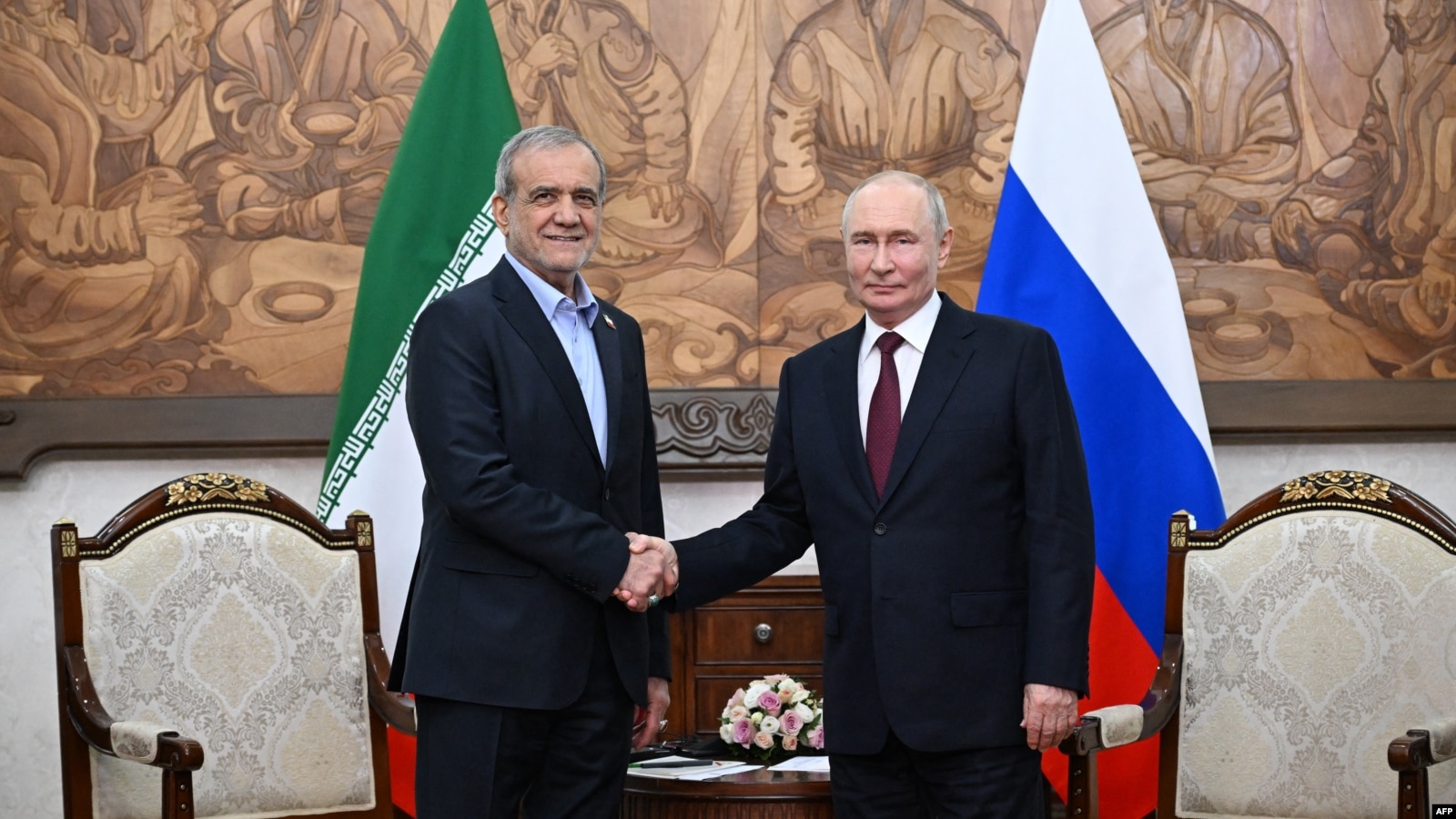
Iranian President Masud Pezeshkian thanked Russian President Vladimir Putin for Moscow’s position on the war in the Middle East, in their first meeting since the conflict broke out in February. Russia has supplied Iran with satellite images and other intelligence, helping Tehran target US facilities in the Persian Gulf in recent months, according to reports. The two allies have also expanded military and economic ties in recent years. “We appreciate and thank you for your positions at every stage, both during the period when the fighting and acts of aggression were taking place and under normal circumstances, when the United States was imposing sanctions on us, both at the United Nations and in international forums,” Pezeshkian told Putin at a meeting on the sidelines of the Shanghai Cooperation Organization (SCO) summit in Kyrgyzstan on September 1. Pezeshkian described Iran’s relationship with Russia as “strategic” and said Tehran and Moscow can work together to resist what he called US “unilateralism.” The meeting came after a new flareup in the six-month war. The United States said it attacked Iranian rocket launchers on a small island in the Strait of Hormuz on August 30, prompting Tehran to retaliate by hitting US military targets in Jordan. Tehran and Washington signed a memorandum of understanding in June aimed at ending the war, but the deal soon unraveled. Since then, Washington has reimposed a naval blockade on Iran and intensified economic pressure on Tehran. Iran has maintained its chokehold on the Strait of Hormuz, a key artery for global oil and gas supplies, and effectively closed the waterway to international maritime traffic. At the SCO summit, Pezeshkian said Tehran remained ready for diplomacy, but only if Washington returned to its obligations under the June agreement. “If the United States returns to its commitments under the aforementioned memorandum of understanding, the Islamic Republic of Iran will immediately reciprocate,” Pezeshkian said. Putin, meanwhile, said Moscow stood in solidarity with the Iranian people in the fight for their interests. The Russian president also said that Moscow and Tehran will maintain their economic and trade ties despite the current military and political environment. “We welcomed the signing of the Iranian-American cease-fire memorandum in June of this year, but unfortunately, the cease-fire proved unstable and too fragile,” Putin said. “In this difficult period, we're trying to provide you with the necessary support, we talked with you about this, we're supplying you with goods that you need.” The Russian delegation in the Kyrgyz capital, Bishkek, included Foreign Minister Sergei Lavrov, Deputy Prime Minister Aleksei Overchuk, and senior officials responsible for energy, transport, economic development, military-technical cooperation, and nuclear energy. Putin has held a series of bilateral talks in Bishkek, including with Chinese leader Xi Jinping, Indian Prime Minister Narendra Modi, and Kazakh President Qasym-Dzhomart Toqaev. He also has meetings scheduled with the leaders of other countries, including Tajikistan, Turkey, Armenia, and Kyrgyzstan on September 1.
WASHINGTON -- Ukraine's top sanctions official has arrived in Washington seeking to keep alive a sweeping sanctions bill that cleared the Senate with overwhelming bipartisan support but now faces a tougher test in the House of Representatives. Vladyslav Vlasiuk, Ukrainian President Volodymyr Zelenskyy's sanctions commissioner, is scheduled to meet lawmakers as Kyiv presses Congress to advance the Lindsey O. Graham Sanctioning Russia and Iran Act of 2026. The legislation passed the Senate on August 7 by an 86-11 vote, reflecting rare bipartisan agreement. Vladyslav Vlasiuk visits the RFE/RL office in Washington on April 15. But the bill has yet to receive a vote in the House, where Democrats have raised concerns about provisions that would give President Donald Trump authority to impose tariffs of up to 100 percent on countries that buy Russian oil and gas or help Moscow evade sanctions. Democratic Leader Hakeem Jeffries of New York said on August 31 that his caucus had not taken a position on the bill. Democrats are concerned the legislation could give Trump additional tariff and sanctions powers that his administration could use too broadly. From Senate Landslide To House Uncertainty The legislation is the product of more than a year of negotiations involving Congress, the White House, and Ukrainian officials. It was championed by the late Republican Senator Lindsey Graham of South Carolina, who reached an agreement with the Trump administration before his death in July. A bipartisan group of senators subsequently carried the measure forward. Far From The Battlefield, Hawaii Pushes Trump On Weapons For Ukraine The Senate version would impose sanctions on Russian officials, oligarchs, and their family members, as well as financial institutions and foreign entities supporting Moscow's war effort. It also targets Russia's so-called shadow fleet, vessels used to transport oil and circumvent Western restrictions. The package extends the Iran Sanctions Act and includes measures targeting Iran's energy and weapons sectors. The White House has backed the legislation, portraying it as another tool Trump could use to increase pressure on Moscow and push Russia toward negotiations. The most contentious provision involves tariffs. Earlier versions of the bill contemplated tariffs as high as 500 percent. The Senate-passed version lowered the maximum to 100 percent and narrowed the measure to major purchasers of Russian oil or gas and countries involved in sanctions evasion. China and India could face some of the greatest exposure because of their purchases of Russian energy. Supporters argue that the provision is intended to give the White House leverage over countries that continue buying Russian energy rather than automatically trigger a sweeping trade war. Critics question how much discretion it would give Trump over when tariffs are imposed or lifted. US House Launches Push For Sweeping Russia, Iran Sanctions Bill After Senate Win Republican Representative Don Bacon of Nebraska is among those urging the House to act despite the disagreements. "The Russian Sanctions bill passed 86-11. The House should vote on this ASAP," Bacon said on August 31. "Some are letting perfection be the enemy of good in the House. Congress must take clear action in support of Ukraine and in opposition to Putin, and do it now." Senator Jeanne Shaheen of New Hampshire, a Democratic supporter of tougher measures against Moscow, called for congressional action on August 31 while criticizing the Trump administration's treatment of a senior Russian official. "As Russia kills civilians in Ukraine, the White House hosts Putin's sanctioned finance minister on US soil," Shaheen said, referring to Russian Finance Minister Anton Siluanov's attendance at a G20 meeting in North Carolina on August 31. "The Trump Admin needs to pressure Putin and his cronies, not offer them a platform. With the House back in DC, it's time to pass Russia sanctions." Ukraine Makes Its Case Vlasiuk's visit comes as Ukraine seeks to keep lawmakers focused on Russia's ability to finance and sustain its war. Kyiv has long argued that Russia's war effort depends heavily on revenue from energy exports and on networks of companies, financial institutions, and intermediaries that help Moscow circumvent sanctions. Ukrainian officials have increasingly urged Western governments to target those networks rather than simply add individual Russian officials to sanctions lists. Russia's Jet-Powered Drones: A Major New Threat To Ukraine Amid Speeding Arms Race Vlasiuk has also worked with European governments to coordinate sanctions against Russian weapons manufacturers and foreign suppliers supporting Russia's defense industry. In August, he told RFE/RL that the Senate vote sent "a strong signal from the American people" that Russia must face a higher price for its aggression and that support for Ukraine remains strong. "We now look forward to the bill's passage by the House and its final approval by Congress," Vlasiuk said. Zelenskyy's Role During his July visit to Washington, Zelenskyy met with senators and urged them to advance the sanctions package after months of congressional uncertainty. His intervention helped produce the 86-11 vote and demonstrated that support for additional pressure on Moscow could still cross party lines. Senator Richard Blumenthal, one of the legislation's Democratic supporters, has argued that the measure could increase the economic cost of Russia's war and strengthen Washington's leverage in negotiations. The Senate rejected an amendment that would have removed the provision concerning duties on countries purchasing Russian-origin crude oil or natural gas or facilitating sanctions evasion. The amendment failed 32-64 before the final bill passed 86-11. 'Shanghai' Grouping At 25: Rifts, Rivalries, And A Show Of Unity That vote underscored the importance supporters place on the tariff mechanism as a way to make the sanctions more effective. Blumenthal has said he offered to have Zelenskyy return to Washington to personally address House members, as he did with senators. As of August 31, however, it was unclear whether such a visit could take place in the coming weeks. The Politics Of Delay The immediate question is whether House leaders can preserve enough of the Senate coalition to bring the bill to the floor. Speaker Mike Johnson has not committed to a vote, and the legislation is competing for attention with funding measures and other priorities as lawmakers return from their summer recess. The House's narrow Republican majority makes bipartisan negotiations especially important. For Ukraine, delay carries risks. Kyiv wants the focus to remain on Russia's war economy: its oil revenue, sanctions-evasion networks, and ability to sustain weapons production. The Senate vote gave Kyiv evidence that bipartisan support for tougher Russia sanctions remains strong. But a prolonged House fight could turn that consensus into a broader argument over Trump's trade powers.
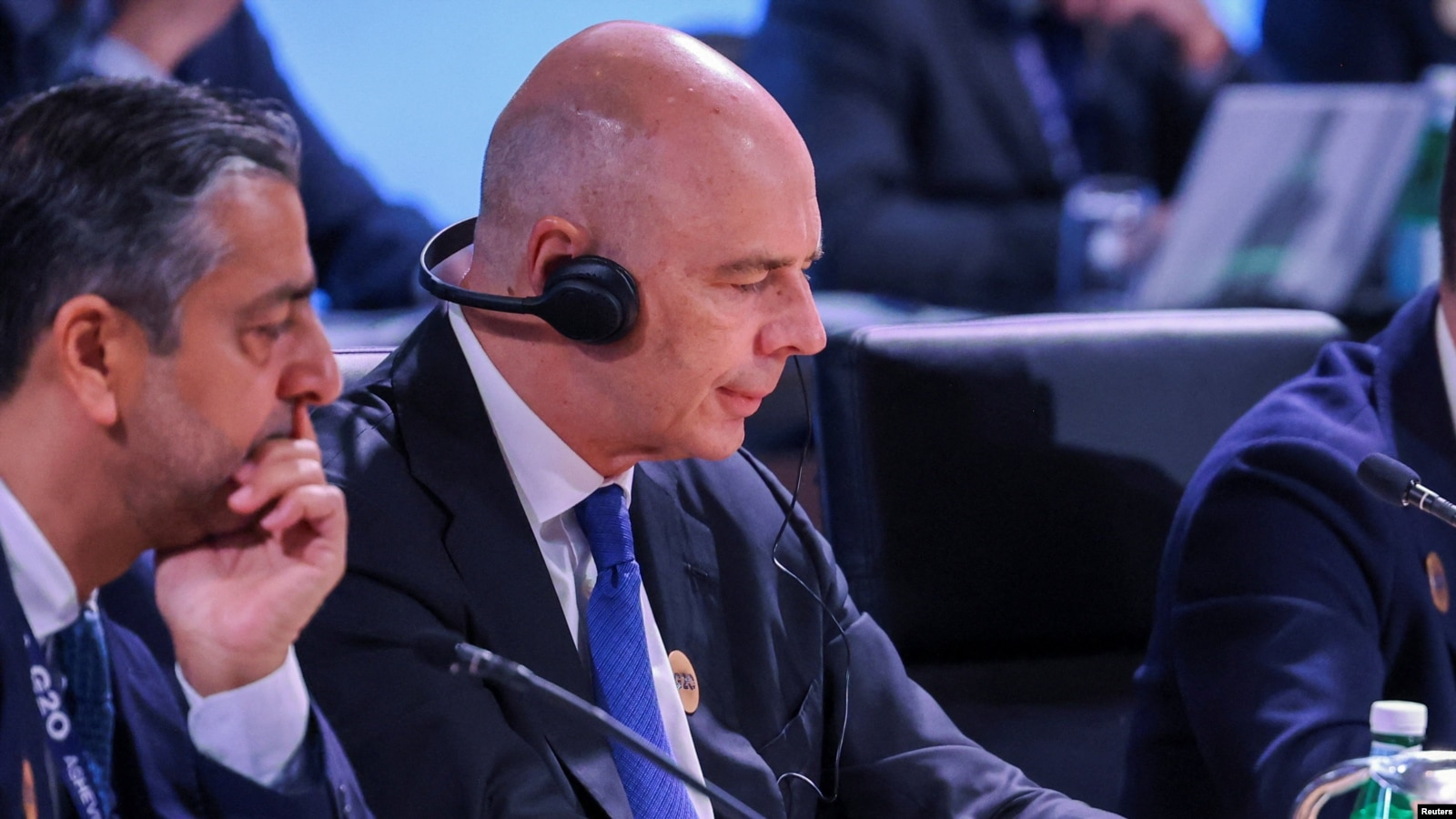
Ukrainian President Volodymyr Zelenskyy said he was briefed by US President Donald Trump's special envoys following their latest trip to Moscow and said the two Americans were working on plans for a follow-up visit to Kyiv in the near future. Meanwhile, while Russian President Vladimir Putin was in Bishkek to attend a regional summit, Finance Minister Anton Siluanov made a surprise visit to a G20 finance meeting in North Carolina, with some participants expressing anger over the appearance of the country's representative while it is at war with Ukraine. While the Ukraine battlefield remained relatively calm throughout the day, diplomatic activity took the spotlight on August 31. 'Shanghai' Grouping At 25: Rifts, Rivalries, And A Show Of Unity Trump has confirmed he will send envoys Steve Witkoff and Jared Kushner to Kyiv in the coming weeks in what will mark their first visit to Ukraine since taking leading roles in the administration's efforts to end Russia's full-scale invasion. Witkoff and Kushner have traveled to Moscow and met with Russian representatives in the US multiple times during Trump's second term, fueling some criticism that the administration has shown favoritism toward Putin and the Kremlin. "We will see what the US president's envoys can accomplish," Zelenskyy wrote on Telegram after holding a "detailed and constructive" call with the two. "September can change a lot, and together with our partners, we must do everything possible to protect people, protect lives, and achieve peace." "There needs to be the right mindset in Moscow -- from Putin, a mindset to end the war, not to keep fighting. For now, unfortunately, all the intel -- both ours and our partners' -- and all the signals from Russia indicate that the Russian leader personally wants more war," Zelenskyy wrote. Not 'Normal' Meanwhile, in Asheville, North Carolina, Russia's Siluanov attended his first G20 gathering since Moscow's full-scale invasion of Ukraine in February 2022 and the country's exclusion from such gatherings. Trump has spoken often about returning Russia to international groupings, such as the Group of 7 (G7) industrialized nations in the face of vehement opposition from most other member states. US officials host G20 finance ministers and central bank governors in North Carolina on August 31. The G20 comprises 19 countries and the European Union, and accounts for around 85 percent of the world's economy and two-thirds of its population. German Finance Minister Lars Klingbeil said the situation with Russia was not "normal" and expressed frustration that there was no forewarning of Siluanov's participation. "People are dying every day. We have just seen another escalation in the [Russian] attacks," Klingbeil said. "You cannot simply return to normality." “I find the signal sent by receiving the Russian finance minister here quite troubling," Klingbeil told reporters in Asheville. "I would have wanted greater clarity from the American side that he should not be received here as a normal guest." Officials from European countries told Reuters that European ministers and central bankers opposed appearing in the normal "family photo" of participants. It was then decided to take the photograph without Siluanov's involvement. At a meeting of G20 finance ministers in 2022 that Siluanov attended remotely, the United States under then-President Joe Biden led a multinational group in a walkout as Russian officials spoke. Asked about Siluanov's attendance this time, White House spokesman Kush Desai told AFP that the US administration has been working with Moscow to push for a deal that "would stop the endless bloodshed that the president has really condemned." Trump Dismisses Fears Of Russian Strike On NATO: 'I Am Not Concerned' "The president and the administration will never shy away from talking with the folks we need to talk to, to further that," he said. "That's what we're working on here at the G20." Russia’s Finance Ministry said Siluanov and US Treasury Secretary Scott Bessent held bilateral talks to discuss Russia-US cooperation on financial issues and interaction within the framework of the G20. A US official told AFP that the Treasury chief advocated for Trump's peace plan for Ukraine during the face-to-face meeting. With reporting by AFP and Reuters
A Finnish court has convicted a Russian former far-right militia member of committing war crimes against Ukrainian prisoners of war in the Donbas region in 2014. The Helsinki court sentenced Voislav Torden, also known as Yan Petrovsky, to life in the unusual case.
A Finnish appeals court has overturned portions of a guilty verdict against a Russian-born man convicted of war crimes in Ukraine, reducing his life sentence to 12 1/2 years behind bars. Voislav Torden, a 39-year-old Russian ultranationalist previously known as Yan Petrovsky, was convicted in Helsinki in March 2025 after being linked to the deaths in 2014 of 22 Ukrainian soldiers and the injury of four others. The appeals court on August 31 overturned Torden's convictions for shooting a wounded Ukrainian soldier and for mutilation, leading to the lower sentence. Helsinki Court Convicts Russian Of War Crimes In Ukraine During 2014 The court did reaffirm his guilt for an ambush in which attackers used a Ukrainian flag to deceive Ukrainian troops before opening fire. "The Court of Appeal finds that Torden is, in count one, liable for the deaths of the 22 Ukrainian soldiers referred to in the indictment and for severely wounding four soldiers," the verdict read. Torden's lawyer, Heikki Lampela, told Reuters that Torden denied all charges and intends to appeal the guilty verdict on the first count to Finland's Supreme Court. Torden was detained in Finland at Ukraine's request in 2023 as he tried to travel to France. The Finnish Supreme Court later blocked his extradition to Ukraine, citing concerns over conditions in Ukrainian prisons and the potential for Torden to face humiliation in custody. Torden, a former commander of the Rusich sabotage group, was fighting against Ukrainian forces in Ukraine's eastern Donetsk and Luhansk regions in 2014, years before Russia's full-scale invasion of February 2022. With reporting by Reuters