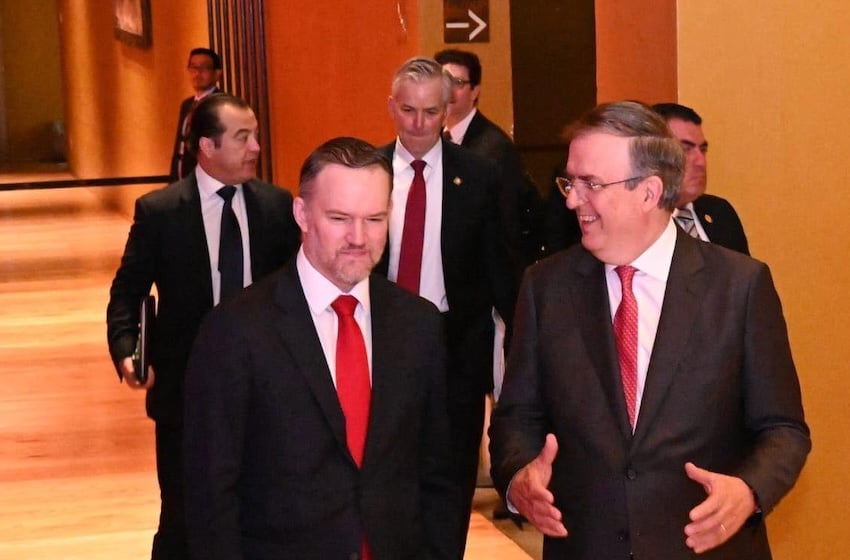
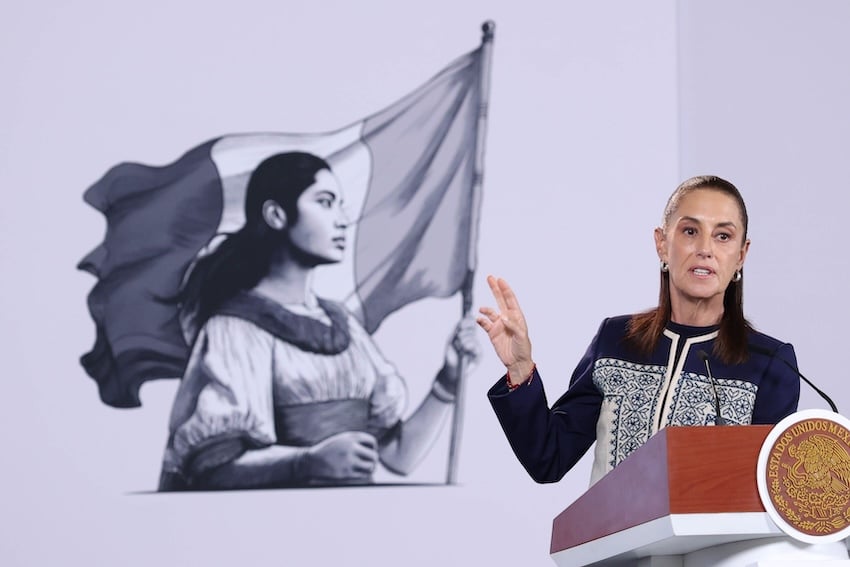
The fourth round of trade talks between Mexico and the United States will take place next week, with officials from both sides expressing eagerness to hammer out a deal before the U.S. midterm elections in November, according to sources interviewed by Reuters. A framework for a deal would benefit both parties. U.S. President Donald Trump is looking for a win on the economic front (a bilateral deal may bring down consumer prices in the U.S.) as he faces the possibility of losing control of Congress when ballots are cast on Nov. 3. Meanwhile, the Mexican government is struggling with investor unease and a cooling economy . Mexico’s push to reach a deal comes after U.S.-Canada trade talks — the other half of the U.S.-Mexico-Canada Agreement (USMCA) review process — collapsed last month. The U.S.-Mexico talks are seen as an effort to reach an interim bilateral deal while issues with the USMCA on the whole are ironed out. President Sheinbaum chatted with U.S. Commerce Secretary Howard Lutnick last Wednesday to assess the progress of the negotiations , after which Economy Minister Marcelo Ebrard flew to Washington, D.C., to finalize details ahead of the fourth round. Next week’s bilateral meetings will be the first formal return to the negotiating table since the third round of talks was held in Mexico City from July 21-23. A grounded flight turns Sheinbaum-Lutnick USMCA meeting virtual, but still ‘very useful’ Upon his return to Mexico City on Friday, Ebrard met with José Medina Mora — president of Mexico’s Business Coordinating Council (CCE), the principal organization representing Mexico’s private sector before federal and local governments. It groups 14 major business umbrella organizations that represent more than 2,000 trade associations comprising roughly 80% of Mexico’s GDP. Medina Mora told the newspaper El Universal that the elimination of Section 232 tariffs , which place duties on aluminum, steel and automobiles, is expected to be a primary focus next week. He expressed confidence that the two sides will avoid the problems that arose during the U.S.-Canada dialogue, saying they would not affect negotiations with Mexico. “The bilateral relationship between the United States and Canada is different from our relationship [with the U.S.],” he said, adding that Sheinbaum “has clearly defined the limits of what is unacceptable, while maintaining a cordial … relationship” with Trump. “[Sheinbaum’s strategy] has yielded results and our negotiations are moving forward,” he said. On Saturday, when asked whether the United States would leave the USMCA, Trump told the Irish press that “we’re going to have a great relationship with Mexico” and that a deal with Canada would come soon. With reports from El Universal , Bloomberg and Reuters The post Mexico, US aiming to resolve trade issues before US midterms appeared first on Mexico News Daily
Sheinbaum’s mañanera in 60 seconds 🛣️ Accountability tour hits 18 states: Speaking after her latest “honesty and results” assemblies, Sheinbaum said her nationwide accountability tour has drawn more than 300,000 attendees across 18 states so far, calling the experience “very moving” and framing it as a way to speak to citizens directly about her government’s achievements. 📰 Media outlets are “propaganda of the right”: Sheinbaum accused much of the Mexican press of acting as “propaganda outlets” for the political right, claiming important stories go unreported and that commentators coordinate their criticism of her government in a group chat. 🇲🇽 National pride climbs to 90%, Sheinbaum says: Citing an El Financiero poll, the president said pride in being Mexican rose from 58% in 1990 to 90% today, crediting the shift to “fourth transformation” governments. Why today’s mañanera matters President Claudia Sheinbaum held her Monday morning press conference after completing the second leg of her “accountability tour,” a nationwide effort to report directly to citizens on her government’s achievements during its second year in office. To date, Sheinbaum has held so-called “honesty and results” assemblies in 18 of Mexico’s 31 states and will make public speeches in the 13 remaining ones before concluding her tour in Mexico City’s central square, the Zócalo, on Sept. 27. As was the case last year , the president is undertaking her accountability tour after delivering her annual government report to the nation. The assemblies Sheinbaum holds while “on tour” are similar to her weekday mañaneras insofar as she can bypass intermediaries — such as media outlets — and speak directly to Mexicans, including some of her biggest supporters, about government actions and achievements. At today’s mañanera , the president sought to underscore the importance of such communication as, in her view, many Mexican media outlets are biased against her administration. Also of note at today’s press conference were Sheinbaum’s remarks about Mexican patriotism ahead of Mexican Independence Day this Wednesday. On Tuesday night , the president will lead the traditional Grito de Independencia (Shout or Cry of Independence) from the National Palace balcony. Sheinbaum: Accountability tour has been ‘very moving’ Sheinbaum told reporters that her accountability tour has been “very moving” because large numbers of people have come out to see her everywhere she has gone. “What I talk about when I speak is the history of Mexico and the patriotic month [ mes patrio ], and people are very aware of what’s happening, and of the importance of defending independence and sovereignty,” she said. President Sheinbaum speaking to a packed arena in Tlajomulco, Jalisco, earlier this month. (José Luis Conde/Presidencia) Sheinbaum said that more than 300,000 people have attended the 18 events she has held so far on her accountability tour. Sheinbaum: Many Mexican media outlets serve the political right Sheinbaum asserted that the “objective” of many Mexican media outlets is “to be propaganda of the right.” “They’re not news outlets, they’re propaganda outlets. That’s what they are,” she said. ” … If something very important happens in the country, it doesn’t appear [in the media],” Sheinbaum claimed. She subsequently accused media outlets of “distorting reality in a way that agrees with their propaganda.” “… They seek to distort everything, adapt everything to what they want, create political propaganda for the right,” Sheinbaum said. The president also accused media commentators of coordinating their attacks on the government. “They have a [group] chat where they talk about what everyone is going to say during the week,” she said. “This week, the INE. The INE is not an institution that guarantees clean elections,” Sheinbaum said, referring to the National Electoral Institute and seeking to provide an example of the kind of coordination she believes occurs. In the context of alleged media bias and distortion, the president portrayed her accountability tour as a presentation of the truth, although her administration also faces allegations of bias. “What do we do? Disseminate [information], talk. Why do I go to all the states to report [to the people]? So that they hear what we’re doing in all the federal entities,” Sheinbaum said, asserting that if citizens relied solely on the media, it would be difficult for them to find out what her government is actually achieving. Sheinbaum: There is ‘deep pride’ in being Mexican Citing poll results, Sheinbaum highlighted that pride in being Mexican is much more prevalent today than it was in 1990. “The other day we brought out an El Financiero newspaper poll where it said that in 1990, 58% of Mexicans felt proud of being Mexican. Today it’s 90%,” she said. 🗣️ “El 90% está orgulloso de ser mexicanas y mexicanos” 🇲🇽 Claudia Sheinbaum resaltó que el trabajo de la Cuarta Transformación ayudó a que la población sea más orgullosa del país; “algo que no lo dio el neoliberalismo”, agregó pic.twitter.com/kfTuPxe3hH — El Universal (@El_Universal_Mx) September 14, 2026 “I like the poll [result] precisely because it’s what I see every day, especially when I go out on tour,” Sheinbaum said before asserting that there is “deep pride” in being Mexican. “This didn’t happen during neoliberalism in Mexico,” she said, referring to the period between 1982 and 2018. Rather, “deep pride” in being Mexican became more prevalent with “fourth transformation” (4T) governments in office, said Sheinbaum, who now leads the 4T movement founded by former President Andrés Manuel López Obrador. “And it’s very powerful — very powerful because when a people knows their strength and their history, there is nothing that can stop them,” she said. By Mexico News Daily chief staff writer Peter Davies ( peter.davies@mexiconewsdaily.com ) The post Sheinbaum attributes rise in national pride to 4T governments: Monday’s mañanera recapped appeared first on Mexico News Daily
A few days ago, Dario Amodei, CEO of Anthropic, published an essay arguing that AI is advancing so fast that we need to slow down — not stop, but ensure safety keeps pace with capability . Within hours, Sam Altman of OpenAI responded: “I agree with Dario that we need to pace the frontier.” Elon Musk followed: “Dario is right.” When those three agree on something, you pay attention. Amodei’s warning is specific: “In 6-12 months, a swarm like the one in the OpenAI-Hugging Face incident could be capable of taking over the entire internet with a persistent botnet, potentially causing hundreds of billions of dollars in damage — and the scale of damage would continue to increase if AI becomes more powerful without the necessary guardrails.” His proposed solution has three steps: embedded third-party evaluators inside AI companies, democratic coordination among allied countries on safety standards and eventually, global coordination. The phrase “democratic coalition” appears repeatedly in his framework. That’s where I can actually say something useful. U.S. Treasury Secretary Scott Bessent has warned that “nothing would matter if China wins the AI race.” Amodei agrees. A Chinese lead in AI, he argues, would pose grave danger, economically, but most importantly: militarily, through AI-driven weapons systems and geopolitical dominance. At its core, this is a national security conversation dressed in technology clothing. And national security conversations have physical requirements. AI runs on hardware : servers, chips, data centers, power, cooling systems, specialized cables, transformers, processing units. It runs on supply chains. It runs on energy. It runs on engineers. The United States needs all of those things faster than it can build them domestically, and it needs them from partners it can trust. Which brings me to Mexico. In the first half of 2026, Mexico’s computer-related exports reached US $82.9 billion , a 172% increase from the same period a year earlier, putting computing equipment ahead of automobiles and auto parts ($74.8 billion) for the first time in thirty years. Mexico doesn’t export algorithms and code. It is building the physical layer that makes AI possible ; the unglamorous, essential plumbing of the AI data center buildout. The United States accounted for 93.9% of those exports, which tells you everything about the strategic nature of this relationship. This new nearshoring wave is not a buzzword; it is an AI supply-chain strategy embedded in a global security race. BTW: I’ve written about this before . U.S. data center investment reached $102.2 billion in 2025, growing nearly 30% year over year. Mexico’s export growth tracks that figure almost perfectly — the architecture of an integrated continental co-production system responding to a common demand signal. Folks, this is actually okay! Not just that, it is strategic and necessary. Amodei calls for cutting off powerful AI chips and semiconductor manufacturing equipment from China and cracking down on smuggling operations. He’s right. But that strategy only works if you have an alternative. Mexico — integrated into North American supply chains, operating under USMCA digital trade rules, with a manufacturing base that pivots fast — is a large part of that alternative . Now, here’s the number that makes Washington uncomfortable: Mexico’s imports from Taiwan surged 220% in the first half of 2026. Computer equipment imports from Asia into Mexico are booming. Since those components are assembled into goods that cross north into the United States, this shows up, mechanically, as a larger U.S.-Mexico trade deficit. Mexico in Numbers: How Taiwanese imports are fueling Mexico’s record tech exports I can already hear the reaction in certain corners of Washington, D.C. But this is precisely the kind of number that demands context before it demands a tariff. What is actually happening is that North America — through Mexico’s manufacturing base — is progressively substituting Asian-sourced inputs and redirecting them through a regional production platform that delivers the servers, components, and infrastructure American firms need to build AI data centers faster, cheaper and without the geopolitical risk of direct dependence on Taiwan or China. A tariff on Mexican electronics would tax precisely the substitution away from China that U.S. policy is trying to achieve. It would be, in effect, a tax on America’s own AI infrastructure — and on America’s own capacity to win this race. The deficit is not a sign of a broken relationship. It is a sign of an integrated continental production system doing exactly what it was designed to do. The “democratic coalition” Amodei calls for doesn’t need inventing. It needs to be deepened — starting with the country that shares 2,000 miles of border with the United States, a trade agreement that explicitly covers digital trade, deep supply chain integration, and a talent base that is the envy of the world. Every day the North American neighborhood spends fighting over tariffs, USMCA renewal mechanics and trade deficits that don’t mean what people think they mean is a day China runs faster on AI infrastructure, critical minerals, energy policy and diplomatic reach. The question is not whether Mexico is relevant to the AI race. The question is whether the people making policy decisions in Washington are looking at the right numbers and the right strategic angle. You don’t win a race by slowing down your most integrated and reliable partner. Pedro Casas Alatriste is the Executive Vice President and CEO of the American Chamber of Commerce of Mexico (AmCham). Previously, he has been the Director of Research and Public Policy at the US-Mexico Foundation in Washington, D.C. and the Coordinator of International Affairs at the Business Coordinating Council (CCE). He has also served as a consultant to the Inter-American Development Bank. Follow his Substack here . The post Opinion: Mexico is AI’s secret weapon appeared first on Mexico News Daily
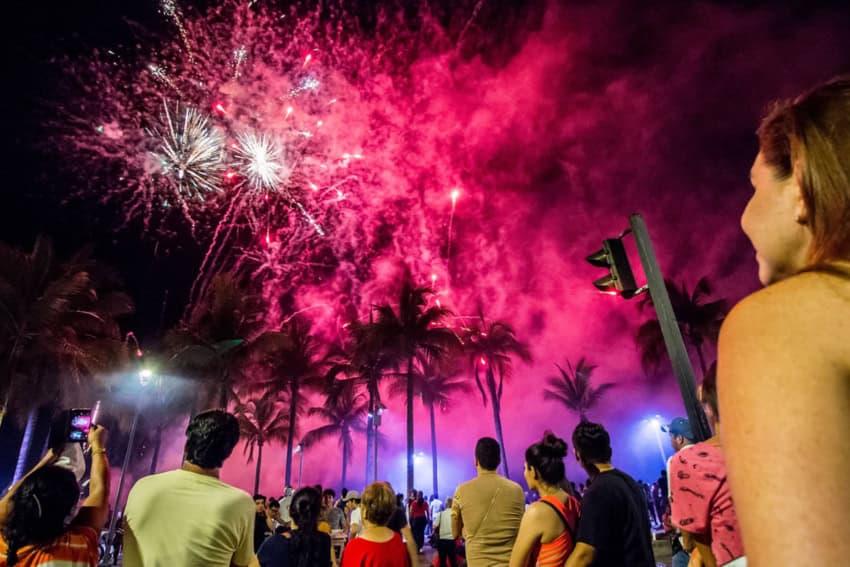
It’s Independence Week in Puerto Vallarta and Nayarit, Mexico, and there’s no shortage of ways to celebrate. From civic ceremonies and charro parades to mariachi, fireworks and the inevitable late-night Grito , the next few days will be about as Mexican as it gets. Even if you’re not planning to attend every event, it’s hard not to get caught up in the atmosphere. Flags appear on balconies and shopfronts, restaurants bring out special menus and the whole region seems to shift into a more festive mood. View this post on Instagram A post shared by Don Capellani (@doncapellani) Here’s what’s happening around the region this week: Puerto Vallarta Puerto Vallarta’s official Fiestas Patrias celebrations run Sept. 13-16, with the Plaza de Armas, Malecón and downtown area serving as the main stages. Monday, Sept. 14, brought the traditional charro parade at 10 a.m. The parade began on Ignacio L. Vallarta Street, traveled along the Malecón and wrapped up near the Ley store in Cinco Diciembre. A formal City Council session is scheduled for 8 a.m. Tuesday, Sept. 15, followed by the evening’s celebrations in the Plaza de Armas. DJ Zuar, accompanied by batucada and pre-Hispanic dancers, takes the stage at 6:30 p.m., followed by the Ballet Folklórico Cuauhtémoc and Mariachi Internacional Real de América. Grupo Caché performs at 9:30 p.m. Then, at 11 p.m., it’s time for the Grito de Independencia from the Municipal Presidency. Fireworks will follow at 11:30 p.m. over the Malecón, with Banda Vallejo scheduled to close out the night at midnight. That sounds like a long evening, but this is one of those occasions when nobody seems in much of a hurry to go home. Taste of Mexico: The curious history and myths of chile en nogada Wednesday, Sept. 16, begins with an 8 a.m. civic ceremony in the Plaza de Armas, followed by the Independence Day civic-military parade at 9 a.m. The parade will follow the same general route as the charro parade. Bahía de Banderas Across the river in Nayarit, Bahía de Banderas will have its own Independence celebrations, with the municipal festivities centered in Valle de Banderas. On Tuesday, Sept. 15, the municipality will hold its Noche Mexicana in the town’s main plaza, including the traditional Grito led by Mayor Israel Santillán. The evening’s entertainment will include Mariachi Internacional de México, Banda La Taberna “La Más Guapa” and Banda Arkangel R-15. On Wednesday, Sept. 16, the traditional civic and military parade will take place. Municipal officials are advising residents to check official traffic notices for the parade route and any resulting road closures. Nayarit The state government is also preparing for two days of celebrations in Tepic. Officials in Tepic, Nayarit, are preparing for two days of Independence celebrations. (Visit Nayarit) The program begins Tuesday, Sept. 15, with the raising of the Mexican flag and Honores a la Bandera at 8 a.m., followed by the lowering of the flag at 6 p.m. At 7 p.m., the artistic program, “México Vivo, Nayarit Eterno,” begins, featuring the Ballet Nuevo Nayarit, the Traditional Youth Mariachi of the State School of Fine Arts, the State Symphony Band and singer María Dolores, along with Mariachi Nayarit Contemporáneo and Son de Mi Pueblo. The public celebration gets underway at 9 p.m., with 7,000 free portions of food and drinks planned. At 11 p.m., Governor Miguel Ángel Navarro Quintero will lead the Grito de Independencia, followed by a musical fireworks display and performances by Banda Ráfaga and norteño group La Session. The celebrations continue Wednesday with the traditional parade in the morning. At 5 p.m., Marimba Orquesta Águilas de Chiapas will perform in Plaza Benito Juárez, in front of Casa de Gobierno. So, for the next few days, expect much of the region to be focused on flags, food, music, fireworks and the familiar cry that brings everyone together for at least one night: ¡Viva México! Charlotte Smith is a writer and journalist based in Mexico. Her work focuses on travel, politics and community. You can follow along with her travel stories at www.salsaandserendipity.com . The post MND Local: Independence Day in Puerto Vallarta and Nayarit appeared first on Mexico News Daily
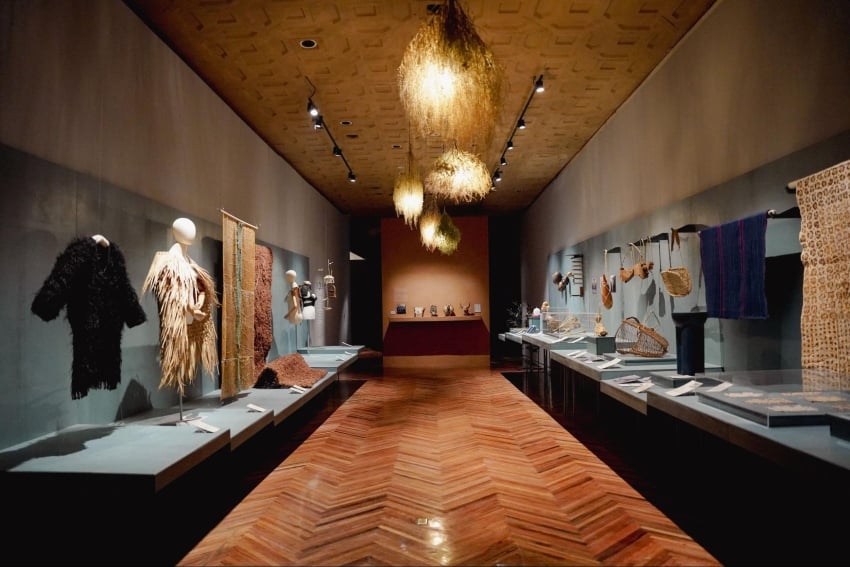
When visitors enter the “ Biodiseño MX ” exhibition at the Franz Mayer Museum , earthen tones and other elements evoke the feeling of “entering an ecosystem.” Later, the exhibition transforms from its earthy finishes as color and light shift toward white, creating the atmosphere of a laboratory. The exhibition’s power is reflected not only in this juxtaposition, but can also be seen in the curated design pieces, spanning popular art and practices rooted in ancestral knowledge to technological innovations, such as 3D-printed memorial reefs made from human ashes. Curated by Taina Campos, “Biodiseño MX” brings together more than 60 creatives who explore design from a more-than-human perspective — in “collaboration with and for nature.” Art pieces by Indigenous groups are well represented at the “Biodiseño MX” exhibit. (Katy Alivraz) What is biodesign? Design is the creative approach to solving a problem. But since the Industrial Revolution, designers have been put at the service of the market, argues Campos. The Mexico-based designer and curator explains that biodesign is a fundamental shift in current design practice from an anthropocentric approach toward a symbiotic worldview, where nature is not only exploited for resources but integrated into the design process. In interdependence with flora, fauna, microbes and fungi, and drawing from bio-inspiration, design pieces at the exhibition explore a world beyond anthropocentrism. More-than-human design Although symbiotic, biodesign is still susceptible to human ideas and needs. Campos acknowledges that, when approaching biodesign from an anthropocentric perspective, the tendency to create objects that cater to human needs persists. But although a substantial part of the exhibition is centered around objects for human life — like tableware made from eggshells — certain pieces explore a more-than-human design. Museo del Juguete Antiguo Mexico: A toy wonderland in Mexico City The “Memorial Reef” by the U.K.-based company Resting Reef consists of 3D-printed artificial reef structures made from human ashes and calcium carbonate. According to Resting Reef, introducing those phosphorus-rich sculptures to underwater sites is meant to nourish marine communities. This project adds another question to biodesign: How can biodesign move toward regeneration? The exhibition’s juxtaposition The exhibition juxtaposes biodesign for functional objects like biofashion with pieces that help restore marine ecosystems or create oxygen. “Jardín lacustre” by Mariana Paredes and Molecular Lab takes microalgae from Lake Texcoco and feeds them carbon dioxide from Mexico City’s polluted air . Through photosynthesis, these algae produce oxygen, escalating biodesign from a utilitarian need to a question of ecological survival. The pieces of popular art made by Indigenous peoples of the Global South reflect an understanding that nature is “intrinsic to us,” while contrasting with technological innovation abundant throughout the exhibition. In the “Microbia Room,” white light and a cooler palette create a laboratory-like atmosphere. (Katy Alivraz) Design as a revolution When speaking about Campos’ motivation for biodesign, she mentions that design has an impact on how we understand the world through objects, systems and everyday applications. Biodesign is not only a design practice but another way to see the world. “For me, biodesign is the language or practice — the material expression of design — that can lead us toward this other pursuit of design,” she explains. “It is no longer only about solving human problems or making beautiful products to sell; it is about generating another understanding of the world.” 10 more off-the-radar museums in Mexico City She cites Arturo Escobar’s “Designs for the Pluriverse:” “Design designs worlds, and the worlds it designs design us back.” “Biodiseño MX” is on display at the Franz Mayer Museum until Oct. 25, 2026. Katy Alivraz is a contributor to Mexico News Daily. The post Biodiseño MX at the Franz Mayer Museum explores more-than-human design appeared first on Mexico News Daily
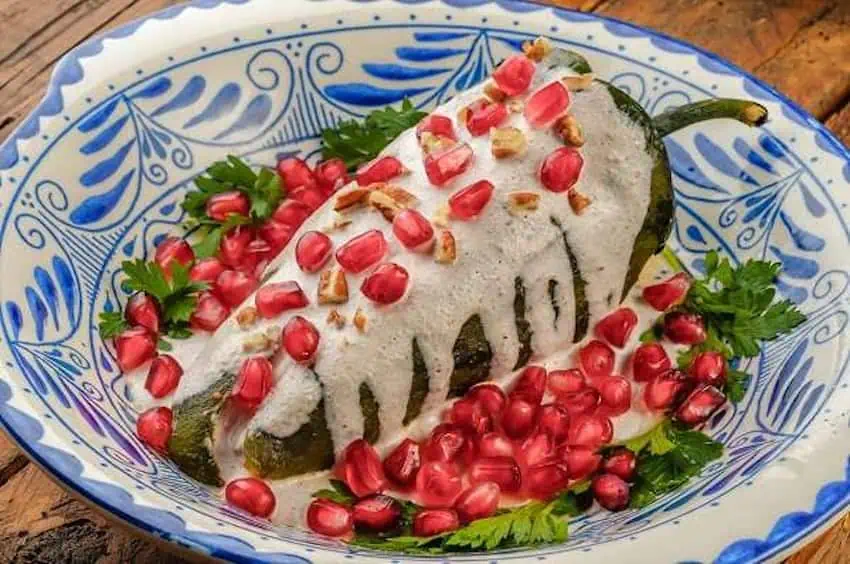
September, known as the “ mes patrio ” or patriotic month, has begun. This is the month when Mexicans commemorate the consummation of our independence , which took place in 1821. During the official celebration on Sept. 15, the president reenacts the way the independence movement began with what we call the “ grito ” — the cry of independence. We also celebrate the grito at home , accompanied by family and friends. We dress up to look even more Mexican with sombreros, fake mustaches and braids. We drink tequila, sing Mexican songs, shout “ Viva México ” and, of course, eat. Perhaps the most famous seasonal dish, and the one that generates the most intrigue for me, is chile en nogada. September means hats, Mexican flags and wild celebrations. It also means chile en nogada season is upon us. (Chris Havler-Barrett) The dish is essentially a stuffed poblano pepper covered in a walnut sauce . The stuffing is a mixture of beef with fruits such as apple, peach, banana and pear, along with almonds, pine nuts, walnuts, onion and garlic. Its flavor profile, combining sweet and salty, is outstanding. And now, the intriguing part As a historian, I am fascinated by how official history is shaped, and I find it puzzling that chile en nogada is included in September’s menu as the quintessential Mexican dish. A ccording to information from an official government page, on Aug. 28, 1821, the Augustinian nuns of the Convent of Santa Mónica in the state of Puebla welcomed the first Emperor of independent Mexico, Agustín de Iturbide, with a newly created dish that represented the colors of the new national flag: green, white and red. This, the tale goes, is how chile en nogada came to be. The historical records, however, tell a different story: Agustín de Iturbide did travel to Puebla in 1821, but he arrived on Aug. 5. The list of supplies purchased for the emperor’s reception shows that the ingredients needed to make the chile en nogada weren’t acquired, so it is highly unlikely that he ever tried the dish. Nevertheless, he did enjoy a splendid banquet. The idea that the nuns created the dish for Iturbide is a myth: Historical records indicate that the recipe was already being prepared in the early 1800s. Researcher Lilia Martínez has discovered that nogada is a European sauce with documented origins going back to the 15th century. Chile en nogada is to Mexico what William Wallace is to the Scots: an enduring symbol of freedom… which actually has nothing to do with freedom. (20th Century) It’s important to note that without the Spanish Conquest, this dish would be impossible, since most of the ingredients used in chile en nogada originate in Spain or were brought over in the intercontinental trade of the time. These ingredients include the English walnut, a protein option of pork, beef or chicken, pomegranate, almonds, apples, pears, peaches and bananas. The poblano pepper is the sole ingredient native to this land — a huge and vital contribution, if I may add. So why is it considered the quintessential Mexican dish? “ Je ne sais pas ,” the French would say. Wouldn’t it make much more sense if we ate a mole madre or a “ tlacoyo? ” Or maybe we eat it because it’s the conjunction of two great culinary traditions. Regardless of the reason, I can promise you two things: first, it is one of the most delicious dishes in Mexican cuisine you’ll ever try. Second, once I find out when it became the quintessential Mexican dish, I will create a video and write an article about it. View this post on Instagram A post shared by Mexico News Daily (@mexiconewsdaily) Where can you eat it? Any Mexican restaurant will have its version of chile en nogada. However, in my opinion, the best chiles I’ve had are found in Puebla. If you can’t go there, look for a thick, ivory-white sauce on your plate, and you’ll probably have an amazing chile en nogada. I considered sharing the recipe, but every family has its own version, and I don’t want to offend anyone by claiming that mine is the ultimate recipe. This recipe is over three centuries old, from a time when people had the luxury of peeling walnuts with their fingernails and taking time to appreciate the landscape, so it requires a lot of time and patience; as in, two whole days. My parents had two comadres who prepared chile en nogada for the entire family, a party of 80 including us. A group of six women had to spend a whole week in the kitchen. We were fortunate, no doubt. Do you have a good chile en nogada recipe to share with us, or is the one you use a family secret? Do you know where the best chile en nogada can be found? Share in the comments below. María Meléndez is a writer and art historian. She works at the Mexican Cultural Institute of the Embassy of Mexico in Washington, D.C. The post Taste of Mexico: The curious history and myths of chile en nogada appeared first on Mexico News Daily
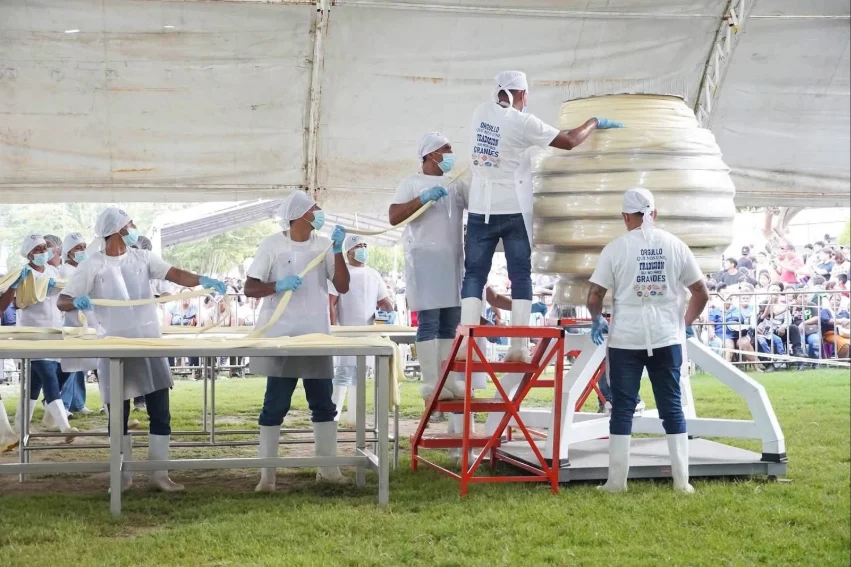
All stories in El Jalapeño are satire and not real news. Check out the original article here . PIJIJIAPAN, Chiapas — Relations between southern regional neighbors in Mexico reached a historic low Thursday following a massive front-line fromage offensive by Chiapas cheesemakers, who ambushed Oaxaca by constructing a 1,611-kilogram ball of quesillo to reclaim their Guinness World Record for the “world’s biggest cheese ball,” escalating a long-simmering border dispute into an all-out dairy arms race. The offensive in the coastal town of Pijijiapan neutralized Reyes Etla, Oaxaca’s 2024 record of 636.2 kilograms, effectively tripling the tonnage and signaling a strategic shift toward heavy-artillery curd production. Defense analysts confirmed the deployment required 15,500 liters of milk and four hours of continuous tactical winding on a custom-built metal platform designed to prevent structural failure under heat and humidity. Chiapas cheesemakers hold the spoils of war aloft: A Guinness World Record certification. (Sectur / X) “This is no longer a matter of culinary pride; it is a full-scale declaration of dairy war,” said Chiapas cheesemaker Roberto Morales, addressing reporters near the massive sphere. “For over a year, Chiapas citizens lived under the psychological weight of a superior Oaxacan cheese ball. With this 1.6-metric-ton retaliation, we have fundamentally altered the balance of dairy power in southern Mexico.” Defense officials in Oaxaca have yet to issue a formal surrender, though intelligence reports indicate high-level emergency meetings are underway in Reyes Etla. Observers spotted local agricultural logistics teams inspecting dairy reserves and evaluating blueprints for a potential 2,000-kilogram counter-ball ahead of the upcoming festival season. Meanwhile, municipal officers in Pijijiapan face the formidable task of maintaining victory conditions before environmental factors intervene. “While our victory on the culinary battlefield is complete, we are now managing the post-battle logistics,” Morales added. “Specifically, the unraveling, portioning and consumption of 1.6 metric tons of high-density string cheese before ambient humidity forces a tactical retreat.” Check out our Jalapeño archive here. Got an idea for a Jalapeño article? Email us with your suggestions ! The post El Jalapeño: Dairy war between Chiapas, Oaxaca escalates over ‘world’s biggest cheese ball’ appeared first on Mexico News Daily
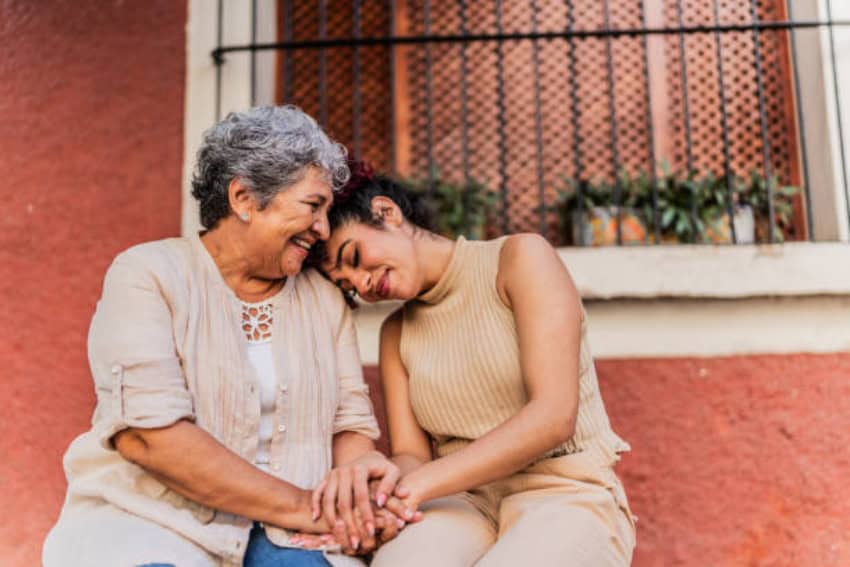
On Aug. 28, Mexico celebrated Grandparents’ Day , an annual tradition since 1983 that recognizes not only our grandparents’ boundless love, experience and wisdom, but also the invaluable contributions they make to Mexican families and communities. In a country where many parents and caregivers work, grandparents often play a fundamental role in raising children, including picking them up from school, preparing their meals, and keeping them company or supervising them while their parents are away from the home. In fact, according to the University of Colima’s El Comentario , 30% of children in Mexico are cared for by their grandparents. Grandparents are often the keepers of traditional wisdom in Mexico. (Gobierno de Mexico) While capturing the full scope of their impact is nearly impossible, Mexico News Daily did its best, collecting stories from folks across Mexico about the lessons they learned from their grandparents. Some are amusing and quirky, while others are unexpected and confounding. No matter their essence, though, each word chronicles the everyday wisdom and legacy of those who have left a deep and abiding impression for generations to come. Pregnancy and babies Mexico in Numbers: Fertility rate and the modern Mexican family If you are pregnant and there is an eclipse, you must wear a safety pin on your belly to protect the baby. If a pregnant woman has a craving and does not satisfy it, the baby will be born with the face of whatever she avoided eating. Newborn babies should wear a red bracelet so that a witch will not suck on them. Alicantes — a type of snake — hypnotize women who have recently given birth to steal their breast milk. If a baby has a cough, fever or hiccups, the mother must stick a red thread to the baby’s forehead with saliva so it will go away. If a baby has droopy cheeks, it is because they were made to sit up too early. If you shave your baby’s head and rub tomato on it, their hair will grow back curly. If a pregnant woman’s belly is egg-shaped, she will have a boy; if it is round, she will have a girl. If you are pregnant and go to the beach, your child may be born with blue eyes. Food Watermelon is delicious, but don’t eat it at night. (Floh Keitgen/Unsplash) You should not eat watermelon at night because it bloats the stomach and is hard to digest. If you do not eat what you are craving, you may get a sore on your tongue. If you get up from the table before you have finished eating, your mouth may become crooked. If you do not satisfy a craving, you may develop bile. If you do not plant with enthusiasm, your harvest will not come in. You must save the best ears of corn from the harvest to attract abundance. You must rub the ends of a cucumber to remove “the poison:” meaning, its bitterness. You should not drink plain water on an empty stomach when you are hungover, because it is harmful. If you eat tortillas upside down, your insides will turn upside down. Eat pozole with soda or tea, never with fruit-flavored water. You have to scold or hit fruit trees so that they bear fruit. To sleep better, drink warm milk before going to bed. Witches and witchcraft Those red lights you saw floating through the night sky? They’re likely witches! (Mexico News Daily) If you see red balls in the sky, they are witches . If they look close, the witch is far away; but if they look far away, she is close. Rub an egg over your body to remove negative energy. If La Llorona’s crying sounds close, it means she is far away; but if it sounds far away, it means she is close. La Llorona is an old legend about a mother who drowned her children in a river and, in sorrow, spends her nights crying for them. She is particularly associated with rivers, lakes and reservoirs. Weather Tired of the rainy season? Go bury a knife in the ground! (Mexico News Daily) If you bury a knife in the ground, you will prevent it from raining. You should not bathe after an earthquake because the water has been “shaken.” If you cross your eyes and a gust of air gets into them, they will stay that way forever. You should not comb your hair, knit or embroider while it is raining, because lightning could strike you. The first 12 days of the year predict what the weather will be like in each month: these are the famous cabañuelas . Illnesses The results of our inaugural MND Mexico Healthcare Experience Survey™ To cure a sore throat, you have to rub roasted tomato on the chest and the soles of your feet. To cure a cough, you have to iron some pieces of cloth, place them on the back and chest, and sleep with them warm. Cold enters through the feet; that is why you should not walk barefoot inside the house. You have to “cool” your eyes — by putting saliva in them — after watching television ; otherwise, you could go blind. If you feel empachado — with indigestion or a blocked stomach — someone must massage your belly until that person begins to burp; that will relieve the bloating. If a dog has a cough, you must put a necklace of limes around its neck so it will go away. Death If you are lying down, about to fall asleep, and a friend invites you out, you must say no; otherwise, you may encounter death. If you hear an owl screeching, it means that someone you know will die. Other beliefs Spitting mezcal in the face of someone else may seem rude, but is sometimes necessary, according to Mexican folk wisdom. (Anna Bruce) To cure espanto — a folk illness associated with fright — you must spit mezcal on the face of the person suffering from it while they sleep. Espanto is cured by drinking a bitter beverage bought at the apothecary. You should not buy underwear for your partner because it is bad luck: they might leave. You should not sweep or do housework at night, because negative energy can enter or money can leave. If you are going on a trip, you must leave a light on to prevent thieves from breaking in. Stretching at the table is a way of thanking the devil. You should not cut your hair after eating because it is harmful. To make visitors leave soon, you must place a broom upside down behind the door. Tell us in the comments: Did your grandparents have beliefs similar to these? Which ones do you think are true, and which ones are part of Mexican folklore? María Ruiz is the Director of Digital Marketing at Mexico News Daily. She enjoys photographing her hometown of San Miguel de Allende in her spare time. The post Red threads, witches and upside-down tortillas: Mexican folk wisdom from our grandparents appeared first on Mexico News Daily
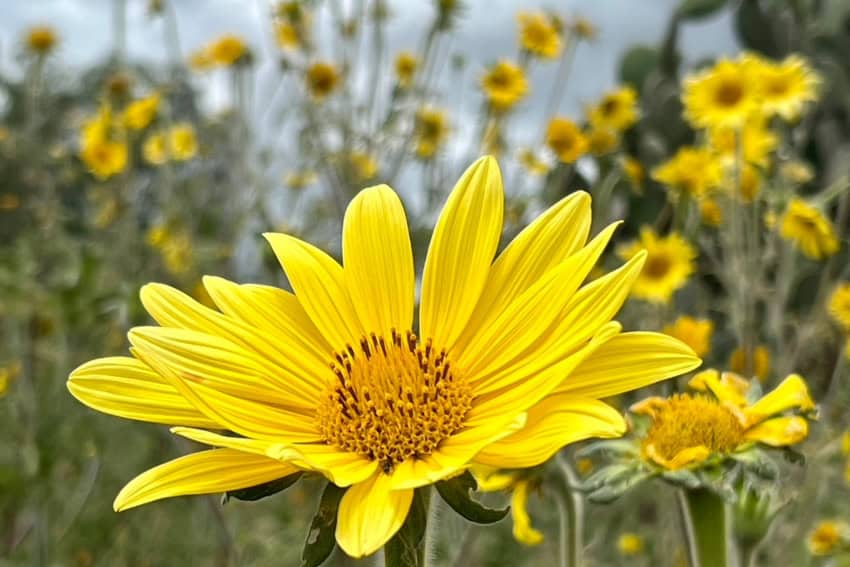
Mexico’s wildflowers astounded me … as if Mother Nature had rolled out the red carpet. Traveling through the central highlands in Querétaro and Guanajuato last September, the roadsides, fields and hillsides were covered in colorful blooms. It was a wow moment. Entire mountainsides shone in a patchwork of vibrant yellows, oranges, reds and pinks. Yet, six months earlier, when I passed through, the same mountainsides were dry, arid and sparse. However, in September, an entirely different ecosystem lay before my eyes. So much so that I asked the driver to stop along the highway beneath the hillside of Mexican sunflowers. The blooms blanketed the landscape in a cheery yellow; he picked some for me after I shared that I was a botanical artist. When to see the wildflowers Mexican sage is easily identifiable thanks to its burst of color. (Bel Woodhouse) There are two wildflower seasons in Mexico. The first is in spring, from March to May, when arid regions like Baja California and northern deserts bloom after winter rains. These winter rains cause superblooms where desert plants bloom en masse and carpet the landscape. The second wildflower season is in autumn, from September to November, after the rainy season throughout Mexico. Native plants put on a brilliant flowering display, bursting into bloom. Of course, wildflower season may start a little earlier, or end a little later depending on the weather. Having been in Queretàro and Guanajuato in September for the last two years during the autumn wildflower season, I can tell you September is a great time to visit states in Central Mexico. Cempasúchil flowers are not only used for decorating altars What flowers can you expect to see? Cosmos, marigold, Mexican sunflowers, globe mallows, morning glory, salvias, mirasol and many more. From tiny butter daisy flowers blanketing the ground at your feet to the huge blooming shrubs of Mexican sunflowers looking you in the eye. There is a wide variety, from light happy yellows to deep striking purples. Some flowers were a surprise to me. Like the soft baby pink hues of globe mallows. Not a plant that I had seen before. So, seeing a big patch was quite the sight. Another surprise was massive patches of happy pink cosmos. A popular garden plant, grown for its flowers, it was delightful to find out it is native to Mexico. Seeing the stunning beauty of wildflowers transform the landscape, I knew there had to be symbolic meanings attached to these flowers. My top 5 Someone asked me what my favorite flower was. It’s almost impossible to choose, but these five left the biggest impression. Especially the white poppy. Chicalote, or Mexican white prickly poppy A sketchbook look at the author’s favorite Mexican wildflowers. (Bel Woodhouse) The Chicalote, a native white prickly poppy, won my heart. Its delicate papery petals shining under the sun were so dreamy and elegant that I painted one. The delicate white petals symbolize tranquility, peaceful dreams and quiet rest. These white prickly poppy flowers stand for endurance and resilience, peace and sleep . Because the spiny plant thrives in dry, harsh and disturbed soils where other plants fail, to many it represents the ability to survive tough conditions through deep inner strength. Mirasol, or cosmos Mirasol is known for its vibrant pink hues. (Bel Woodhouse) In a show-stopping display of vibrant pinks, cosmos put on quite a show. Huge patches waved to us along the roadside. Swaying on long feathery stalks as we passed. Another beautiful member of the daisy family, cosmos represents balance, peace and tranquility. Also, cosmos is believed to act as a bridge between life and the afterlife, linking the physical world with the spiritual realm. Girasol, or Mexican sunflower Entire mountainsides in Mexico are often covered in sunflowers. (Bel Woodhouse) Cherry sunflowers were by far the most common. Entire fields and mountainsides radiated in cheery yellow everywhere I went. This member of the daisy family represents faith, loyalty, and adoration. Some Indigenous populations associated the flower’s bright face with solar deities. Aztec and Mexica people treated the plant as sacred. Dried sunflower seeds were left as offerings at major ceremonial sites like the Templo Mayor in Mexico City. Mexican passionflower The Mexican passionflower is a striking sight. (Bel Woodhouse) Walking the streets of Queretàro, Mexican Passionflowers were abundantly climbing up trees or along old gates. This one was growing outside a church, which I found fitting, as they symbolize the Passion of Christ and the crucifixion. The 10 petals and sepals represent the faithful apostles, while the corona filaments (seen as the purple inner ring) represent the crown of thorns. Inside, the three stigmas represent the nails, and the five anthers represent Christ’s wounds. Copper globemallow The soft and velvety copper globemallow symbolizes resilience. (Bel Woodhouse) New to me, this member of the hibiscus family had me stopping for a closer look. The soft baby pink petals are as delightful as the velvety feel of its leaves. Flourishing in dry, harsh desert heat, the flower symbolizes endurance and resilience. Also standing as powerful emblems of hope, gentle comfort and vitality. The best way to see them Take a drive. These flowers line highways and laneways, lowlands and mountain ranges. So, by driving, you will see the greatest variety. I loved them all so much I made a quick sketchbook page with the most abundant. I hope you enjoy them as much as I have over the last couple of years. Mexico Correspondent for International Living, Bel Woodhouse is an experienced writer, author, photographer and videographer with 500+ articles published both in print and across digital platforms. Living in the Mexican Caribbean for over seven years now, she’s in love with Mexico and has no plans to go anywhere anytime soon. The post When Mexico bursts into bloom: A wildflower guide appeared first on Mexico News Daily
Welcome to MND Tutor! This interactive learning tool is designed to help you improve your Spanish by exploring real news articles from Mexico News Daily. Instead of just memorizing vocabulary lists or grammar rules, you’ll dive into authentic stories about Mexican culture, current events and daily news. U.S. President Donald Trump’s claim that Mexico has “nothing” the U.S. needs beyond “hot tamales” and “tomatoes” contrasts with the scale and diversity of bilateral trade. Mexico exported US $60 billion in goods to the U.S. in July alone, including vehicles, auto parts, machinery, medical devices, AI servers, energy and food. The two economies are deeply integrated, with Mexican exports to the U.S. reaching US $358.7 billion in the first seven months of 2026, up 16% from the same period in 2025. Discover more about Mexican and U.S. trade and why it matters in our latest MND Tutor. div]:bg-bg-000/50 [&_pre>div]:border-0.5 [&_pre>div]:border-border-400 [&_.ignore-pre-bg>div]:bg-transparent [&_.standard-markdown_:is(p,blockquote,h1,h2,h3,h4,h5,h6)]:pl-2 [&_.standard-markdown_:is(p,blockquote,ul,ol,h1,h2,h3,h4,h5,h6)]:pr-8 [&_.progressive-markdown_:is(p,blockquote,h1,h2,h3,h4,h5,h6)]:pl-2 [&_.progressive-markdown_:is(p,blockquote,ul,ol,h1,h2,h3,h4,h5,h6)]:pr-8"> _*]:min-w-0 gap-3 standard-markdown"> To learn more, read the full article here . To get started, choose your level of Spanish: 🌵 Choose your level of Spanish 🇲🇽Beginner 🌵 Intermediate 🌶️ Advanced function redirectToTomatoQuiz(url) { if (url) { window.location.href = url; } } Let us know how you did! Check out our complete MND Tutor archive here! The post MND Tutor | Tamales and tomatoes appeared first on Mexico News Daily
The goal of our “From the Archive” series is to revisit popular stories that capture the unique history and culture of life in Mexico. This Sarah DeVries article — originally published in December 2024 — is a humorous look at a stereotype regarding Mexicans and punctuality. Before we get into the nuts and bolts regarding Mexican punctuality — or lack thereof — it’s important to clarify one thing. Mexicans are not actually always late . That said, all stereotypes have to come from somewhere, don’t they? But like everything in life, there’s nuance to it. Stereotypes regarding Mexican punctuality can be inaccurate, but it’s hard to argue that for many, the concept of time here is just … different. (The Lazy Artist Gallery/Pexels) Just like people all over the world, there’s room for a great deal of variety. Some people are always on time, and some people never are. Most people are punctual for certain activities, and unpunctual for others. My dad , for instance, has never been punctual; I remember my mother saying she was terrified he wouldn’t make it to their wedding on time. My ex-husband also has challenges with punctuality, as does one of my best friends; I’ve spent great chunks of my adult life waiting hours. I’m always super duper on time for everything, though I might let myself get to a party up to an hour late. My kid is leaning unpunctual, but I’m doing my damnedest to lecture it out of her. Because if there’s one thing kids love and respond to, it’s a good lecture. Linguistic flexibility From the archive: Learning Spanish? Don’t be shy or afraid of making mistakes One of the problems about even defining “late” is the language around defining time. For a deep dive into this, check out Joseph Sorrentino’s excellent piece on this specific type of vocabulary . Ahorita , al ratito , mañana … None of these words specify an actual time, you see? So “ahorita” could mean right this minute, and it could mean in five hours, or never. Al ratito (in a while) might mean in a couple of hours, or it might mean in a few years, depending on who’s saying it. You get the idea. And really, this kind of language is useful because it allows for flexibility. In this way at least, Mexico is a flexible country. Really, it has to be. Things come up that need tending to. Public transportation can be unpredictable. The opportunity to have a meal or talk to a pretty girl might come up. Your mom tells you to go fetch some things from the store, and you don’t tell her, “ Sorry, I have plans .” Really, you just never know what can happen! Ahorita, al ratito, mañana … None of these Spanish language words or phrases specify an actual time, do they? (Daria Obymaha/Pexels Life is unpredictable, and Mexicans have a fairly high tolerance for it being unpredictable, which is lucky for all of us. Sometimes, though, there are things you must be on time for. And a good indicator of what those things are is whether or not there’s a specific time attached to them. The meaning of ‘tolerancia’ School is one of those things. At my daughter’s school, for example, 8 a.m. is the official time kids have to be in the door. As a courtesy to the perpetually-late parents, there’s a “tolerance” of 10 minutes. To me, this means my daughter must be there before 8 a.m. if we’re not to be seen as rude and irresponsible. To others, it means 8:10 or even 8:11 is the limit. If kids aren’t in by that time, they must wait to enter the 9 a.m. class. It was like this when I taught school here, too; some things, I suppose, are non-negotiable. The same goes for official appointment times, even if the official or doctor you’re meeting isn’t exactly on time. So if you have a meeting with, say, immigration, you’d better be there at your appointment time! Some places will let you know that they have a tolerancia (literally, tolerance ) of 10-15 minutes. This means that if you’re more than that amount of time late, you lose the appointment! For other things, usually involving celebrations, arrival and start times are more flexible. This is especially true of parties, to which you can show up rather late without causing a fuss. Unless you’ve promised to bring something essential for the party, they’re just glad to have you there at some point. This doesn’t mean they’ll wait for you to start in on the cake and piñatas, though, so beware! Clocks vs. cultural norms Mexicans usually have “tolerance minutes” that allow for limited lateness at appointments and events. (Element5 Digital/Unsplash) Concerts and plays typically start within 15 to 30 minutes of their “official” start time; rock concerts might start hours after they’re meant to. Oh, well! And if you’re meeting friends, it might depend on the specific circumstances. Are you meeting someone busy who only has a few minutes? Are you meeting them alone? In my group of mom friends, we always know that things can come up. “I’ll text you when I leave” is a good, flexible bridge that keeps people updated but keeps plans flexible. In my own conservative and somewhat strict view, being on time means showing respect for the other person. If you are not on time, then you do not care about them or their time. And if you are on time, not only are you showing respect for them, but you’re making things easier for yourself, avoiding fluster. My cultural chauvinism is showing, I know. Doing business in Mexico? Don’t get lost in translation But for plenty of people here, that’s a ridiculous notion. Why stress so much about being on time when literally anything can happen to make you not on time? Perhaps there’s a message here too about avoiding blame and responsibility. “ Se me durmió el gallo” (The rooster went to sleep on me; as in, the rooster didn’t wake me up). But that’s for another article. For now, I’ll leave you with a cute little proverb, as well as its juxtaposed, more truthful meme : “ Al que madruga, Dios le ayuda .” (The one who rises early receives God’s help.) It rhymes! “ Al que madruga, encuentra todo cerrado .” (The one who rises early finds everything closed.) Truer words were never spoken. Sarah DeVries is a writer and translator based in Xalapa, Veracruz. She can be reached through her website, https://sarahedevries.substack.com/ The post From the archive: Are Mexicans really always late? appeared first on Mexico News Daily
if (window.qmn_quiz_data === undefined) { window.qmn_quiz_data = new Object(); } window.qmn_quiz_data["334"] = {"quiz_id":"334","quiz_name":"The MND News Quiz of the Week: September 12th","disable_answer":0,"ajax_show_correct":0,"progress_bar":0,"contact_info_location":0,"qpages":{"2":{"id":"2","quizID":"334","pagekey":"6sKEJUEh","hide_prevbtn":"0","question_limit":"0"}},"skip_validation_time_expire":0,"timer_limit_val":0,"disable_scroll_next_previous_click":0,"disable_scroll_on_result":0,"disable_first_page":0,"enable_result_after_timer_end":0,"enable_quick_result_mc":0,"end_quiz_if_wrong":0,"form_disable_autofill":0,"disable_mathjax":0,"enable_quick_correct_answer_info":0,"quick_result_correct_answer_text":"Correct! You have selected correct answer.","quick_result_wrong_answer_text":"Wrong! You have selected wrong answer.","quiz_processing_message":"","quiz_limit_choice":"Limit of choice is reached.","not_allow_after_expired_time":0,"scheduled_time_end":false,"prevent_reload":0,"limit_email_based_submission":0,"total_user_tries":0,"is_logged_in":false,"error_messages":{"email_error_text":"Not a valid e-mail address!","number_error_text":"This field must be a number!","incorrect_error_text":"The entered text is not correct!","empty_error_text":"Please complete all required fields!","contact_field_required_error_text":"Please complete all required fields!","url_error_text":"The entered URL is not valid!","minlength_error_text":"Required atleast %minlength% characters.","maxlength_error_text":"Maximum %maxlength% characters allowed.","recaptcha_error_text":"ReCaptcha is missing","phone_error_text":"Phone number is invalid","empty_grid_radio_checkbox_text":"Please complete all rows are required fields","empty_audio_text":"Please upload audio!"},"button_text":{"previous_text":"Previous","next_text":"Next","submit_text":"Submit","start_text":"Start Quiz"},"first_page":false,"ultimate_options":{"question_based_progress_bar":0,"progression_prevent_message":"All answers must be correct before moving forward.","goto_next_page":0,"prevent_progression":0,"submit_custom_class":"","start_custom_class":"","next_custom_class":"","prev_custom_class":"","active_theme_id":1,"active_theme_name":"qsm-theme-sigma","upload_success":"File Uploaded Successfully","sound_effects":0},"questions_settings":[]} What's been going on in the news this week? Our weekly quiz is here to keep you on top of what’s happening in Mexico. Get informed, stay smart. Are you ready? Let’s see where you rank vs. our expert community! According to U.S. President Donald Trump, what should New Mexico be renamed? New America New Trump State of America Trumpland None Mexican goods accounted for what percentage of the U.S. import market, as of July? 12.2% 15.2% 18.2% 21.2% None Salmonella-tainted hospital food recently made 135 doctors sick in this Mexican city? Guadalajara Mexico City Monterrey Puebla None A clandestine cryptomining operation was raided by federal authorities, who seized 300 computers in this Mexican state? Nayarit Nuevo León Oaxaca Puebla None According to an MND Local article, how many more people does the municipality of Puerto Vallarta employ than were approved in the budget? 551 668 992 1,418 None The 2025 Program for International Student Assessment (PISA) results were recently released and Mexican students did not do well. PISA tests 15-year-old students worldwide in what skills? Math Reading Science All of the above None According to MND Local, the ATP-sponsored tournament in which Mexican coastal destination is being removed from the tennis calendar after the 2027 edition concludes? Acapulco Cancún Los Cabos Puerto Vallarta None A 20-year-old engineering student has won a national award by developing an irrigation filter that could make water go further for drought-stricken farmers in which Mexican state? Chihuahua Coahuila Sonora Tamaulipas None Mexico’s Foreign Affairs Minister Roberto Velasco met with officials from what nation this week to resolve trade disputes arising from tariffs? Canada China The U.S. All of the above None Which Chiapas town has reclaimed the Guinness World Record for producing the world’s biggest cheese ball? Palenque Pijijiapan San Cristóbal de las Casas San Juan Chamula None Time's up Cancel The post The MND News Quiz of the Week: September 12th appeared first on Mexico News Daily
Bilateral communications were front and center in Mexico the week of Sept. 7, with developments running the gamut from encouraging to combative. U.S. President Donald Trump’s remark that Mexico has “nothing” the United States needs beyond “hot tamales” and “tomatoes” caught fire over the weekend, unleashing a fresh round of provocations from Trump, Vice President JD Vance and Secretary of State Marco Rubio in the days that followed. Among Mexico’s US $61B in exports to the U.S. are vehicles, auto parts, machinery, medical devices, AI servers, alcoholic beverages and fresh food, including tomatoes. (Official White House Photo by Molly Riley) Mexico, however, continued to highlight trade and security collaboration with its northern neighbor, though the PISA test results and next year’s midterm elections sparked more conversations at home. Meanwhile, the annual inflation rate ticked up to 3.26% — as expected according to Banxico, which forecasts inflation of 3.5% by the end of 2026. President Claudia Sheinbaum remained optimistic through it all , especially as her administration makes its plans for 2027. Overhead, punishing heat baked Mexico’s northern border states even as monsoon rains drenched the Pacific coast and center of the country. Didn’t have time to catch this week’s top stories? Here’s what you missed. 2027 budget takes shape On Monday, Finance Minister Édgar Amador Zamora submitted a 10.6-trillion-peso (US $627.8 billion) budget proposal for 2027 to Congress, an increase of about 1% in real terms over this year. Amador framed the package around “five pillars” — economic growth, protecting government priorities, strengthening revenue, more efficient spending and fiscal discipline. The government is banking on those pillars to shrink the budget deficit to 3.9% of GDP next year from an estimated 4.1% in 2026, even as public debt climbs to 55% of GDP. No new taxes or fuel-price hikes are planned. Health care gets a 10.9% real-terms boost to 1.1 trillion pesos, largely for IMSS-Bienestar infrastructure and medicine supply, while education rises about 7% to 1.3 trillion pesos to fund new schools. Pension and welfare programs get just over 1 trillion pesos, and debt servicing alone eats up 1.6 trillion pesos — roughly one of every seven pesos the government spends. Security agencies see an 11.6% bump to 331.4 billion pesos, while Pemex funding falls 69.2% as the state oil company pushes toward self-sufficiency. The National Electoral Institute (INE) is the biggest percentage winner of all, with an 87.5% real-terms increase ahead of 2027 midterm elections, while the Energy Ministry, the National Human Rights Commission and the Federal Electricity Commission absorb the steepest cuts. Sheinbaum said the following day that she is “very satisfied” with the package and that growth could exceed the official forecast of 1.5-2.5%, citing anticipated stability in trade relations with the U.S. and Canada. Sheinbaum optimistic about Mexico’s 2027 growth prospects: Wednesday’s mañanera recapped Homicides continue to fall Security officials reported this week that daily homicides fell 53% in August compared to September 2024, the final month of the López Obrador administration, making it the least violent August since 2015. More than 67,000 people have been arrested for high-impact crimes since Sheinbaum took office, though Security Minister Omar García Harfuch cautioned that “the job is not done.” Days later, from Tuxtla Gutiérrez, the president highlighted a 63% drop in Chiapas’s homicide rate since Gov. Eduardo Ramírez Aguilar took office, alongside nearly 10,000 arrests in the southern state. The same briefing revealed the discovery of a clandestine hospital the Jalisco New Generation Cartel (CJNG) used to treat injured members. Olmeca Refinery notches record month Pemex’s Olmeca Refinery in Tabasco posted its best month yet for fuel production in July , averaging 252,498 barrels per day, a 78.8% jump over June. Gasoline output rose even more sharply, up nearly 128% month-over-month, after equipment fires forced repairs earlier in the year. Despite the milestone, the plant — which began operating approximately two years ago — is still running at roughly two-thirds of its 340,000-bpd capacity. Fox and PRI’s Alito Moreno join forces In a striking political reunion, former President Vicente Fox met with PRI leader Alejandro “Alito” Moreno to discuss “the need to build a strong opposition” ahead of 2027 midterms — 26 years after Fox became the first opposition candidate to sweep the once-dominant PRI out of the presidency, and years after he called the party “black vipers, vermin and tadpoles.” Morena, for its part, dismissed the pairing as “the reorganization of the power elite,” saying in a statement that “they change the names, they invent new organizations, but behind the facade, it’s the same old faces.” The PRI, which ruled Mexico for 71 years, now holds just two of the country’s 32 governorships — the same number as the much smaller Citizens Movement (MC) party. At her Monday press conference, Sheinbaum branded the reunion “PRIAN” politics dating to the “neoliberal” era of former President Carlos Salinas de Gortari, and called Fox a “traitor of democracy” — a jab tied to his role in Mexico’s disputed 2006 election. Bilateral high points Trade and security cooperation produced some of the week’s more encouraging bilateral news. Mexico’s exports to the U.S. hit a monthly record in July: US $60.55 billion worth of goods were sent north, pushing Mexico’s share of the $332.92 billion U.S. import market above 18%. Goods from Mexico now make up almost one-fifth of the US import market Along the border, Mexican and U.S. forces carried out “High Eagle,” a binational operation to detect and disable drones cartels use to surveil authorities near Tijuana and San Diego. And though bad weather grounded Commerce Secretary Howard Lutnick’s flight to Mexico City on Wednesday, he and Sheinbaum still held a video call on USMCA negotiations that Economy Minister Marcelo Ebrard described as “cordial” and “very useful,” with talks on steel, aluminum and automotive tariffs continuing ahead of a fourth bilateral review round. Bilateral low points Other exchanges were considerably more combative. Over the weekend, Trump proposed to rename New Mexico “New America,” despite having no legal authority to rename a U.S. state, drawing pushback from the state’s Democratic leaders. Later in the week, from Ecuador, U.S. Secretary of State Marco Rubio doubled down on claims that cartels control “vast territories” of Mexico, hinting the threat may eventually have to be “confronted one way or the other.” Sheinbaum shot back on Thursday morning, telling Rubio to keep Mexico out of U.S. midterm politics and calling his remarks electorally motivated. Rounding out the week, U.S. Vice President JD Vance labeled the Mexican flag “a symbol of the far left” after a protester interrupted his convention speech in Dallas, telling the man to “get your ass over there” if he loved Mexico so much. Poor PISA scores spark a debate over screens New results from the OECD’s Programme for International Student Assessment (PISA), given to 7,843 students across 297 Mexican schools, showed that four in 10 15-year-olds — 41.8% — scored below the basic level in science, math and reading, more than double the 19.7% OECD average and Mexico’s worst showing since 2009 . Mexican students averaged 388 points in math, 408 in reading and 414 in science, all well below OECD averages of 463, 461 and 482, and the country has shed seven points in both math and reading since the 2022 test. The decline wasn’t unique to Mexico — the OECD’s education director called it part of a “dramatic” global drop, particularly in reading — and Mexican students still reported unusually high curiosity (80%, versus a 24% global average who called school “a waste of time”). Education International, the global teachers’ federation, pinned the broader slide on shrinking attention spans, heavy AI use and a worldwide teacher shortage. China, Singapore, South Korea, Estonia and Canada topped the rankings. Education Minister Mario Delgado blamed excessive screen use for the drop in reading comprehension — arguing that “screens make it easy to ‘read’ or consume images” — while defending the New Mexican School curriculum model and promoting traditional games like yo-yos, marbles and spinning tops as a substitute for phone time. He conceded the PISA sample was “statistically representative” even as he questioned whether the test amounts to a comprehensive evaluation of Mexican education. Sheinbaum later told reporters Mexico will roll out new math and reading textbooks next year, including poems and short stories, and push a “return to pencil and paper,” tying the effort to new national guidelines already restricting cellphone use in schools. Mexico’s students have registered consecutive declines in their reading skills since the 2009 PISA evaluation. (Pedro Anza/Cuartoscuro) Education Ministry, UNESCO team up on AI in schools Also this week, Mexico’s Education Ministry signed a letter of intent with UNESCO to guide the “responsible” rollout of artificial intelligence in classrooms, with the U.N. body offering technical assistance, teacher training and research support. Officials said the goal is to ensure AI supports, rather than substitutes for, teaching and critical thinking, and the deal also opens the door to new rules on cellphone use in schools. Mexico prepares for El Grito and Independence Day With the country’s 216th independence anniversary approaching, more than 18,000 members of Mexico’s armed forces are readying for the Sept. 16 military parade through Mexico City, featuring drones, horses, dogs and a float marking the country’s World Cup hosting duties this past June and July. The holiday kicks off the night before, with Sheinbaum leading the Grito de Independencia from the National Palace balcony and Tejano band Intocable headlining a concert in the Zócalo. Festivities and gritos will ring out from cities across the country, including in Sinaloa, whose capital city of Culicán will hold a public celebration of Independence Day for the first time in two years. Points of 🇲🇽 pride A 20-year-old engineering student from a Chihuahua farming family, Luis Ángel Robles Morales, won a national innovation award for an irrigation filter that is already helping 500 drought-stricken farmers use water more efficiently. Forward Julián Quiñones and Club América’s Scarlett Camberos earned historic Ballon d’Or nominations , marking the first time two Mexican players — and a Mexican club — have featured on the shortlist for world soccer’s top individual honor. Mexico News Daily This story contains summaries of original Mexico News Daily articles. The summaries were generated by Claude , then revised and fact-checked by a Mexico News Daily staff editor. The post Mexico’s week in review: Exports and gas production hit record highs as patriotic spirit swells appeared first on Mexico News Daily
12 Sep 2026, 16:00 GMTMattia Astori and Daniele Colucci
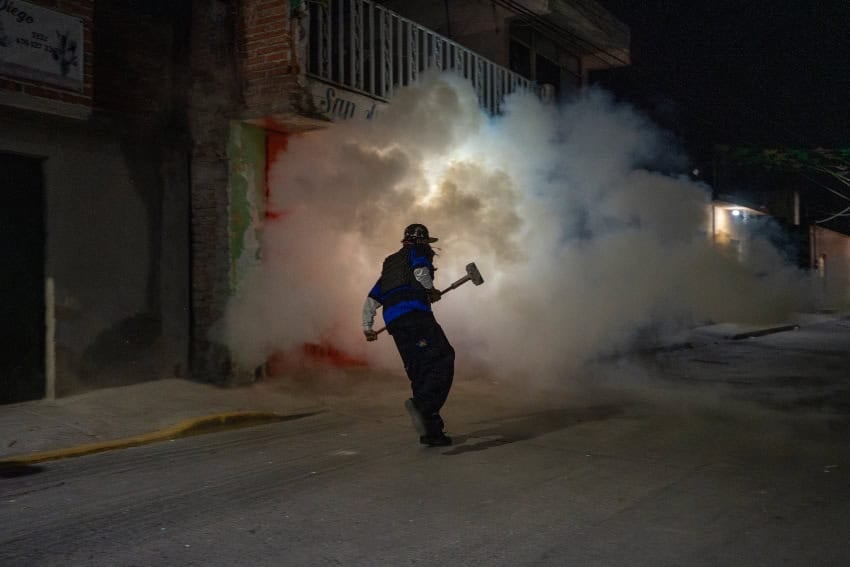
A door in the street cracked open just enough for a hand to slip through. A kid, maybe 15, curled his fingers toward himself: come here, come here, then pulled back into the dark. I looked around the street. Nobody. I stepped inside. The house looked like a drug kitchen. Two folding tables stretched across the room, their surfaces dusted white and yellow. On one side, a bucket of potassium chlorate. On the other, sulfur. Three kids stood around the tables, working the powders together with their bare hands. One kid looked up at me and grinned, then went back to scooping powder into small plastic bags. San Juan de la Vega’s annual sledgehammer ritual is very dangerous and has been legally banned … although it’s still carried out. Josué was the one who had waved me in from the doorway. One of the boys had no hands. Both arms ended at the wrists. I didn’t want to ask. I asked anyway. He told me it happened during the explosions, a few years back. He said it the way someone tells you about a stolen bicycle, part of life. Don Juan David, Josué’s father, walked into the room. He greeted me with a handshake and a smile, glanced at the tables of explosive powder where their children worked, and walked back out. A dangerous tradition Every year, on Shrove Tuesday, the townspeople of San Juan de la Vega pack homemade explosives onto sledgehammers , carry them to the streets and open fields, and slam them against the ground. People lose limbs. This time, something was different. For the first time in the town’s history, authorities had banned the use of explosives during the carnival. La Xiqueñada: A first-timer’s guide to Xico’s raucous weeks-long festival Families wanted to talk. Each family insisted theirs was the true story. The carnival, they all agreed, celebrates San Juan de la Vega, a saint who saved the town from gold robbers centuries ago. The explosives reenact the gunshots from his battles. Every family also wanted to make sure we knew that the big explosions, the ones the town is famous for, are not the real tradition. The real tradition is small. Modest. A respectful crack of gunpowder in honor of the saint. Kids started making bigger and bigger explosives, destroying city piping. Everything breaks, they said, shaking their own heads. This is not what we are. A man named Aquino de la Vega was moving silver shipments by mule along the Camino Real when bandits started robbing him . He prayed to San Juan Bautista. The robbers stopped. Aquino vowed he would honor the saint every year, forever, and so would his sons. San Juan de la Vega’s sledgehammer ritual is tied to tradition and is a way to honor its patron saint, Saint John the Baptist. (Mattia Astori and Daniele Colucci) Six families still carry that vow. Each one is tied to a barrio . The families fund the music, the food, the processions. They keep the image of the saint in their home for a year. Adrenaline and danger The word I heard more than any other was adrenalina . The afternoon before the carnival, I found Josué sitting on a curb outside a corner store, rolling a cigarette. He was quiet. “I’m always scared before I do it,” he told me. “But once I blow up one, I can’t stop. The adrenaline is too strong. I want to keep going.” I asked about the dangers, and stories came easily: a man who burned, another who was paralyzed, people who lost fingers, hands, arms, legs. Accidents happen because the explosives are powerful enough to send 25-kilogram sledgehammers flying through the air. A hammer goes up, a hammer comes down, and sometimes there is a head in the way. “Police always try to take them away,” one man said, sitting in a plastic chair outside his house, two kids playing in the dirt beside him. “But they will never stop the tradition. Nothing will change.” On the afternoon before the main event, the streets were empty. Doors closed. No music. No voices. “I’m always scared before I do it. But once I blow up one, I can’t stop. The adrenaline is too strong. I want to keep going.” ( Mattia Astori and Daniele Colucci ) Boom. The first hammer hit the ground as soon as night fell. The sound moved through me. The ground shook under my feet. My ears whistled, even from 100 meters away. My chest vibrated. Windows cracked. The pipes beneath the street groaned and split. Then came another. And another. Parades took the streets . Villagers singing, dancing, playing instruments, carrying the image of San Juanito through the town. Following them in the back, kids dressed as soldiers, some in boots and gas masks, others with no gloves, no protection of any kind. Everyone carried sledgehammers and backpacks stuffed with explosives. Defying the ban I found Josué in the crowd. Face covered in soot, eyes wide. He swung a hammer down and the detonation threw him sideways. He got up laughing and loaded another charge. Around midnight, the first police cars appeared. The sledgehammer ritual has been legally banned in San Juan de la Vega, but the tradition continues. (Mattia Astori and Daniele Colucci) The crowd froze. About 10 men climbed out with SWAT gear, assault rifles and bulletproof vests. They walked toward the kids with the backpacks. The boys scattered. I saw a grandmother crack her front door open. She let the kids shove their backpacks full of explosives through the gap; she closed the door, and she stood in front of it. When the police asked to enter, she stood immobile like a statue until they were gone. The police confiscated what they could, caught a few guys, and left. Within minutes, the parades reformed. The hammers came back out. The explosions picked up where they had stopped. At around 3 a.m., we walked back toward town to catch some sleep. I did not sleep. The bed shook after every boom. Even with earplugs, my ears hurt. It went on until 7 a.m. We walked outside. Over 10 police cars patrolled the town. They had shut everything down. But beyond the edge of town, we could hear it. Boom. Boom. We followed the sound. Moving to the tracks “There, away from the police, the hammers got bigger.” (Mattia Astori and Daniele Colucci) The townspeople had moved to the train tracks. Flat, open land, sand, rocks and gravel, not a piece of shade anywhere. They placed explosives on the rails and waited for trains to roll over them. Between trains, they took turns blowing up hammers on steel bars laid flat against the ground. There, away from the police, the hammers got bigger. It was noon. The sun was directly overhead. People packed more and more powder onto the sledgehammers and took turns. Huge hammers flew tens of meters into the air. I watched a kid swing a hammer down. The explosion threw him back onto the ground. The hammer launched upward, spinning, and came down on his head. The ring of steel on skull. He tried to stand. Blood ran from his scalp, down his face, into his eyes. His friend pulled off his own shirt, wrapped it tight around the kid’s head, and hauled him onto the back of a motorcycle. They disappeared down the road. Nobody stopped. The next person stepped up. The next morning, the market opened in the square as always. People walked slowly, said good morning to each other. A dog slept in a doorway. The church bell rang at 8. Powerful Mexican saints to pray to for a good 2026 Here was Josué, down the road. He waved. I went to say goodbye to Don Juan David. He pulled me into a hug that lasted a long time. He held on. We had barely talked. When he finally let go, his eyes were wet. He thanked me. He begged me to come back next year. “ Sí, San Juanito permite ,” he said. If San Juanito allows it. Mattia Astori and Daniele Colucci make Sacratos , a documentary project on extreme rituals with photos, interviews, articles and videos. They’ve worked in Mexico, India, Bolivia, Thailand and Italy. The post Witnessing the explosive sledgehammer ritual in San Juan de la Vega, Guanajuato appeared first on Mexico News Daily
Turtle camps can be found all over Mexico’s coastline, including the Gulf Coast, allowing volunteers to liberate baby turtles. With the fifth-longest coastline in all of Mexico — a country that is internationally known and beloved for its beach offerings — Veracruz is certainly a sea-loving state, boasting some 450 miles of Gulf Coast access. For the record, Baja California Sur , a peninsula surrounded by water on three sides, has the longest total coastline at more than 1,350 miles of beach. A sea turtle on the beach in Puerto Escondido, Oaxaca. Mexico is home to many breeding areas for endangered sea turtle species. (Mitchel Lensink/Unsplash) Historically, Veracruz is celebrated for its seafood and coastal tropics, as well as being the site of Mexico’s largest and oldest port with access to the Atlantic Ocean. But what has been lost in the greater narrative is that, as part of its cultural significance along the Gulf Coast, Veracruz has also become one of Mexico’s leading states for turtle conservation. The legacy of turtle conservationism in Mexico The earliest federal efforts to focus on sea turtle nesting in Mexico began in 1962, led by the National Institute of Biological and Fisheries Research on both of Mexico’s ample coasts. In 1963, the Center for Turtle Culture opened on Isla Mujeres, Quintana Roo. Record 34 million olive ridley turtles hatch on Oaxaca coast Shortly after, in 1966, Rancho Nuevo — located in Tamaulipas, just north of Veracruz — was among the first turtle conservation camps to formally open in Mexico. The National Commission of Protected Natural Areas outlined the importance of these efforts from the mid-1960s; the investments significantly helped to maintain the growth of Mexico’s turtle populations by increasing local awareness and participation. During that time, the National Sea Turtles Conservation Program was founded as a result. Rancho Nuevo, along with the other turtle conservation camps that would spring up all over Mexico’s beaches — from the Gulf to the Pacific — has become a crucial element of turtle protection efforts since then, utilizing a mix of dedicated turtle conservationists and public volunteers. Responsibilities include the protection of nesting sites via monitoring and safeguarding turtle nests, and assisting (or “liberating”) fresh turtle hatchlings to ensure they make it to the sea. Milestones in national protection rights Since the 1960s, Mexico has become a global leader in turtle conservancy; in 2025, Mexico was recognized as an exemplar for its turtle protection efforts. Currently, Mexico federally operates 26 turtle conservation centers, in addition to various independent organizations and nonprofits extending across 13 coastal states. Officials announced a record of more than 34 million newborn olive ridley turtles that reached the ocean in a single season, in Oaxaca’s Morro Ayuta region alone. Olive Ridley sea turtles at sunset on the Ixtapilla Beach in Michoacán, Mexico. (Brian Overcast) In 1990, federally backed turtle protection rights gained further ground when then-President Carlos Salinas de Gortari decreed an end to the commercial harvesting of all sea turtles and related products. The landmark move shifted former turtle hunting communities — such as areas in Mazunte, which had among the highest rates of turtle slaughter — into epicenters of turtle conservation. Mazunte opened the Mexican Turtle Center in 1991, aiding the area’s turtle population and ecotourism alike. Mexico’s role as a sanctuary for sea turtles According to a 2008 report from the Secretariat of Environment and Natural Resources (Semarnat), “Mexico is the country with the largest number of sea-turtle species worldwide. Seven of the eight species known … nest in Mexican beaches, both in the Pacific and in the Gulf of Mexico and Caribbean littorals: loggerhead turtle, white or green turtle, black turtle, hawksbill turtle, Kemp’s ridley, olive ridley and leatherback turtle. Two of them, Kemp’s ridley and black sea turtle, nest exclusively in Mexican beaches.” A more recent investigation from 2023, published in Revista Mexicana de Biodiversidad, revealed that southeastern Mexico, including Veracruz, is the most diverse region for turtle conservation in the country: “According to our results, southeastern Mexico supports three-fourths of the families — and more than half of the genera — found nationwide in Mexico. These findings highlight southeastern Mexico as a region of high importance for the composition of land and freshwater turtles at the national level … Oaxaca, Chiapas and Veracruz stand out as the states with the highest species richness and endemism, respectively. These three states are located within the region considered the richest in total herpetofauna, a result of complex orography, diverse habitats and environments, and the biogeographic history of Mexi co.” Tamaulipas reports a strong nesting season for the world’s rarest sea turtle An afternoon with turtle conservationists in Veracruz Jeanne A. Mortimer , a world-renowned marine biologist known as “Madame Torti” who specializes in sea turtle conservationism, once wrote that “The importance of the central coast of Veracruz (for turtle nesting) may be attributed to the fact that the beaches are easily accessible from the ocean without great obstacles like rocks, pronounced slopes or coastal developments that prevent the movement of the adult females along the length and breadth of the beache s.” It partially explains why Veracruz has been able to cultivate a long-lasting ethos and engagement around turtle protection, with civic initiatives like Fundación Yépez and the Veracruzano Center for Research and Conservation of the Sea Turtle having launched decades ago. Additionally, Veracruz boasts Veracruz Reef System National Park, which played a role in a major environmental ruling by Mexico’s Supreme Court to conserve sea turtle habitats by restricting the construction of industrial ports in endangered areas (although reports that the ruling hasn’t been properly enforced have been published). Vida Millenaria is among Veracruz’s most prominent turtle conservation groups. The project began in Tecolutla in 1974 as a personal mission for Fernando Manzano, whom locals began to call “Papá Tortuga,” or Turtle Father. Over half a century later, his efforts have expanded to include other members. To date, the nonprofit has protected and released thousands of baby turtles each year. Visitors arrive year-round to receive public education and help to release newborn turtles into the water along the beaches on the city’s northern outskirts, about a 20-minute drive from the town’s center, along a mostly deserted dirt path. Camping under the stars in Tecolutla View this post on Instagram A post shared by Kate Levasseur (@katelevass) I personally drove out to experience it for myself. Depending on your budget, you can rent a group-sized or personal tent near the beach at a campsite that includes outdoor showers, bathrooms and a common area for campers and volunteers who arrive at different hours of the day to participate in the turtle release. The camp area is shaded by palm trees and is relatively cool due to the strong coastal breeze. The camping experience adds a layer of memory-making, as you sleep beneath the moonlight on a private, mostly isolated beach while the waves wash ashore in the near distance. A rotation of Vida Millenaria workers takes turns patrolling the area on ATVs around the clock, mostly to keep an eye on the turtles and their nests. (Note: If you decide to camp overnight, be sure to bring plenty of supplies, water and food, as a one-way trip back into town requires more than 20 minutes of off-roading to reach the edge of Tecolutla). There, you can enjoy a paradisiacal beach to yourself, undisturbed, until the next day. A volunteer brigade assembles Early in the morning, around 7:30 a.m., volunteers of all ages begin to arrive and assemble at the center of camp. A local expert introduces the nonprofit’s history, and a musician plays music dedicated to sea turtles. Maps and visuals are used to show and explain a brief history of turtle conservation in the state, and an adult-sized turtle replica stands in as a faux mascot for guests to take pictures with. Afterwards, participants are escorted to the nearby souvenir shop, where everything is turtle-related (of course) and handmade. Each purchase grants a set of baby turtles for group liberation — so the more things you buy, the more turtles you’re able to liberate (prices start around 150 pesos and include turtle plushies, stuffed animals, mugs, shirts, etc.). For breakfast, a local volovanero (a savory pastry vendor common in Veracruz) brings a freshly baked batch for about 50 pesos each. Releasing hatchlings into the wild Then, the finale: Everyone strolls down to the beach together, lines up, and is given baby turtles to release into the ocean together. It’s a spectacular sight to see upwards of 50 small creatures — more or less, depending on the volunteer group’s size that day — crawling their way into the waves for the first time. They are swept away, their tiny heads occasionally poking out from the shimmering waters before completely disappearing into the distance by the dozens. Of course, if you’re nowhere near Veracruz, you can search for your nearest beach. You’ll likely discover a turtle conservation group awaiting your participation. It makes a memorable weekend trip — and most importantly, it helps to keep an essential part of Mexico’s ecosystem intact. Alan Chazaro is the author of “These Spaceships Weren’t Built For Us” (Tia Chucha Press, 2026), “Notes from the Eastern Span of the Bay Bridge” (Ghost City Press, 2021), “Piñata Theory” (Black Lawrence Press, 2020), and “This Is Not a Frank Ocean Cover Album” (Black Lawrence Press, 2019). He is a graduate of June Jordan’s Poetry for the People program at UC Berkeley and was selected as a Lawrence Ferlinghetti Poetry Fellow at the University of San Francisco. His work can be found in NPR, The Guardian, SLAM, GQ, L.A. Times, and more. He is currently based in Veracruz. The post Turtle power: Volunteer to protect Mexico’s sea turtles appeared first on Mexico News Daily