A former defense minister whose dismissal last month sparked protests has delivered a videotaped address to Ukrainians in which he assailed wartime corruption, warned of a systemic crisis of governance, and said the country must find a way to hold elections despite the continuing Russian invasion.
Ukraine's parliament is expected to vote on the resignation of the country's prosecutor-general on September 14 after President Volodymyr Zelenskyy urged his quick removal amid rising tensions over a series of high-profile anti-corruption investigations. Ruslan Kravchenko submitted his resignation last week saying he did not want his position to be used "as a tool for political confrontation" after anti-corruption investigators homed in on an embezzlement scheme connected to a top official in his office. On September 14, he said he had signed a "suspicion notice" against the head of the National Anti-Corruption Bureau (NABU), one of the bodies investigating his office. NABU said in a statement on its Telegram channel that the move was "a continuation of a systemic attack on independent anti-corruption bodies." Fevered Political Moves In Ukraine Amid Anti-Corruption Raids, Fedorov Challenge "There is only one path for this Prosecutor-General: removal from office. That is what I told him," Zelenskyy said in a post on social media. "Ukraine has seen all the reasons why. If he considers this political pressure, he is free to call it that. I ask parliamentarians to support his removal without delay." The controversy around Kravcenko, who said on September 14 that he is currently outside the country on a business-related trip, is the latest in a swirl of corruption allegations and investigations that have cast a pall over Zelenskyy's government. A top Zelenskyy aide, Andriy Yermak, was forced to resign last year as investigators probed a scheme involving hundreds of millions of dollars in kickbacks from contractors to the state nuclear company, Energoatom. Kyiv Court Orders Former Zelenskyy Adviser Yermak Jailed On $3 Million Bail Mykhaylo Fedorov, who served as defense minister until he was forced out in July, has publicly and loudly complained about corruption in the defense sector, in what many observers saw as an open challenge to Zelenskyy. The top general overseeing Ukraine's military, General Oleksandr Syrskiy, with whom Fedorov had clashed, was later pushed out. Zelenskyy has not been implicated in the scandals, which earlier resulted in the resignations or firing of justice and energy ministers. Ousted Defense Minister Calls For Elections, But Can Ukraine Hold Them During the War? In July, Zelenskyy also shook up his entire government, pushing out Prime Minister Yulia Svyrydenko and replacing her with the head of state energy company Naftogaz. He also replaced the country's ambassador to Washington, who faces her own graft allegations. But the scandals have tarnished Zelenskyy's popularity, and several opinion polls show him trailing several prominent public figures. Foremost among them is Valeriy Zaluzhniy, the former top general and commander-in-chief of Ukraine’s military. He is now serving as as Kyiv's ambassador to London.
Russian drone strikes hit a gas station and a train less than two kilometers from Ukraine's border with NATO member Poland. Polish Prime Minister Donald Tusk said his country is prepared for potential Russian attacks affecting its territory, a possibility he described as a "worst-case scenario."
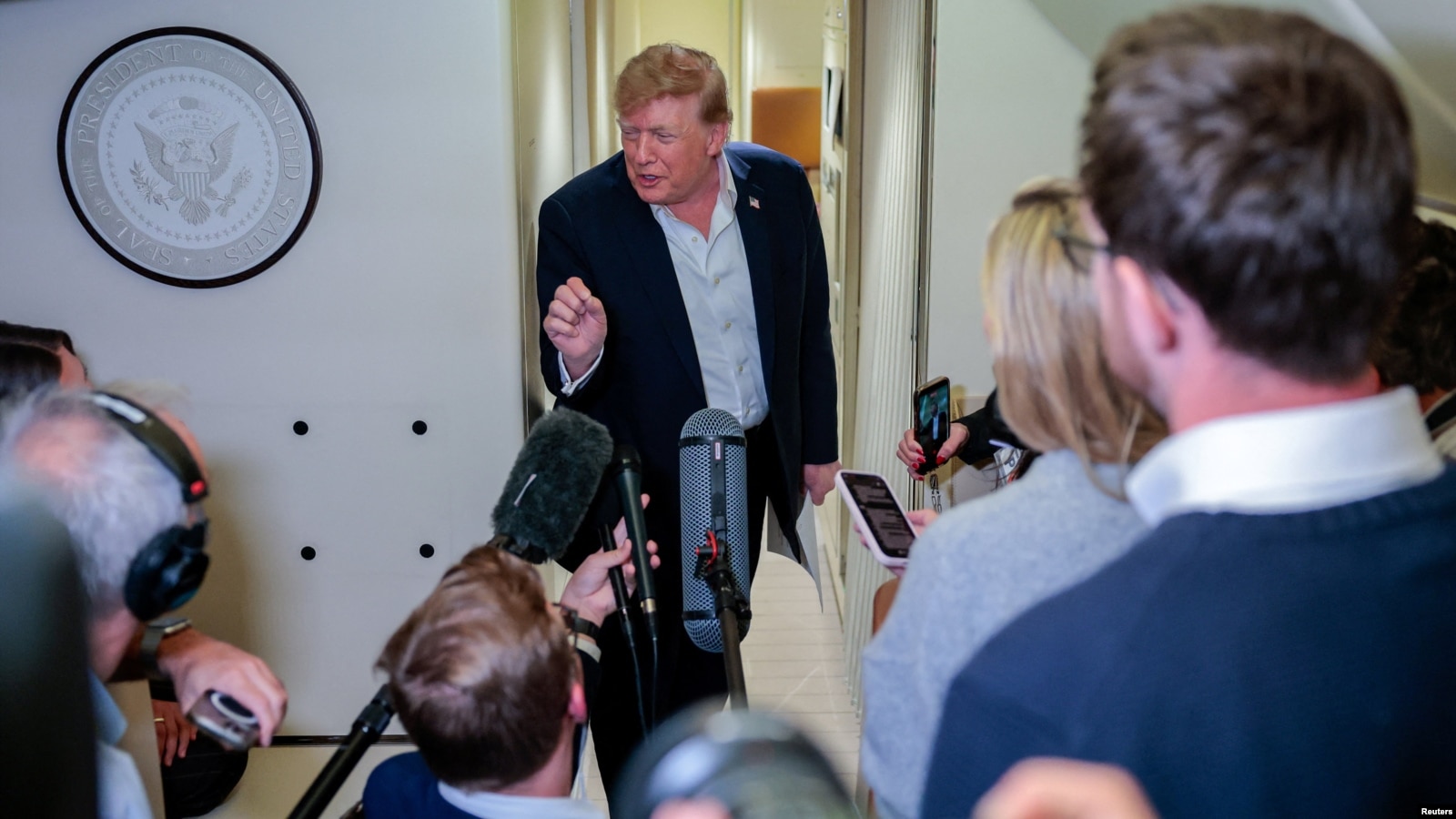
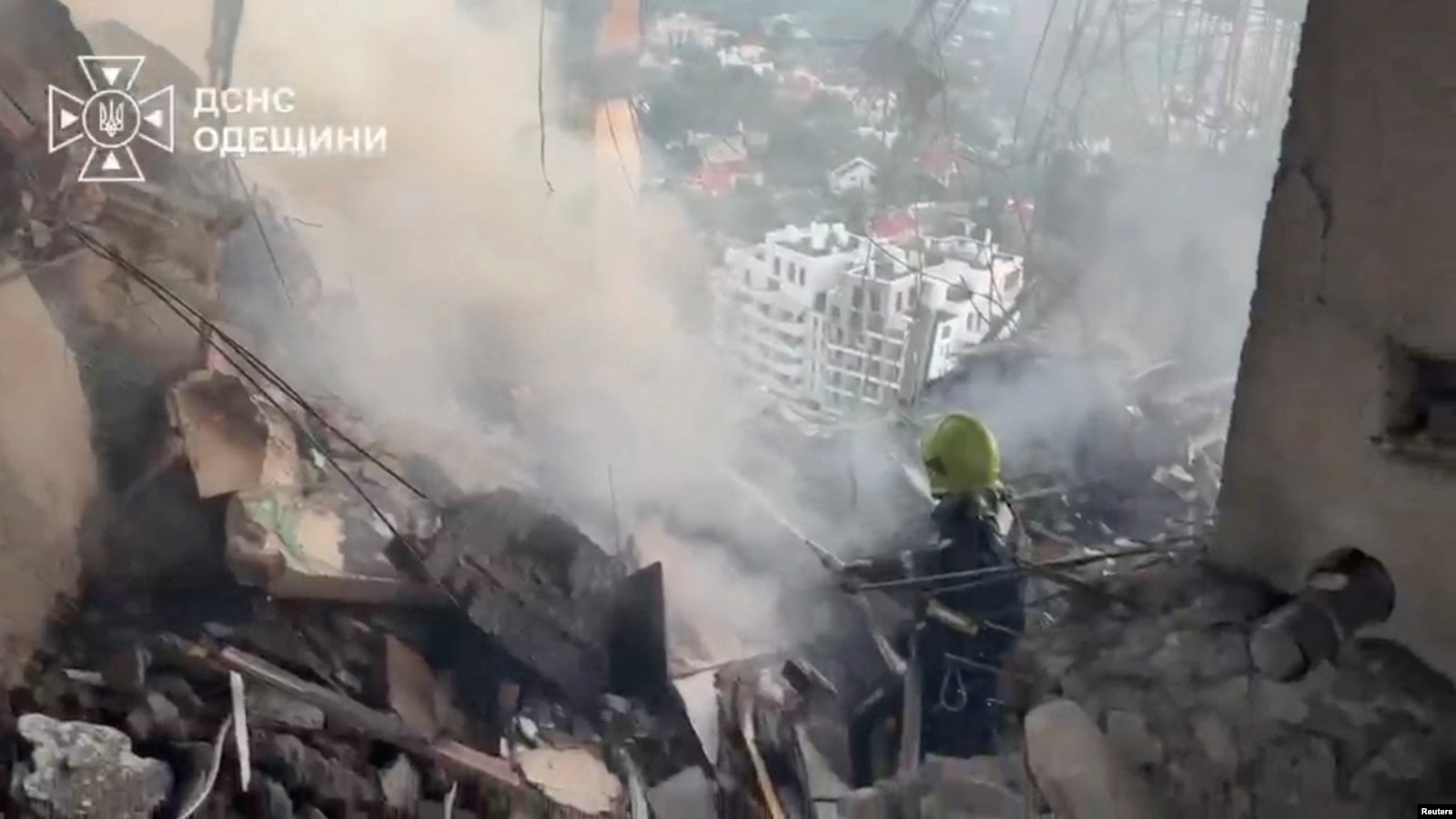
US President Donald Trump has called on Ukrainian President Volodymyr Zelenskyy to stop targeting Russian diesel infrastructure amid Russia's relentless attacks across Ukraine, including near the Polish border. "There are plenty of other targets. Don't hit diesel fuel," Trump told reporters on September 13 during his visit to Ireland. "You have to stop knocking out diesel fuel in Russia," he said. Trump's comment came a week after his envoys, Steve Witkoff and Jared Kushner, had visited Kyiv and Moscow in the latest US-mediated diplomatic effort to bring the wartime capitals closer to a negotiated agreement. While all sides have called the talks "substantial," the dynamics on the front line have not changed, with Russia continuing to attack Ukraine and hitting its civilian, logistics, and energy infrastructure as the cold weather sets in. Ukraine, meanwhile, has continued to respond, targeting energy and military sites inside Russia with its long-range drone attacks. Kyiv has been calling the effort "long-range sanctions" as it seeks to curb Moscow's energy profits and force it to negotiate. Since the beginning of the summer, Ukrainian drone strikes have caused nationwide fuel shortages in Russia and stoked discontent among its citizens, who were disconnected from the war in Ukraine, now in its fifth year. Ukraine's Refinery Attacks Force Russia To Turn Abroad To Process Its Oil Ukraine Warns Russia 'Knocking On NATO's Door' With the latest diplomatic efforts yielding no practical easing of tensions on the battlefield, two Russian drone strikes hit near the Polish border early on September 13. The first strike hit a petrol station near the Yahodyn border crossing between Poland and Ukraine, in the latter's Volyn region. No casualties were reported. The second, also in Volyn, struck the locomotive of a passenger train just two kilometers from the Polish border, Ukraine's state railway operator, Ukrzaliznytsia, reported. According to Oleksandr Shevchenko, a local transportation official, the train was traveling from Kyiv to Warsaw. As Ukrzaliznytsia said that a threat-monitoring group was able to warn the train's crew of the attack in advance, no casualties were reported. Video footage spread over Ukrainian social media showed people running from the blast at the railway station. Tusk Says Poland On High Alert After Russian Strikes Near Ukraine's Western Border Separately, Ukrzaliznytsia said that "quite possibly," the original target of the drone strike could have been the "diplomatic train," which carried top European officials, including former British Prime Minister Boris Johnson. It added that former CIA Director David Petraeus was aboard another train at the time. Petraeus told The New York Times that he could hear Russian drones above and then an explosion, leading to the immediate evacuation of passengers. "For those who have not been under fire, this was terrifying...This is the act of a truly barbaric leader trying to terrorize Ukrainian civilians," Petraeus said. As the incidents occurred, air-raid alerts were issued in several eastern districts of Poland. While there were no reports of violations of Polish airspace, Jacek Goryszewski, spokesman for the Operational Command of the Polish Armed Forces, said the "threat to Poland was real." In separate incidents on September 13, Romanian authorities reported a drone entering the country, and Lithuania called on residents in the capital and neighboring regions to preventively seek shelter after issuing an alert of possible drone sighting. The country's main airport in Vilnius was shut down and NATO jets were scrambled. The alert was called off within an hour. "Russia's barbaric strikes at the Ukraine-Poland border in Yahodyn are not just a continuation of its attacks on our state borders," Ukrainian Foreign Minister Andriy Sybiha wrote on X on September 13. "This is Putin's terror 'knocking' directly on the doors of the EU and NATO." He urged European leaders to "throw the full weight" of sanctions against Russia. Russian Strikes Kill 9 Across Ukraine, As Zelenskyy Offers To Meet Putin At Miami G20 Earlier this month, Germany officially blamed an incident on Moscow in which explosive-laden drones interrupted flights at Leipzig Airport. At the time, European Commission President Ursula von der Leyen said that "Europeans are faced with a hard truth that this is the new normal." "It is precisely to prevent these strikes from spreading further into Europe that Ukrainian men and women fight every single day, laying down their lives to keep this aggression from expanding," Ukrainian President Volodymyr Zelenskyy said in a post on Telegram on September 13. "Russian terrorism is a shared threat to many, but it can and must be defeated right here in Ukraine," he added. According to Zelenskyy, a total of 2,100 drones, 1,700 gliding bombs, and 73 missiles were launched at targets across Ukraine in the past week. Ukrainian authorities said that elsewhere in Ukraine, the latest Russian attacks had also targeted the country's western regions of Ivano-Frankivsk, Ternopil, and Lviv, as well as the war-torn eastern Donetsk region and the key southern region of Odesa. Ukrainian Soldier Honored For Rescue In 'Kill Zone' Regional authorities in the Odesa region said nine people had been injured after a drone struck several residential buildings. A warehouse in the region was also reportedly targeted. Meanwhile, in the region's capital city of Odesa, rescuers have completed work at the site of the drone strike on a 25-story residential building on the night of September 12. Two people were killed and more than 20 injured in that attack. Russia's Defense Ministry claimed that its overnight strikes targeted "logistics centers through which military cargo is delivered and distributed, as well as energy facilities that support their operation." The ministry also reported strikes on railway infrastructure in western Ukraine. Russia denies targeting civilian areas despite widespread evidence of such attacks that have killed thousands of people since the start of Russia’s full-scale invasion. With reporting by RFE/RL's Ukrainian Service
KYIV-- Russia continued to pound the Ukrainian civilian population, killing at least nine people in attacks throughout the country, while Ukrainian President Volodymyr Zelenskyy repeated he'd be willing to meet Russia's Vladimir Putin at the upcoming G20 summit -- something the Kremlin called "impossible." Russia has intensified air strikes throughout Ukraine over the past two months, with the Kremlin hitting power plants and other infrastructure as the potentially brutal winter months loom on the horizon. Civilian deaths were reported in several cities and regions on September 12 as Ukraine struggles to secure its population amid a shortage of air defense weapons badly needed to intercept high-speed Russian missile. US House Set To Take Up Russia Sanctions Bill Amid Fight Over Trump Tariff Powers In Kramatorsk in Ukraine's Donetsk region, the city of some 150,000 people -- which has been under Russian military pressure for months -- local authorities said Russian forces attacked private cars, killing three people in three incidents over a 90-minute period. "These are not military targets," the city council said in a statement. "They are ordinary civilian cars. People were going about their business." Vitaliy Bunechko, governor of Ukraine's Zhytomyr region west of Kyiv, said a Russian strike hit a grocery store, killing two people in the town of Zvyahel. Ivan Fedorov, governor of Zaporizhzhia region, said two people were killed and 11 injured in assaults on Zaporizhzhia and other communities. Oleksandr Vilkul, head of Kryviy Rih's military administration, said two people had been killed in overnight attacks on the city by drones and missiles. Zelenskyy Says Latest Russian Missile And Drone Attacks Targeted Civilian Sites Across Ukraine Russia’s military claimed its forces targeted Ukrainian steel maker Zaporizhstal in Zaporizhzhia, an Interpipe Steel complex in Dnipro, and several plants in Kryviy Rih. The claims could not independently be verified. In response to Russian attacks, Ukraine has hit energy facilities and warehouses, often deep inside Russia, causing acute energy shortages throughout the country, while both sides have targeted each others' shipping in and around the Black Sea. Zelenskyy Willing To Meet In Miami In a interview with German broadcaster Deutsche Welle released on September 12, Zelenskyy said he would be willing to meet with Putin for peace talks at the December 14-15 Group 0f 20 (G20) gathering in Miami. "Yes, of course," he said when asked about a meeting. "We have to come. We have to meet, to speak, and make decisions. It's not about words. What I will tell him or what he wants to tell me, it doesn't matter. Results matter." The Kremlin immediately rejected Zelenskyy's offer. "It is impossible," Kremlin spokesman Dmitry Peskov told AFP, repeating Russia’s demand that such a face-to-face meeting could only take place in Moscow. "There is a readiness to meet him in Moscow," said Peskov, who noted that it has not been decided yet whether Putin will attend the G20 gathering. Hundreds Of Russian Teens Face Terrorism Charges As Wartime Crackdown Intensifies Zelenskyy has long rejected the possibility of meeting in Moscow at a time when his country is facing a full-scale invasion by Russian forces. “He can come to Kyiv," Zelenskyy told ABC News in reference to Putin. "I can't go to Moscow when my country's under missiles, under attack, each day. I can't go to the capital of this terrorist." Washington is attempting to kick-start long-stalled talks on Europe's deadliest conflict since World War II. US envoys Steve Witkoff and Jared Kushner visited Moscow and Kyiv last week, while US President Donald Trump and Putin have conducted phone talks in recent days. In the Deutsche Welle interview, which took place on September 11 while he was in Canada, Zelenskyy said Witkoff and Kushner's visit was a "good signal" and that it was important the two had made a trip to Kyiv as well as Moscow. Exclusive: A Secluded Russian Island May Hold Bioweapons Secrets Zelensky has said he he plans to meet Trump in late September, although details have not been confirmed. Trilateral Talks Meanwhile, a top Ukrainian official suggested US-Russia-Ukraine talks could resume as early as next month. Kyrylo Budanov, head of the Ukrainian presidential office, said a new round of trilateral talks on ending the war may take place in October. Speaking to the Interfax-Ukraine news agency on the sidelines of the Yalta European Security forum in Kyiv, Budanov said Ukraine is preparing for a new meeting in the trilateral format, but he did not provide details. Earlier, Budanov told The New York Times that the negotiation process would likely intensify after Russia's State Duma elections on September 18–20 and the US midterm elections on November 3. The last direct talks between Russia and Ukraine came in February in Switzerland, with the US acting as mediator and with Budanov being a part of the Ukrainian delegation. With reporting by AFP and Reuters
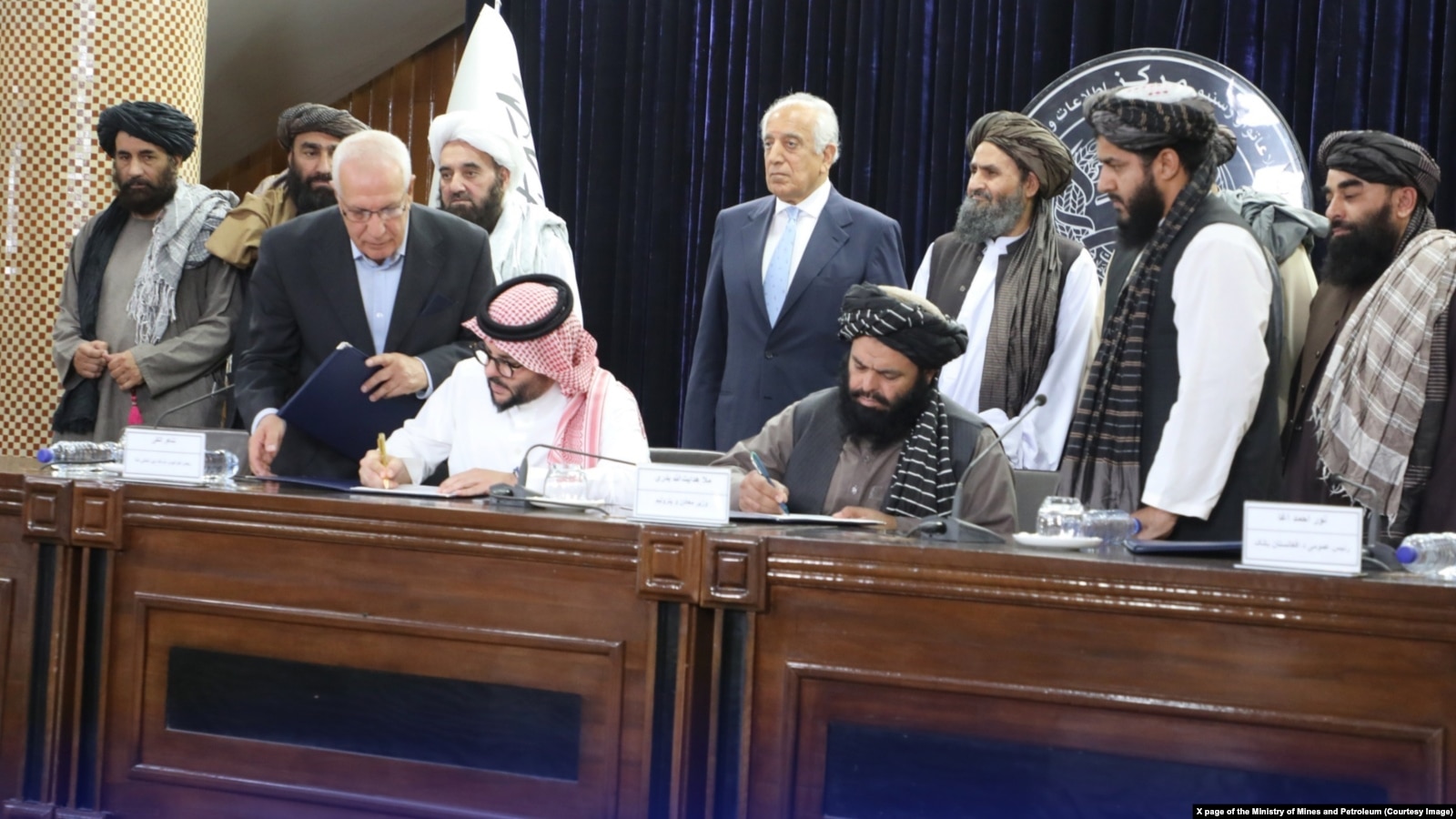
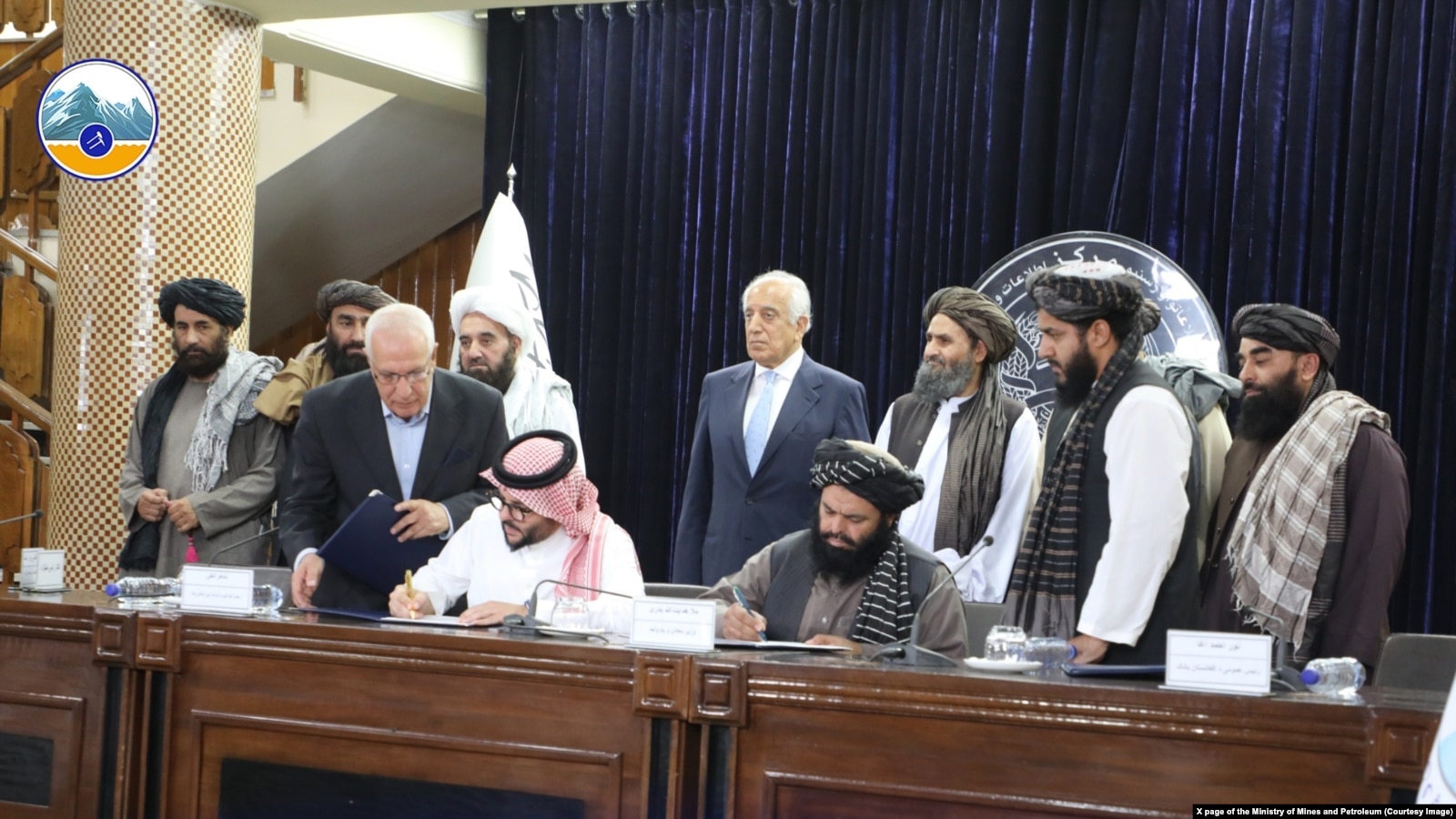
The US State Department has urged American companies to exercise extreme caution when considering business transactions with Taliban-ruled Afghanistan after a former US official attended the signing of a deal between a Saudi energy group and the hard-line authorities. A US State Department spokesperson, who spoke on condition of anonymity, confirmed the warning to RFE/RL, adding that private companies interested in doing business in Afghanistan should ensure their transactions comply with applicable US laws and regulations as the Taliban is on the list of Designated Global Terrorist Groups (SDGT). Washington Distances Itself From Former Envoy Khalilzad's Taliban Meetings Ahead Of 9/11 Anniversary The warning comes after a visit to Afghanistan earlier this week by Zalmay Khalilzad, who was US special envoy to Afghanistan from 2018 to 2021. Khalilzad was in Kabul on September 7 for the signing of a Saudi oil and gas deal and he also met with the Taliban's foreign minister, Amir Khan Muttaqi. The trip, which came on the eve of the 25th anniversary of the 9/11 terror attacks, raised eyebrows as the United States does not recognize the Taliban as the legitimate government of Afghanistan. Washington has distanced itself from Khalilzad's trip, with a State Department spokesman telling RFE/RL that "Khalilzad is not a US government employee. As such, he does not represent the United States government." According to the US Treasury Department, US citizens and companies generally do not have the right to engage in any transactions, payments, contracts, services, or financial cooperation with individuals and entities on this list. Treasury added that non-US individuals and companies that conduct certain transactions with these groups may themselves be subject to US sanctions and civil or criminal penalties. The Taliban's Mines and Petroleum Ministry, which signed the initial $200 million contract with the Saudi company Delta International Energy, says it includes the Kashk-Tirpol oil field located between Herat and Badghis in western Afghanistan. According to the ministry, the deal covers oil and gas exploration across some 23,000 square kilometers of territory of the oil field in western Afghanistan, including a proposed 700-kilometer gas pipeline. 25 Years After 9/11, Could Afghanistan Again Become A Launchpad For Global Terror? Delta International Energy is a Saudi company that invests and engages in business in the Middle East and other markets. The Taliban, which retook power in 2021, is considered one of the most repressive regimes in the world. The international community has blacklisted Taliban leaders and cut off the group from the global financial system. In recent months it has sought to reverse its isolation, seeking both foreign investment and international legitimacy. Russia is the only country that has formally recognized the Taliban as Afghanistan's legitimate government. Several countries -- including China, Kazakhstan, and Uzbekistan -- maintain diplomatic, trade, and economic ties with the Taliban without officially recognizing its government. In June, Taliban officials for the first time held talks in Brussels on the repatriation of Afghans despite sharp criticism from rights groups that said the European Union was legitimizing the hard-line group, which has been accused of severely curtailing the basic rights of Afghans, especially of women.
Ukraine’s foreign minister is urging allies to provide more air defenses after a Russian drone strike on Pavlohrad killed at least five people and injured dozens. RFE/RL correspondent Roman Pahulych arrived as emergency crews treated the wounded and battled fires.
A fresh round of Russian strikes on Ukraine killed at least three people and wounded dozens of others over the past 24 hours, Ukraine's president said on September 12, adding that the strikes targeted civilian sites and infrastructure across the country. "Since the night, there have been virtually constant strikes on our cities and communities," Volodymyr Zelenskyy wrote on social media. "Ten regions were under Russian strikes last night, and Russian attack drones are still flying in many of them." Two people were killed and six others were wounded by a Shahed-type drone strike on residential buildings in the Zaporizhzhia region, he said, adding that a missile attack on "critical infrastructure" in Kryviy Rih killed one person and injured three others. In Odesa, 37 people were injured when a high-rise residential building was hit by Russian missile overnight, and rescue operations were under way at the site. The search continued for two people that were unaccounted for, Zelenskyy said. Earlier, local officials in Odesa said that a 25-story residential building had been damaged, with apartments on the 21st through 23rd floors catching fire. The upper floors were destroyed. Three other residential buildings were also damaged in Odesa, officials said. US House Set To Take Up Russia Sanctions Bill Amid Fight Over Trump Tariff Powers Ukraine's Air Force said Russia attacked the country with ballistic and cruise missiles and 129 attack drones, including jet-powered Shahed-type drones. It said Ukrainian air defenses had destroyed or suppressed 110 of the targets. The air force said strikes were recorded in 20 locations across the country and falling debris in four others. It said the Odesa region was the most affected. The attacks came a day after Russian strikes killed at least six people in Zaporizhzhia and other parts of Ukraine, as Moscow and Kyiv have traded strikes on logistics, energy, and other economic infrastructure in recent weeks. The Kremlin Tries A New Weapon For Its War: The Relics Of A 14th-Century Saint Russia's Defense Ministry claimed on September 12 that Russian forces had hit the Zaporizhstal steel plant in Zaporizhzhia, as well as an Interpipe Steel complex in Dnipro and several facilities in Kryviy Rih, including the Northern Iron Ore Beneficiation Works complex. The ministry also said its forces had struck two cargo vessels overnight in the Ukrainian Black Sea port of Chornomorsk, according to Russia's Interfax news agency. The claims cannot be independently verified. The attacks followed a deadly Russian assault on Zaporizhzhia on September 11, when one person was killed, according to Ukrainian officials. Russia also struck other parts of Ukraine that day, including Kyiv, where attacks on two petrol stations killed two people and wounded at least 12. 'Save Him!' RFE/RL Captures Chaos After Russian Strike On Ukrainian Shops Russia has intensified its air campaign against Ukraine in recent weeks, including repeated attacks with faster jet-powered drones. The strikes have increasingly hit logistics and economic targets as fighting along the front line has largely stalled. On September 10, Russian strikes killed five people in the southeastern industrial city of Pavlohrad and also hit a petrol station in Kyiv and a sunflower-oil facility operated by US-based Bunge in Dnipro. Ukraine Strikes Economic, Industrial Targets Ukraine has also stepped up long-range drone attacks on Russian economic and industrial targets. On September 12, Ukrainian drones struck industrial facilities in Russia's Samara region, Interfax reported, citing regional Governor Vyacheslav Fedorishchev. He did not specify which facilities were targeted or the extent of the damage. Ukraine's military said it had struck the Togliattikauchuk plant, one of Russia's largest producers of synthetic rubber, in the city of Togliatti, causing a fire. The Ukrainian General Staff said the plant produces synthetic rubber and fuel additives used in fuel for Russian missiles. The claim could not be independently verified. The mayor of Togliatti said several residential buildings were damaged and one person was injured. Russia's Defense Ministry said it had downed 230 Ukrainian drones overnight over more than a dozen Russian regions, as well as over Crimea, which Russia illegally annexed in 2014. In a separate attack, four commercial properties were set ablaze in the southern Russian city of Taganrog, local officials said.
Anthropic said it has disrupted attempts by Iran, China, and other countries from using its artificial intelligence (AI) models to disseminate state propaganda and spy on ethnic minorities and dissidents. That is according to the AI company's latest threat intelligence report issued on September 11, which covers incidents from December 2025 to August. The report also said criminals, state institutions, and scientists, including in Russia and China, were using AI models such as Claude and Gemini to design missiles and bombs as well as create deadly pathogens. Trump Downplays Report China Aided Tehran In Attack On US Troops In Jordan 'Cognitive Warfare' Anthropic named several Iranian state institutions it said were using its AI models to shape public opinion inside and outside the country. The entities include the Islamic Culture and Communications Organization, which operates under the Ministry of Culture and Islamic Guidance and oversees Iran's official cultural diplomacy and international relations abroad; the Islamic Propaganda Office, a religious organization; and the Islamic Propaganda Organization, a religious and cultural group. Anthropic accused the institutions of running "cognitive warfare" campaigns and promoting narratives created by the powerful Islamic Revolutionary Guards Corps, the elite branch of Iran's armed forces that plays a prominent role in politics and the economy. "In each case, the operation relied on Claude to build campaign plans, doctrine manuals, persona systems, target databases, and ministerial planning documentation," said Anthropic's report. "Using the model in this manner allowed them to generate complex organizational frameworks and assets that would otherwise have required a fully staffed program office to produce." In one case, the Islamic Culture and Communications Organization used Claude to "complete organizational plans" for the state funeral of slain Supreme Leader Ayatollah Ali Khamenei that took place from July 3-9, Anthropic said. From Russia With Expertise: Iranian Students Return Home With Potentially Deadly Knowledge Of Drones, AI, And More Recruitment Tool Anthropic also said it disrupted an "influence operation" by the Mujahedin-e Khalq (MEK), an exiled opposition group that seeks to overthrow the Islamic republic and that Tehran regards as a terrorist organization. The operation, the AI company said, "used a shared AI agent to impersonate real people and recruit inside Iran." "The operation successfully scraped over 500 social media channels to build detailed profiles of individuals inside Iran," the report said. "They then grouped these targets by city, age, occupation, political alignment, and arrest history likely to help them tailor their messages to the specific audiences." Surveillance Operations Anthropic said it also disrupted operations by state actors, including Iran, that used Claude to "build, run, and otherwise facilitate surveillance operations." In one case, Iran-based actors used Claude to build and deploy a malicious Firefox extension that harvested users' identities from social media networks, the AI company said. In another case, an Iranian actor used Claude to analyze hundreds of thousands of social media posts and chose 39 opposition accounts to monitor. "The operators were state-aligned organizations that targeted the same diaspora and dissident communities these regimes have historically targeted," Anthropic said.
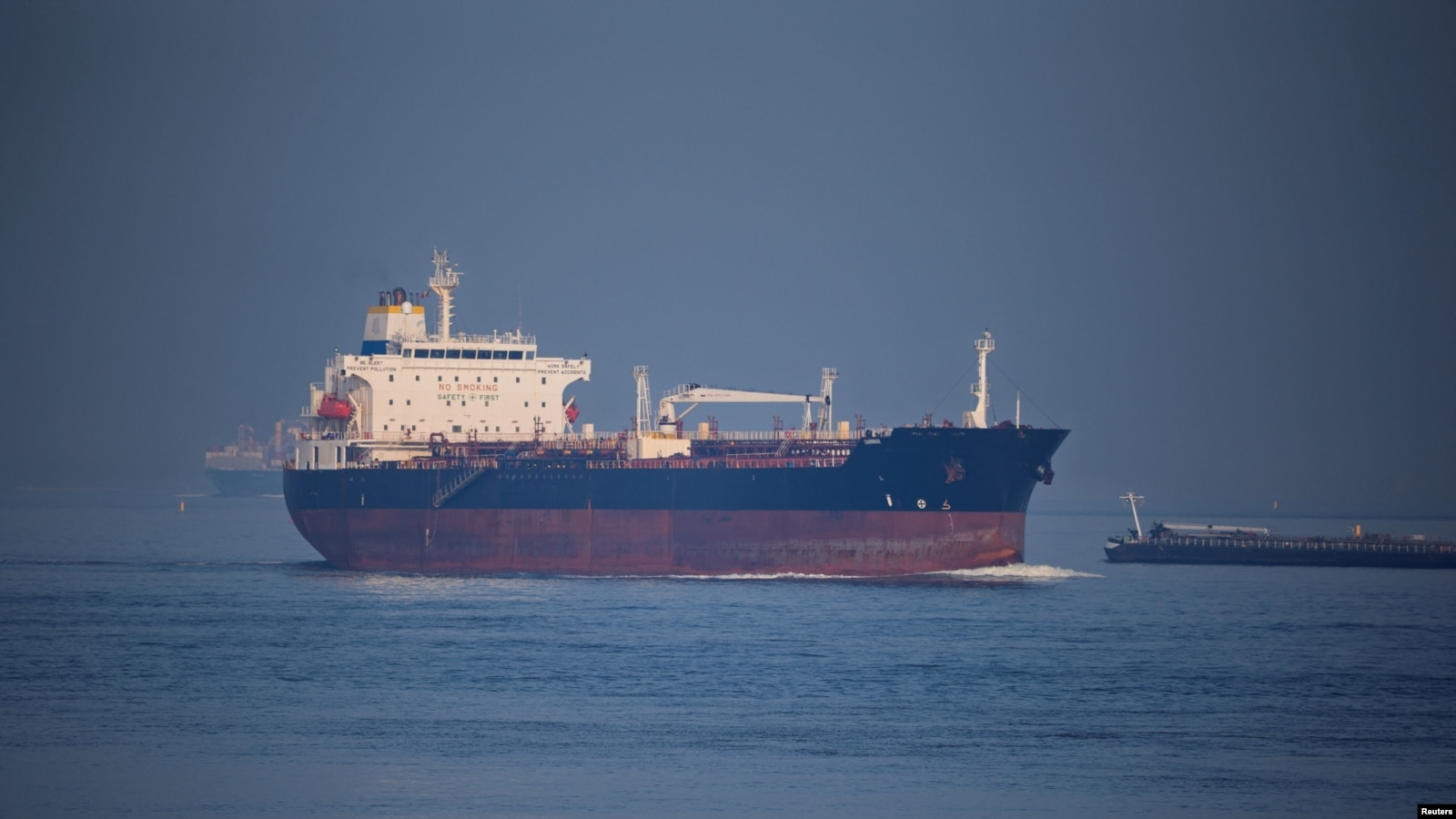
WASHINGTON -- The recent US destruction of five Iranian oil tankers in the Strait of Hormuz has exposed more than the widening confrontation between Washington and Tehran. It has highlighted an increasingly intertwined sanctions-evasion system linking Iran and Russia -- a network of ships, managers, intermediaries, and trading routes that Ukrainian officials and US sanctions experts say the West can no longer treat as two separate problems. Three of the five tankers -- Kaviz, Charminar, and Riesco -- had direct links to Russia’s shadow oil fleet, according to Vladyslav Vlasiuk, Ukrainian President Volodymyr Zelenskyy’s sanctions commissioner. All three transported Russian oil and called at Russian ports, Vlasiuk told RFE/RL on September 10. Riesco, he said, carried both Russian and Iranian oil and participated in ship-to-ship transfers involving other sanctioned vessels. “Russia and Iran have a long history of cooperation, and their sanctions-evasion networks increasingly overlap,” Vlasiuk said. From Russia With Expertise: Iranian Students Return Home With Potentially Deadly Knowledge Of Drones, AI, And More Philip Luck, director of the Economics Program at the Center for Strategic and International Studies and a former deputy chief economist at the US State Department, described the system more bluntly: “There’s not a Russian shadow fleet and Iranian shadow fleet. There’s one shadow fleet that is facilitating Iranian oil sales and Russian oil sales.” Tankers Tied To Moscow Kaviz operated between the Russian ports of Ust-Luga and Novorossiysk and had a history of switching off its automatic identification system, which allows authorities and other vessels to track ships. Vlasiuk linked it to Fractal Marine DMCC, a network involved in moving Russian oil after Western sanctions were imposed. Charminar repeatedly called at Russian ports, including Ust-Luga, Primorsk, Vysotsk, and St. Petersburg. Vlasiuk said it was connected to a shipping network controlled by Iranian oil businessman Mohammad Hossein Shamkhani. After Britain sanctioned Fractal Marine, vessels connected to the network were transferred to other managers while their Russian oil operations continued, Vlasiuk said. US Sanctions All Remaining Iranian Airlines In Sweeping Aviation Crackdown Riesco illustrates the two-way nature of the trade. It carried both Russian and Iranian oil and participated in ship-to-ship transfers involving other sanctioned vessels. All three tankers are sanctioned by Ukraine and the United States, according to Vlasiuk. Kaviz is also sanctioned by the European Union, Britain, Canada, and Switzerland. Vlasiuk did not estimate how much revenue the vessels generated for Russia. Their importance, he said, lies in helping Russian oil reach global markets despite Western restrictions. “These vessels were part of the infrastructure that enabled Russian oil to keep reaching the global market despite sanctions, allowing Russia to preserve a major source of revenue,” he said. For Ukraine, that infrastructure is itself a target. “The same vessels, masters, managers, intermediaries and shipping routes are used to transport both Russian and Iranian oil,” Vlasiuk said. One Fleet, Two Oil Trades Luck said the implications extend beyond the three ships because Russia and Iran sell oil to many of the same markets. That creates a challenge for sanctions policymakers: measures aimed at one country’s oil trade may affect the other because the logistics are shared. “So anything, if you want to put more pressure on Iran, you’re gonna be putting more pressure on Russia,” Luck said. “And if you put more pressure on Russia, you’re putting more pressure on Iran. It’s the exact same problem.” The issue has become more urgent as Washington combines economic pressure on Tehran with direct military action. The US says the Iranian tankers were part of a shadow network helping finance Iran’s Islamic Revolutionary Guard Corps and its proxies. The strikes followed Iranian attacks on US naval forces, while Secretary of State Marco Rubio has warned that Washington will respond to further attacks. US Targets Turkish Bank In New Bid To Cut Iran's Financial Lifelines The confrontation has also increased pressure on energy markets. Washington and Tehran are seeking influence over the Strait of Hormuz, through which roughly one-fifth of global oil supplies passed before the war. For Kyiv, the tanker strikes show why maritime networks have become an increasingly important sanctions target. “As long as this infrastructure remains operational, opportunities to evade sanctions will remain,” Vlasiuk said. Ukraine Sees A Wider Russia-Iran Link The episode comes as Washington considers expanding its ability to target Russia’s energy revenues and the networks helping Moscow evade sanctions. The Lindsey O. Graham Sanctioning Russia and Iran Act of 2026 passed the Senate on August 7 by 86-11. It targets Russia’s shadow fleet, imposes additional sanctions on Russian officials and financial institutions, and authorizes the president to impose duties of up to 100 percent on goods from major purchasers of Russian oil and gas and countries involved in sanctions evasion. It also extends the Iran Sanctions Act for five years. The bill’s future in the House remains uncertain, but Ukraine says it could provide leverage against Russia, whose energy revenues remain central to financing the war. At a September 10 briefing hosted by the Bipartisan Congressional Ukraine Caucus, Ukraine’s Charge d’Affaires in Washington, Denys Sienik, urged lawmakers to view the measure as a source of leverage rather than a finished instrument. “All the decisions, major decisions, indeed require compromise,” Sienik said. He warned that Russia continues earning substantial oil and gas revenues while producing weapons and recruiting soldiers. “What message will it send to Ukrainians, and what message will it send to Russia if this does not pass?” he asked. Former State Department sanctions coordinator Daniel Fried offered a similar assessment. “If the US authority would increase diplomacy to end Russia’s war against Ukraine, it should increase the leverage it’s using against Russia,” he said. “Now is the time to use it.” Fried cited the Obama administration’s Iran policy, when Congress pressured the administration to threaten countries buying Iranian oil while allowing waivers for nations that significantly reduced purchases over six-month periods. China and India protested but ultimately reduced their imports. He said the current bill could likewise give Washington room to negotiate with major buyers rather than automatically impose maximum penalties. Fried acknowledged questions about how the bill’s thresholds would be calculated and how authorities would determine the destination of Russian oil. “But with this bill, if it passes, there is something to work with,” he said. “There is leverage. If it doesn’t pass, there is nothing, zero.” Fried said sanctions need not eliminate every barrel of Russian or Iranian oil from global markets. Their goal is to reduce the revenue available to sustain war. Forcing Russia to sell at lower prices, he said, can also reduce money flowing to the Kremlin. That approach places the shadow fleet at the center of the sanctions debate. The objective is not simply to stop individual ships, but to make the networks moving sanctioned oil more expensive, unreliable, and difficult to replace. Ukraine’s argument is that those networks are already shared by Russia and Iran. The three tankers identified by Kyiv offer a case study: vessels moving Russian oil, Iranian oil, or both; managers shifting between sanctioned networks; and ship-to-ship transfers helping cargoes reach international markets. As Washington escalates pressure on Tehran and considers additional measures against Moscow, that convergence could become increasingly important.
10 Sep 2026, 12:23 GMTRay Furlong, RFE/RL's Radio Azadi
A visit to Afghanistan by a former US special envoy that included meetings with senior Taliban officials and a major oil and gas deal has touched a raw nerve on the eve of the 25th anniversary of 9/11 . Zalmay Khalilzad, US special envoy to Afghanistan 2018-21, was in Kabul on September 7 for the signing of an agreement between a Saudi energy group and the Taliban authorities that could lead to billions of dollars of investment. During his visit, he also met with the Taliban's foreign minister, Amir Khan Muttaqi. The United States does not recognize the Taliban as the legitimate government of Afghanistan, and Washington has distanced itself from Khalilzad's trip. "Khalilzad is not a US government employee. As such, he does not represent the United States government," a State Department spokesman told RFE/RL. 25 Years After 9/11, Could Afghanistan Again Become A Launchpad For Global Terror? "The Taliban remain designated as a Specially Designated Global Terrorist (SDGT) group. As such, we urge private companies interested in conducting business in Afghanistan to exercise extreme caution and ensure their transactions comply with applicable US law and regulation," the spokesman added. Khalilzad's presence has raised questions about his role in the deal and speculation about a possible back channel in communications with the Taliban. He negotiated and signed the agreement with the Taliban in 2020 under which international forces would withdraw from Afghanistan, an operation that was completed the following year. He has traveled to Taliban-ruled Afghanistan several times and held previous meetings with Taliban officials. He notably was present in Kabul at the release of 64-year-old American citizen Dennis Coyle from a Taliban prison on April 4 this year. "Experience has shown that people who have worked at high levels of the American government in recent decades can sometimes influence the country's foreign policy and relations even after retiring," Mir Abdul Wahid Sadat, head of the Afghan Lawyers Association, told RFE/RL's Radio Azadi . Tariq Farhadi, an Afghan political analyst based in Europe, said that even though Khalilzad's visit appeared private, his influence and contacts in the United States could be important to the Taliban. The group is seeking both foreign investment and international legitimacy. "He has about 40 years' experience in American politics and knows many people in the government and Congress," Farhadi told RFE/RL. From Al-Qaeda To Lone Wolves And AI: How Terrorism Has Changed Since 9/11 "History does not stand still, and it is not easy to predict the future course of US policy," he added, pointing to how Syrian President Ahmed al-Sharaa has gone from being hunted as a terrorist to being feted at the White House. Khalilzad has posted news reports on the energy deal in which he says it is an "indication that Afghanistan is ready for business" and a significant development for the country. It came days after the Financial Times reported that the Taliban had offered the Trump administration access to Afghan mineral resources in return for sanctions relief and release of frozen assets. The deal brings together Saudi Arabia's Delta Energy Group and Afghanistan's Ministry of Mines and Petroleum for oil and gas exploration across some 23,000 square kilometers of territory in western Afghanistan. It includes a proposed 700-kilometer gas pipeline. "[Khalilzad] is currently working as a consultant on the Delta project…and there is also a possibility that he will partner with a company in this project," said Farhadi. His possible business role has raised some eyebrows. Michael Rubin, director of policy analysis at the Middle East Forum , noted that Khalilzad was in the White House situation room on September 11, 2001, yet now "appears to profit" from the deal. "Khalilzad's tone-deaf ceremony in the Taliban's capital as Americans mourn…demands congressional hearings if not greater investigation," he wrote. Afghan war veteran Will Selber, writing for the Foundation for Defense of Democracies , also criticized his presence. "Whatever his intentions, Khalilzad gave the Taliban something it has sought since returning to power: an appearance of American validation," he wrote.
10 Sep 2026, 10:47 GMTJulia Parnis, RFE/RL's Ukrainian Service
PAVLOHRAD, Ukraine -- President Volodymyr Zelenskyy said Ottawa will provide Ukraine with air defense support as he visited Canada in an attempt to shore up support from the country's allies amid deadly Russian drone and missile attacks.
10 Sep 2026, 10:47 GMTJulia Parnis, RFE/RL's Ukrainian Service
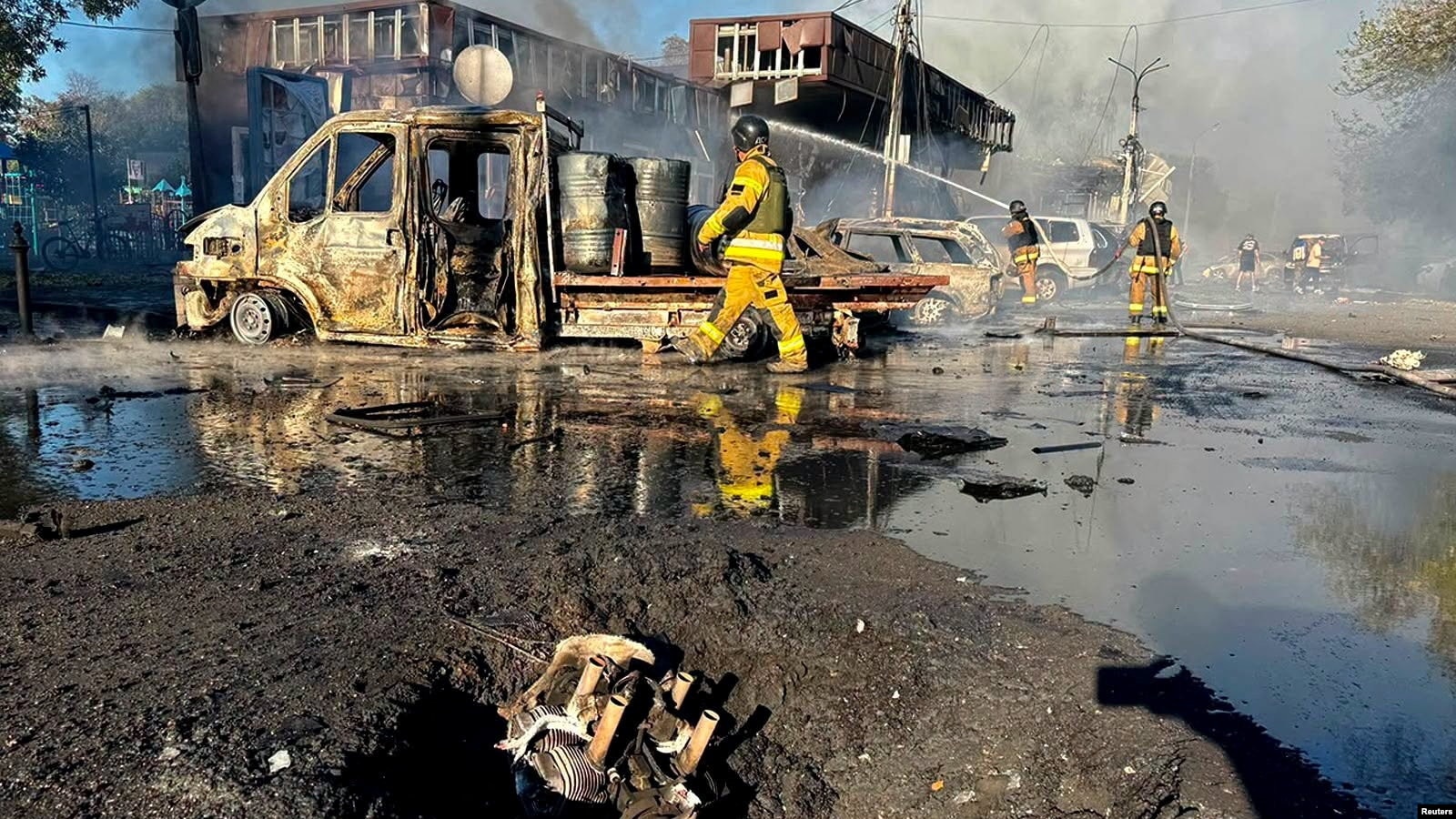
PAVLOHRAD, Ukraine -- President Volodymyr Zelenskyy said Ottawa will provide Ukraine with air defense support as he visited Canada in an attempt to shore up support from the country's allies amid deadly Russian drone and missile attacks. "This is a very important package of air defense," he told reporters on September 10, adding that Canada will also provide aid to Ukraine's energy industry. He provided no further details. The Ukrainian president arrived in Canada's western city of Calgary a night earlier after a visit to Norway for the funeral of King Harald V and talks on air defense support. His plane was delayed on its way to Oslo after an alert in Moldova that a Russian drone had entered the nearby airspace. "Canada remains one of our closest partners," Zelenskyy wrote on X after his arrival in Canada. "We value the support of the Canadian people and the decisions that help Ukraine to withstand the war and to protect our people." From Russia With Expertise: Iranian Students Return Home With Potentially Deadly Knowledge Of Drones, AI, And More Zelenskyy's visit came as Russia continued to launch intense air attacks on Ukraine, with fresh strikes reported on September 10 in Kyiv, Dnipropetrovsk, Donetsk, and Mykolayiv regions. At least 10 people were killed in Russian strikes across these regions, while more than 100 others were injured, including children. In Dnipro, the capital of the east-central Dnipropetrovsk region, Russian forces struck a food-industry facility that had already been damaged in an earlier attack the same day, while in neighboring Pavlohrad, a shopping area and cars caught fire after an evening strike. "There was a hit in central Pavlohrad by a Shahed drone," RFE/RL Ukrainian Service correspondent Roman Pahulych reported from the aftermath site, adding that another strike followed less than a minute later. "There are shopping premises here. There was heavy traffic here -- a bus stop is located here," he added, as he filmed devastating images showing ruined buildings and burnt-out cars. Farther east, in the frontline city of Kramatorsk in the Donetsk region, regional authorities said Russian forces had struck four times, with impacts reported near educational facilities and a multistory residential building. Russian air strikes also hit the southern port city of Mykolayiv, as well as civilian and industrial infrastructure in the surrounding region. Aftermath of Russian Attacks on Ukrainian Cities Moscow has stepped up its air war in recent months, using ballistic missiles and jet-powered drones that have taken advantage of Ukraine's dwindling air defenses. Among other targets, the attacks have hit Ukraine's power grid ahead of the upcoming fifth wartime winter. Since the beginning of its invasion, Russia has sought to paralyze Ukraine's energy system, leaving thousands of people across the country with no heating and electricity amid freezing temperatures. Russia's Jet-Powered Drones: A Major New Threat To Ukraine Amid Speeding Arms Race Ukraine, meanwhile, has continued its own long-range strikes inside Russia. Overnight on September 9-10, Ukrainian drones struck the Russian Caspian Sea port of Makhachkala in Daghestan. Elsewhere, Russian authorities reported one person died and two were injured in another attack in the Voronezh region. Russia's Defense Ministry claimed that 448 Ukrainian drones were shot down overnight. The intensifying exchange of strikes has put air defense and the protection of Ukraine's energy infrastructure at the center of Zelenskyy's trip. Canadian Prime Minister Mark Carney said in a statement on September 9 that Zelenskyy's visit "will focus on shared priorities between Canada and Ukraine, including deepening defense, economic, and energy cooperation." "It will also address the human cost of Russia's war of aggression against Ukraine and build on the strong people-to-people ties that connect our countries," the statement said, adding that Canada "remains steadfast in our commitment to support Ukraine's defense, recovery, and reconstruction." Renewed Diplomatic Efforts As fighting remains intense, Zelenskyy's latest international trip comes amid renewed US-mediated efforts to find a path toward ending the war. After months of stalled talks aimed at ending the conflict, US special envoys Steven Witkoff and Jared Kushner visited Kyiv and Moscow over the past weekend in what appeared to be the latest attempt to narrow the gap between the two sides' negotiating terms. Days later, Russian President Vladimir Putin spoke by phone with US President Donald Trump, a conversation the Kremlin described as "constructive and quite frank." "We had a great conversation. He [Putin] is wanting to make a deal, and if Zelenskyy is wanting to make a deal, that'd be very nice," Trump told reporters on September 9, adding, "These are two people that are tired of fighting." Putin has given no sign he is ready for a cease-fire unless Kyiv makes major concessions it has rejected, including ceding territory in the eastern Donbas region that Russian troops have been unable to take by force. Kremlin aide Yury Ushakov suggested Putin told Trump that an immediate cease-fire could be secured if the United States would end all support for Kyiv. US Envoys Conclude Moscow Meeting With Putin As Kremlin Cites 'Difficult Situation' On September 9, the Financial Times reported that CIA Director John Ratcliffe is preparing to take a bigger role in US negotiations with Russia and Ukraine, citing unnamed sources the paper said indicated the roles of US special envoy Steve Witkoff and Trump's son-in-law Jared Kushner might be scaled back to make room for Ratcliffe. In a post on X , White House spokeswoman Anna Kelly called the FT story "incorrect and ridiculous." CIA spokeswoman Liz Lyons, also on X , wrote: "This reporting is false." Witkoff and Kushner have led the talks with Moscow and Kyiv for the last year and a half. According to the FT, officials close to Ratcliffe have told their European peers that in addition to maintaining contact with intelligence agencies in both Russia and Ukraine, the CIA director would now play a more active role in shuttle diplomacy.
Iran launched fresh missile attacks on Jordan, saying it was targeting a US military base in retaliation for strikes on Iranian oil tankers. Jordan says it intercepted 18 ballistic missiles, while the US military says it destroyed five Iranian crude carriers after Iran's failed attempted attacks on a US warship. The latest exchanges mark a sharp escalation in the conflict around the Strait of Hormuz and the Gulf of Oman.
Iran said it attacked vessels near the Strait of Hormuz on September 9 after the United States destroyed several Iranian oil tankers overnight, in a sharp escalation in the six-month war.
Iran said it attacked vessels near the Strait of Hormuz on September 9 after the United States destroyed several Iranian oil tankers overnight, in a sharp escalation in the six-month war. The tit-for-tat strikes led to a surge in global oil prices, with Brent crude reaching $100 per barrel for the first time since July. Tehran also said it had fired ballistic missiles at a US base in Jordan. No casualties or damage were reported. Iran and the United States have been engaged in tit-for-tat strikes in the past few weeks, in a move that observers say could reignite a full-blown war. US President Donald Trump said on September 9 that the United States was not looking for a deal to end the war, although he added that negotiations could happen. Trump also told reporters that he believes that the conflict will end “immediately” after the midterm elections in November because Iran “can't hold out any longer.” Trump Downplays Report China Aided Tehran In Attack On US Troops In Jordan Targeting Shipping The US military said it sank five Iranian oil tankers overnight near Kharg Island, Iran’s main oil export hub, calling it a response to Tehran firing missiles at a US Navy warship over the past two days. Iran retaliated by firing 20 ballistic missiles toward Jordan, which said it intercepted 18 of them. Jordan said two of the missiles landed in unpopulated areas. The Islamic Revolutionary Guards Corps (IRGC), the elite branch of Iran’s armed forces, claimed that it also attacked two US vessels, eight oil tankers, and 10 “noncompliant vessels” that were trying to pass through the Strait of Hormuz. A key artery for global energy supplies, the strategic waterway has been effectively closed by Tehran since the start of the war with the United States in February. Earlier in the war, Iran established a shipping route in the Strait of Hormuz that hugged the Iranian coastline. It said any vessels using a US-backed route along Oman’s coast would be targeted. The United Kingdom Maritime Trade Operations (UKMTO), which is affiliated with the British Navy, said on September 9 that “several” vessels in the Gulf of Oman and the Persian Gulf were “subject to disabling fire as part of ongoing military activity in the region.” Tehran Targets US Base In Jordan After Iranian Oil Tankers Sunk Separately, the IRGC warned tanker crews in ports in Kuwait and Bahrain, both US allies, to evacuate, raising fears of further disruption around the Strait of Hormuz. The escalation has already affected shipping: data from Kpler, a commodities and shipping analytics company, showed only six commercial vessels crossed the strait on September 8, well below the recent average. Also on September 9, the IRGC for the first time added parts of the Gulf of Oman and the Arabian Sea to a new "prohibited zone" where vessels will be subject to “sanctions.” US Warns Iran Will 'Lose Tankers' Iran's Foreign Ministry condemned the US attack on its oil tankers as “an overt threat to regional and international peace and security,” saying that they "increase the dangers of tensions in the region.” US Sanctions All Remaining Iranian Airlines In Sweeping Aviation Crackdown US Secretary of State Marco Rubio said Iran would “lose tankers” every time it attempted to hit US ships. "Iran continues to try to hit US naval ships, and for every time they do that or try to do that, they're going to lose tankers, and I think you'll see that again today," Rubio told reporters on September 8 on a visit to Colombia. Rubio's remarks came as Washington intensified its campaign to squeeze Iran economically. The United States announced new sanctions on September 8 targeting Iran's aviation sector and companies accused of helping Tehran obtain aircraft and sensitive technology. On the same day, Iran's national currency, the rial, fell to a new low against major foreign currencies. The United States has also imposed a naval blockade on Iranian vessels and ports, disrupting Iran’s oil exports, its key source of revenue.
9 Sep 2026, 12:06 GMTRFE/RL's Moldovan Service, RFE/RL's Ukrainian Service
Ukrainian drones struck a naval base and oil terminal in Russia's southern port city of Novorossiisk, with Kyiv saying several warships were hit, including a Kalibr missile carrier. Local officials reported 4 dead and at least 29 injured.
9 Sep 2026, 12:06 GMTRFE/RL's Moldovan Service, RFE/RL's Ukrainian Service
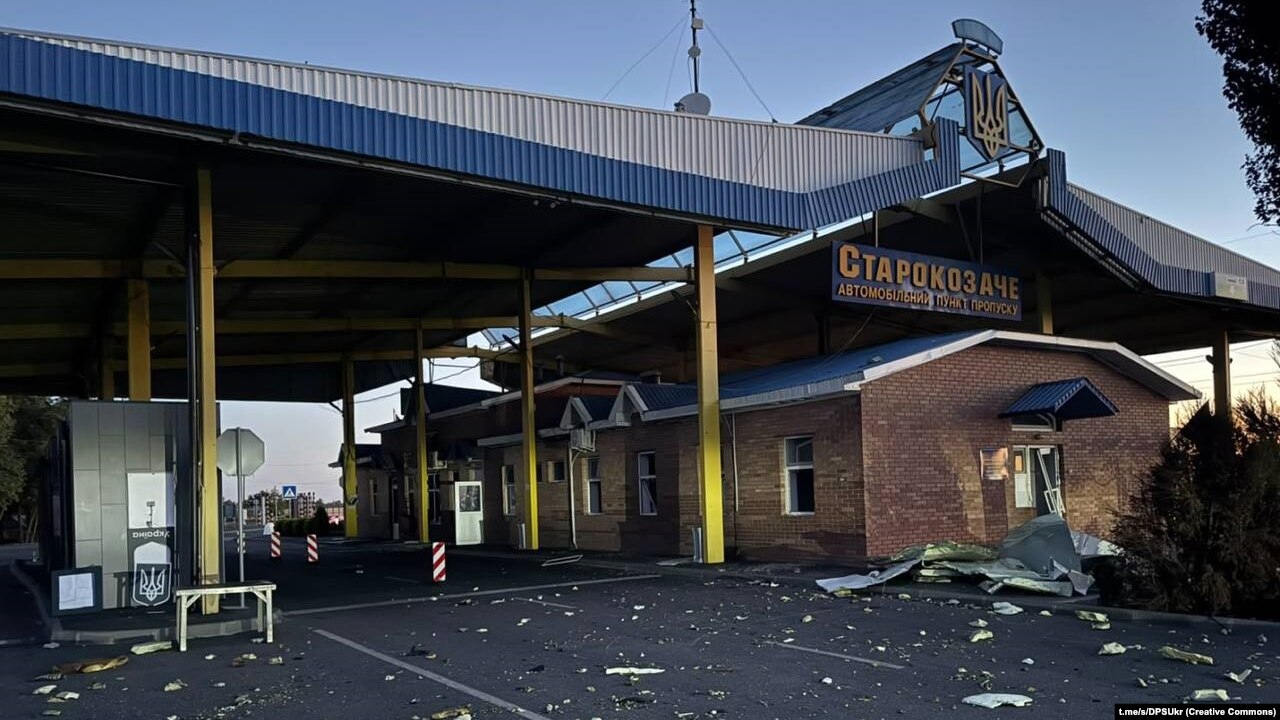
A Russian drone attack targeted a border crossing between Ukraine and Moldova, killing two people and injuring three others, while Russian drones also struck in Kyiv, as Moscow continues its campaign of near-continuous strikes across Ukraine. The Russian attack on the Starokazache–Tudora border crossing in Ukraine's Odesa region on September 9 damaged checkpoint infrastructure, vehicles, and buildings, sparked a major fire, and forced the evacuation of 16 people, Ukraine's State Border Guard Service reported . Moldovan authorities condemned the strike, and President Maia Sandu warned that Russian attacks pose a growing threat to Moldova. "Russia's front line is moving further west -- which is why air defense for Ukraine is urgent," she wrote in a post on X. Sandu said the border crossing had been closed following the attack. The strike came a day after a Russian drone entered Moldovan airspace, prompting authorities to temporarily halt flights and delaying Ukrainian President Volodymyr Zelenskyy's departure from the country for Norway. Norwegian Prime Minister Jonas Gahr Store later said Zelenskyy's plane had been "almost hit by a drone" as it departed Moldova. But a Ukrainian presidential source described the suggestion that Zelenskyy had been in danger as "exaggerated" while Moldovan authorities said they had temporarily closed the country's airspace after detecting a Russian drone, delaying several flights, including Zelenskyy's. His plane was cleared to depart after the restrictions were lifted. Moldovan Prime Minister Vasile Tofan noted in a post on Facebook that the Kremlin's war against Ukraine was "increasingly endangering the lives of our citizens as well." In attacks on the Ukrainian capital, Russian drones killed one person and injured 17 others, according to Kyiv authorities. One drone struck a 24-story residential building, causing a fire. Russian Drone Strikes Residential Building In Kyiv, Causing Injuries Moscow has launched near-daily attacks on Ukrainian cities and civilian infrastructure across the country using strike drones, missiles, and guided aerial bombs, underscoring its intent to press forward with the nearly 4 1/2-year full-scale war on Ukraine despite astronomical casualties. Ukraine Hits Russia's Novorossiisk Ukraine targeted the Russian Black Sea port of Novorossiisk overnight, Ukrainian authorities reported on September 9. "A naval base was hit, including a terminal used to load oil, military port facilities, and warships carrying Kalibr missiles," Ukrainian President Volodymyr Zelenskyy said, adding that Ukraine is responding effectively to "Russia's daily terrorist strikes." Ukraine Strikes Russian Warships And Oil Terminal In Novorossiisk Russian authorities confirmed the Ukrainian drone attack on Novorossiisk, reporting that four people, including a child, were killed, according to Krasnodar region Governor Veniamin Kondratyev. Russia's Defense Ministry said on September 9 that its forces had downed 596 Ukrainian drones overnight, a day after Russia President Vladimir Putin spoke by phone with US President Donald Trump, a conversation that the Kremlin described as "constructive and quite frank." Washington has not yet commented on the call. The attacks followed US envoys Steve Witkoff and Jared Kushner's visit to Kyiv for talks with President Volodymyr Zelenskyy and other officials, after their earlier meetings in Moscow with President Vladimir Putin. Zelenskyy, meanwhile, arrived in Canada late on September 9 following his visit to Norway, where he attended the funeral of King Harald V and held talks on air-defense support. His visit to Canada is expected to focus on defense, economic, and energy cooperation, according to Canadian Prime Minister Mark Carney's office. With reporting by AFP and dpa