US Agency for Global Media USAGM

News and Information from Around the World

Items
Active filters Topic: China Clear all
2 Sep 2026, 18:13 GMT Xia Miao for RFA Mandarin

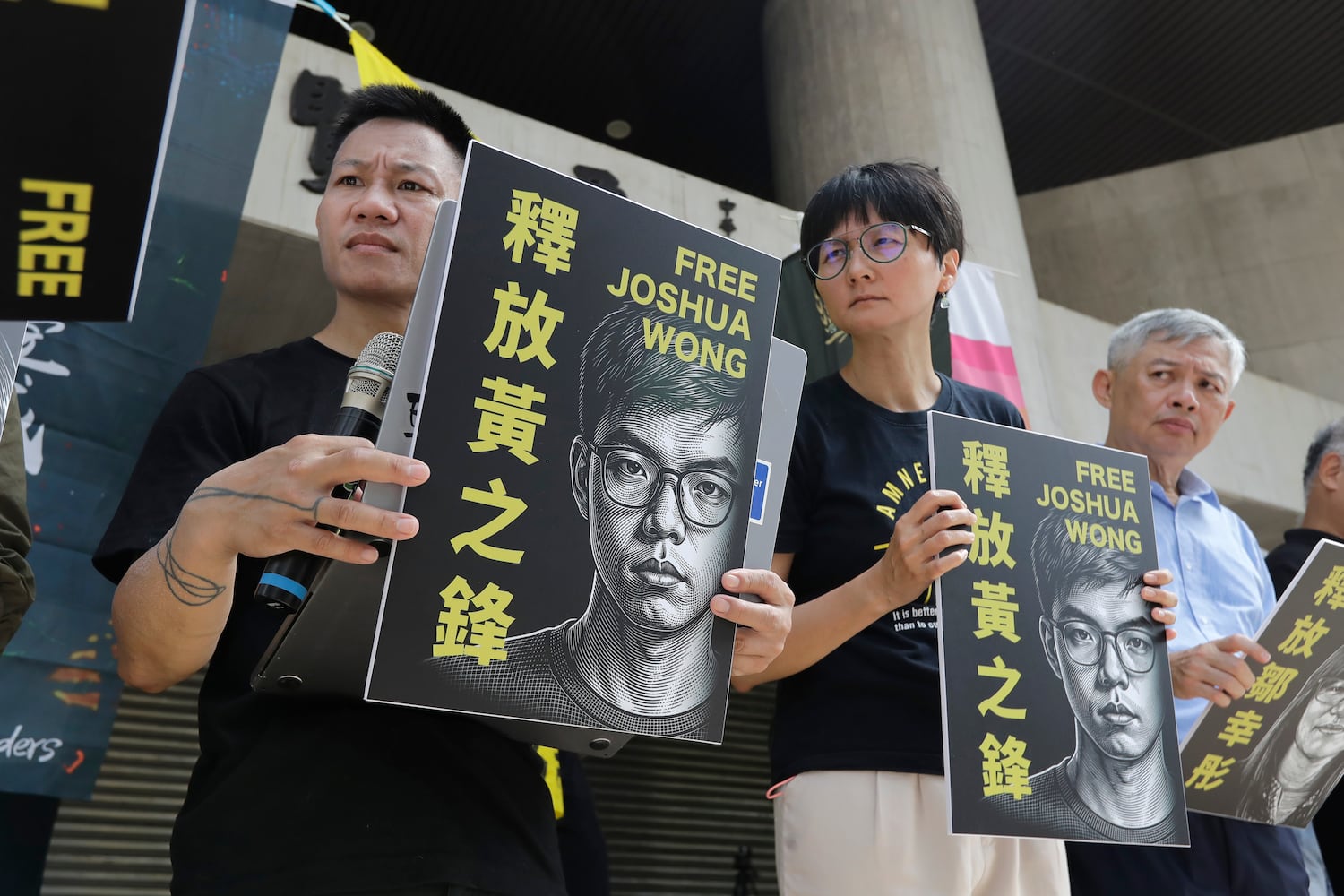
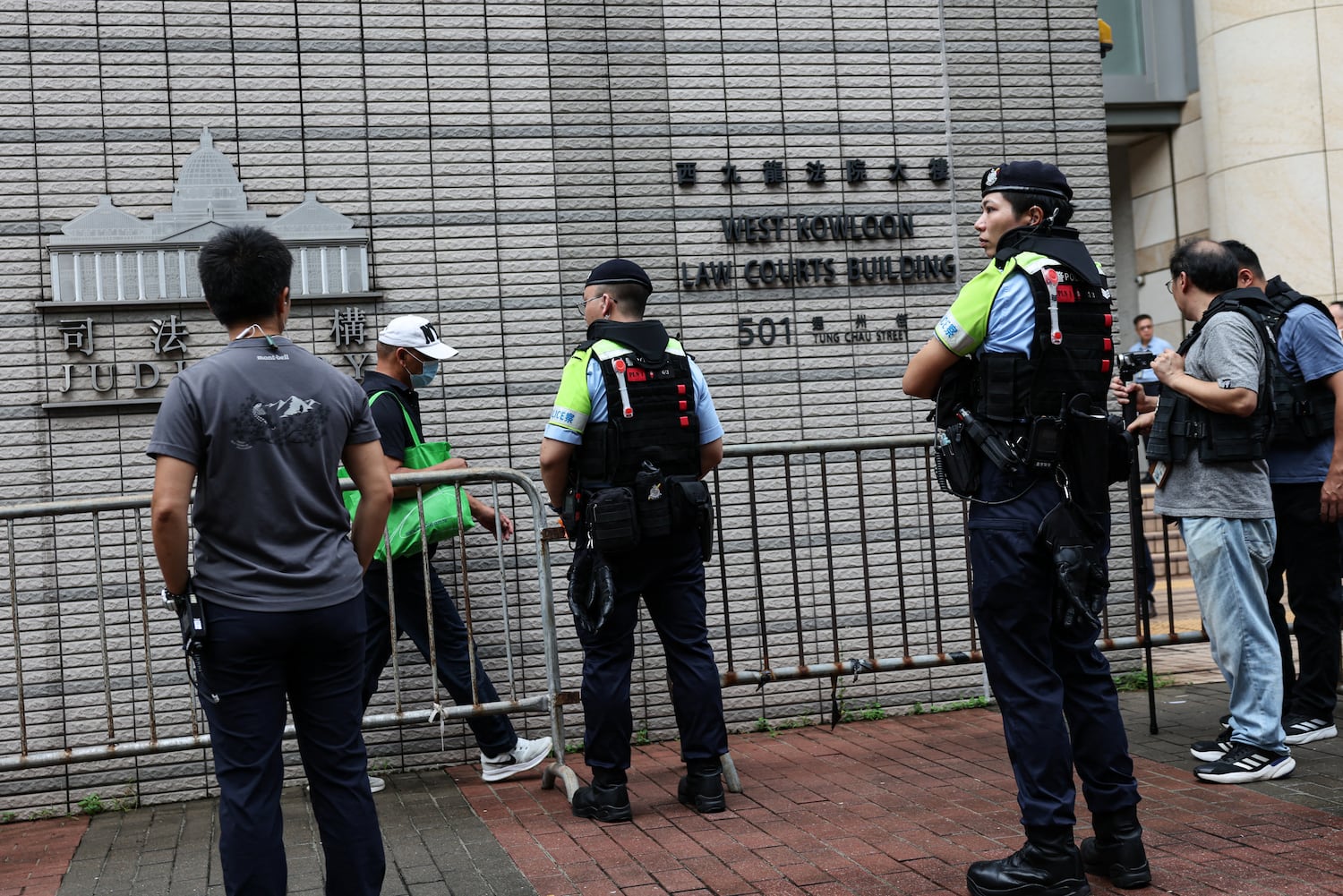
Read a version of this story in Mandarin One of Hong Kong’s most prominent pro-democracy activists, Joshua Wong, will likely have to serve consecutive sentences after pleading guilty to foreign collusion Wednesday, a Hong Kong-based legal professional told Radio Free Asia. Wong, 29, is one of the most internationally recognizable faces of the now-quashed democracy movement in the city. He was among 45 Hong Kong opposition politicians and pro-democracy activists who were convicted with “conspiracy to commit subversion” under the city’s 2020 National Security Law for taking part in a democratic primary in the summer of 2020. He is already serving a four-year-and-eight-month sentence for subversion. He is currently due for release in January, but will almost certainly have to serve more time after entering his plea. A March 4, 2021, photo shows pro-democracy activist Joshua Wong walking to a prison van to head to court in Hong Kong. (Tyrone Siu/Reuters) Wong is accused of trying to call on foreign countries, organizations or people in 2020 to “impose sanctions or blockade, or engage in other hostile activities” against China and Hong Kong over the controversial law. The foreign collusion charge has a maximum sentence of life imprisonment, but Wong’s lawyer, Derek Chan, asked Judge Tam Yiu-ho to give Wong a sentence of three to 10 years, which is at the “upper end of the lower band” of punishments for the crime, according to a report by AFP. Chan noted that Wong had already served most of his first sentence and that his actions in the second crime were not particularly severe. Low possibility of parole Regardless of what sentence Wong will receive, he will likely have to serve it in its entirety after his current sentence is up, a Hong Kong legal professional identified only by his surname Wang, told RFA Mandarin. “Under the principles of common law in Hong Kong, when two cases involve different offenses, the court will consider the criminal acts, the time of occurrence, and the relationship between the two cases before deciding whether the sentences will be served concurrently or consecutively,” said Wang. “Judges will also adjust the sentence according to the totality principle to ensure that the total sentence is proportionate to the overall culpability.” Wang said the key to determining how long Wong would serve would be whether the court considers him to be a “principal offender, or one whose offences were of a grave nature,” an “active participant” in the crime, or an “other participant.” Wong could also receive a one-third reduction of his sentence for pleading guilty. The likelihood that Wong would receive parole is very low, Wang said, so he would probably have to serve the full sentence. Judge Tam said that the sentence would be decided “as soon as possible” but did not offer a specific date, AFP reported. Deprived of freedom According to reports, Joshua Wong has been continuously detained since November 23, 2020, after pleading guilty to the June 21, 2019, siege of the Hong Kong Police Headquarters. He was subsequently implicated in cases involving unauthorized assembly, including a rally to commemorate the 1989 Tiananmen Square Massacre, and his involvement in the pro-democracy primary. He has now been deprived of his freedom for more than 2,100 days. The prosecution alleges that Joshua Wong and another prominent pro-democracy figure, Nathan Law, had been conspiring together since 2016. Police officers stand guard outside the High Court in Hong Kong, Sept. 2, 2026. (Chan Long Hei/AP) The two lobbied internationally to promote the “democratic self-determination” proposition, traveling to the United States, Germany, and Italy to meet with local political figures, including then-U.S. House Minority Leader Nancy Pelosi and then-U.S. Senator Marco Rubio, and participating in the promotion of the Hong Kong Human Rights and Democracy Act. Wong also spearheaded four joint petitions demanding that the United States, France, and Switzerland cease supplying weapons or strategic equipment to the Hong Kong police. Law left Hong Kong after the national security law went into effect in 2020, but Wong vowed to stay. More than 30 people had lined up overnight outside the court to obtain tickets to attend the hearing, with police officers on standby. One of the citizens in line, identified by her surname Liao, told the media that she wanted to offer moral support to Joshua Wong, because she believes he should not be treated this way. Hong Kong pro-democracy activist Joshua Wong speaks to the media after being arrested and released on bail on August 30, 2019 in Hong Kong. (Chris McGrath/Getty Images) (Chris McGrath/Getty Images) In this photo provided by Demosisto, Joshua Wong, secretary general of the political party Demosisto, is taken away by traffic police during an attempt to intercept the motorcade of top Chinese official Zhang Dejiang on May 19, 2016 in Hong Kong. (Getty Images) (Getty Images) As photos of Hong Kong democracy activists (clockwise from top) Jimmy Lai, Joshua Wong and Benny Tai are on display in the background, U.S. Speaker of the House Rep. Nancy Pelosi testifies during a hearing before The Congressional-Executive Commission on China (CECC) at Dirksen Senate Office Building on Capitol Hill on February 3, 2022 in Washington. (Alex Wong/Getty Images) (Alex Wong/Getty Images) Joshua Wong, center, campaigns with his replacement candidate Kelvin Lam on November 23, 2019 in Hong Kong. (Chris McGrath/Getty Images) (Chris McGrath/Getty Images) Pro-democracy activist Joshua Wong attends a press conference after being disqualified for his Legislative Council nominations on July 31, 2020 in Hong Kong. (Anthony Kwan/Getty Images) (Anthony Kwan/Getty Images) Hong Kong protest leader Joshua Wong, 22, speaks as thousands of protesters surround the police headquarter in Hong Kong on June 21, 2019. (Paula Bronstein/Getty Images ) (Paula Bronstein/Getty Images) Student leader and pro-democracy activist Joshua Wong speaks to media on a road outside the Hong Kong Government complex on November 17, 2014 in Hong Kong. (Chris McGrath/Getty Images) (Chris McGrath/Getty Images) Pro-democracy activist Joshua Wong speaks during a press conference after being disqualified for his Legislative Council nominations on July 31, 2020 in Hong Kong. (Anthony Kwan/Getty Images) (Anthony Kwan/Getty Images) Hong Kong pro-democracy activists Agnes Chow, left, and Joshua Wong speak to the media after being arrested and released on bail on August 30, 2019 in Hong Kong. (Chris McGrath/Getty Images) (Chris McGrath/Getty Images) Pro-democracy activist Joshua Wong speaks to the media and supporters outside the Legislative Council shortly after being released from prison on June 17, 2019 in Hong Kong. (Carl Court/Getty Images) (Carl Court/Getty Images) Pro-democracy activist Joshua Wong prepares to board a Correctional Service Department van at Lai Chi Kok ahead of a court hearing at Lai Chi Kok Reception Centre on December 18, 2020 in Hong Kong. (Anthony Kwan/Getty Images) (Anthony Kwan/Getty Images) Joshua Wong is being punished for exercising his right to free speech, Frances Hui, an exiled Hong Kong pro-democracy advocate and policy and advocacy manager for the Washington-based Committee for Freedom in Hong Kong Foundation, said in a video the organization released prior to the trial. Hui reflected on knowing Wong since 2016, when they were both teenagers. “For those of us who watched him grow up, it’s hard to think about the teenager we knew, and it should be hard for anyone to accept that he could now spend decades more behind bars,” Hui said in the video. “Joshua is about to turn 30 this year. He should be thinking about his future, not whether he’ll ever be free again.” Edited by Eugene Whong

Download options
31 Aug 2026, 20:38 GMT Taejun Kang for RFA

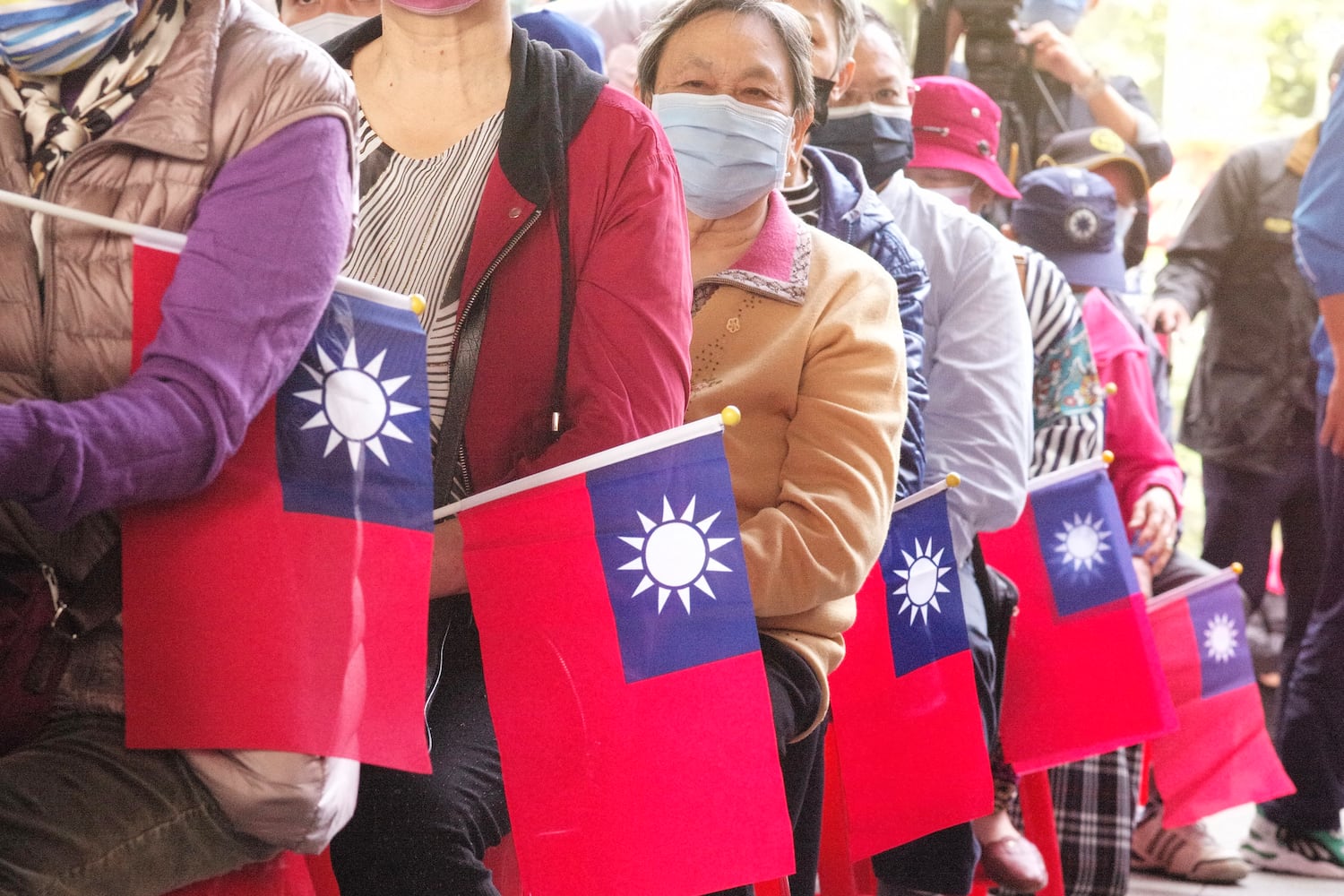
China is likely to use artificial intelligence to influence Taiwan’s Nov. 28 local elections, analysts told Radio Free Asia. Taiwan’s ruling Democratic Progressive Party, or DPP, warned this month that Beijing could use AI to target groups of voters, impersonate Taiwanese social media users and circulate fabricated recordings or scandals shortly before election day. The warning comes as Taipei steps up its defenses against AI interference in the election regardless of whether it originates inside or outside of the democratic island, which China considers to be its territory. Taiwan’s government rejects Beijing’s sovereignty claim and says the island’s future can be decided only by its people. Researchers say influence operators can use AI to produce content more quickly, manage networks of fake accounts and tailor messages to individual voters. “I do think that AI will be more involved in the November local elections,” Sze-Fung Lee, an independent researcher specializing in Chinese hybrid warfare, told RFA. “The use of AI has been observed repeatedly in previous elections, and I believe we will continue to see it in the form of deepfakes for defamation campaigns, coordinated inauthentic behavior, and more sophisticated microtargeting.” People ride past campaign ads for presidential and parliamentary candidates ahead of the general election in Taipei, Jan. 12, 2024. (Ann Wang/Reuters) China has a long history of interfering in Taiwan’s elections, and it will likely use AI as it continues its efforts, William Yang, a Northeast Asia analyst at the Belgium-based International Crisis Group, told RFA. “I do think Taiwan has legitimate reason to worry about Chinese election interference assisted by advanced AI technology,” Yang said. “Now with the assistance of advanced AI technology, these efforts will certainly be on the rise, especially when it coincides with key election cycles.” Beijing has repeatedly denied interfering in Taiwan’s elections. It accuses the DPP of promoting separatism and using tensions with China for political purposes. Electoral context The DPP’s warning comes as the party faces a difficult local election. The opposition Kuomintang, or KMT, won 14 mayoral and county chief posts in 2022, compared with five for the DPP, and has secured a majority of those positions in the past two local election cycles. Yang said the KMT was currently projected to win more counties, although the DPP could seriously challenge it in several races. “The DPP will certainly be closely monitoring and tracking signs of disinformation that is trying to undermine its electoral prospects and find clues that might suggest its connection to China,” he said. The KMT supports greater engagement with Beijing but rejects descriptions of itself as pro-China. The DPP, meanwhile, supports closer relationships with countries like the United States and Japan. Newly elected opposition Kuomintang leader Cheng Li-wun delivers her speech during the party's National Congress in Taipei, Nov. 1, 2025. (I-hwa Cheng/AFP) In a statement issued in February about reports of Chinese preparations to influence the local elections, the KMT said it opposed interference by external actors. Despite the major differences the two parties have in cross-straits relations, Taiwan’s local elections are generally driven more by domestic issues. In 2022, the DPP emphasized national security and resistance to Beijing but suffered its worst local election result in years, prompting then-President Tsai Ing-wen to resign as party chair. 2024 influence? In its warning, the DPP said AI-generated material that circulated around Taiwan’s 2024 presidential election included videos promoting “The Secret History of Tsai Ing-wen,” – an electronic book containing allegations about the former president – and a suspected fake recording of Terry Gou, a businessman and former presidential hopeful. Research by Taiwan-based civil society group Doublethink Lab found that generative AI was used during the 2024 election to conduct large-scale spam campaigns and help inauthentic accounts vary their posts and schedules. In previous elections, manipulation campaigns relied more on direct amplification of Chinese state media and prominent Weibo users, but in 2024, most of the interference came from unofficial social media accounts, Doublethink Lab found. However, attributing such activity to China can be difficult, the report said. The presence of AI-generated material does not establish who created it, and researchers must examine account networks, posting behavior and connections with state-backed media or other known actors. Voters cast their ballot for the presidential election at a polling station in Taipei on Jan. 13, 2024. (I-hwa Cheng/AFP) AI could make attribution harder by allowing operators to imitate Taiwanese expressions, discuss local issues and vary their online behavior. A February report by the Netherlands-based Leiden Asia Centre said AI could make disinformation cheaper and easier to produce at scale. It found, however, that manipulation in Taiwan drew much of its power from existing political polarization, social grievances and social media platforms that reward emotionally charged content. The report indicated that AI could amplify existing political divisions rather than create new ones. Shoring up defenses Taiwan’s Central Election Commission is establishing a specialized task force and an online platform through which candidates can report suspected deepfakes. The commission plans to assess reported material and refer confirmed cases to online platforms for action. Such a system could help authorities respond to fabricated recordings attributed to identifiable candidates. Coordinated networks may be harder to address when individual accounts post political opinions or misleading claims that are not demonstrably false. Content circulating through closed online communities, including those found on the popular LINE messenger app, also presents a challenge because it is less visible to election officials, researchers and fact-checkers. The election preparations come amid broader concerns about Chinese cyber activity. Taiwan’s National Security Bureau said critical infrastructure faced an average of 2.63 million Chinese cyberattacks a day in 2025, an increase of 6% from 2024 and 113% from 2023. Some of the attacks coincided with Chinese military exercises or politically significant events in Taiwan, the bureau said. The cyberattack figures do not demonstrate AI-enabled election interference, but Lee said they supported the government’s broader assessment of sustained Chinese pressure. “I do not think the government is being overly sensitive,” she said. “There is hard data showing the frequency of cyberattacks and cognitive warfare targeting Taiwan every day, as well as evidence of Chinese electoral interference in Taiwan’s 2024 presidential election.” Edited by Eugene Whong.

Download options
25 Aug 2026, 19:50 GMT Meng Ou for RFA Mandarin

Read a version of this story at RFA Mandarin A Hong Kong court this month convicted two leaders of a dissolved pro-democracy group to erase the memory of the Tiananmen Square Massacre, a pro-democracy activist who was a student leader during the 1989 event told Radio Free Asia. The Hong Kong High Court ruled Aug. 21 that the Hong Kong Alliance in Support of Patriotic Democratic Movements of China, its former chairman Lee Cheuk-yan and its former vice-chairwoman Chow Hang-tung, were guilty of “inciting subversion of state power.” The Alliance is best known for organizing yearly candlelight vigils in Hong Kong’s Victoria Park each year in remembrance of the Tiananmen incident, a practice that continued until 2019. In 2020 authorities stopped the vigil citing health concerns during the pandemic, then from 2021 onward they were able to use Hong Kong’s draconian National Security Law to end it permanently. Erasing the past The verdict is intended to discourage commemorations of the Tiananmen Square Massacre, Wang Dan, who was a student leader of the protests in 1989, told RFA. “The authorities clearly hope to use this verdict to erase every trace of history and prevent Hong Kong people from remembering June 4th,” he said, referring to the massacre by the date which it occurred, as is customary in Chinese. Hong Kong pro-democracy activists Lee Cheuk-yan, left, and Chow Hang-tung posing during photo sessions in Hong Kong on March 21, 2021. (Peter Parks/AFP) Wang said that he does not believe authorities can succeed in erasing the event from the public consciousness. “Such a verdict will only lead more people to commemorate it in silence,” he said. “Silent remembrance is still remembrance. The memories people carry in their hearts cannot be completely destroyed by such brutal acts.” In September 2021, authorities arrested Lee, Chow, and another former chairman of the Alliance, Albert Ho, with “inciting subversion of state power.” The Alliance voted to dissolve on Sept. 25 of that year. Lee and Chow were held in custody until the trial, which began in January of this year. Ho was initially held in custody but was briefly let out on bail for medical grounds in 2022, then returned into custody in 2023. Ho pleaded guilty while Lee and Chow both pleaded innocent. The court on Aug. 21 found Lee, Chow, and the disbanded organization guilty. Legal argument A core point of contention in this case is the Hong Kong Alliance’s long-standing call to “end one-party rule.” The court held that after the implementation of the National Security Law in 2020, the Hong Kong Alliance and its leaders continued to promote this goal and incited others to carry out acts of subversion of state power by illegal means. A 2014 photo shows people attending a candlelight vigil in Victoria Park to commemorate the 25th anniversary of the June 4th Tiananmen crackdown. (RFA) During the trial, Lee and Chow argued that “ending one-party rule” was about promoting democratic transition and did not equate to demanding an end to the leadership of the Chinese Communist Party, while also believing that related political expressions were protected by freedom of speech in Hong Kong. However, the court did not accept this argument. The Hong Kong Police National Security Department stated that the court’s ruling was in line with their view of the case. The police also noted that the Alliance continued to hold rallies, exhibitions, street campaigns, and online memorial activities after the law went into effect. Sentences are yet to be determined, but the two could face up to 10 years in prison. Edited by Eugene Whong.

Download options
7 Jul 2026, 17:23 GMT Taejun Kang for RFA

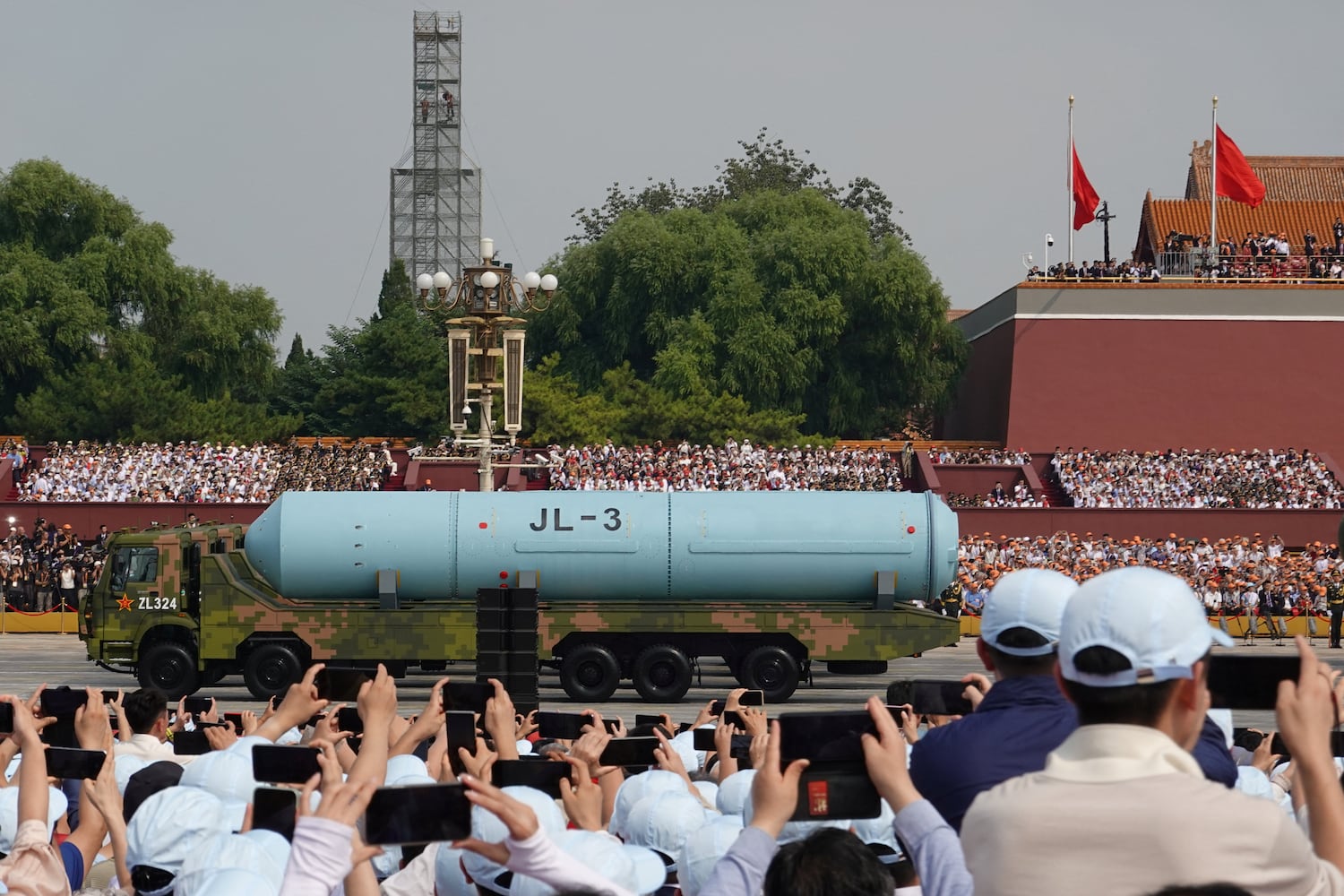
China’s test of a submarine-launched ballistic missile into the Pacific this week was aimed at signaling its growing military reach to U.S. allies across the region, analysts told Radio Free Asia, as Beijing sought to frame the launch as a routine exercise. China’s state-run Xinhua news agency reported Monday that a Chinese navy submarine launched a missile carrying a dummy warhead toward international waters in the Pacific at 12:01 p.m. local time, describing it as a “routine arrangement” in annual military training and not directed at any specific country or target. Analysts said the timing and trajectory suggested Beijing was using the test to send a broad political and military message across the Asia-Pacific. “China’s latest ICBM test serves several purposes,” William Yang, a Northeast Asia analyst at the Belgium-based International Crisis Group, told RFA. “It demonstrates the progress in China’s advanced missile capabilities, sends a signal to regional countries, including Australia and other Pacific states, about Beijing’s ability to respond resolutely to what it views as a challenge to its interests, and allows the People’s Liberation Army to maintain regular military drills across the Asia Pacific region.” A nuclear-powered Type 094A Jin-class ballistic missile submarine of the Chinese People's Liberation Army (PLA) Navy during a military display in the South China Sea April 12, 2018. (Reuters) Though Yang referred to it as an ICBM, or intercontinental ballistic missile, Xinhua did not specifically use those words. The U.S. State Department called it an “intercontinental-range ballistic missile,” in a statement where it criticized the launch at a time when “the United States is working harder than ever to prevent nuclear proliferation,” and “China is doing the opposite.” The launch also drew criticism from Japan, Australia, New Zealand and Taiwan, with several governments saying they had received only short notice. The test touched a nerve across the region because it came against the backdrop of intensifying strategic competition in the Pacific, where China, the United States and its allies have been vying for influence over sea lanes, security ties with Pacific Island countries, and military access to the region. For China, the Pacific islands have become an increasingly important diplomatic and strategic arena as Beijing seeks to expand its presence beyond East Asia. For Australia, New Zealand and the United States, the region has become a frontline in efforts to prevent China from translating economic influence into a deeper security foothold. Australia-Fiji treaty The missile landed in the South Pacific Nuclear Free Zone only hours after Australia and Fiji signed a mutual defense treaty. Yang said the timing was “also a political signal to Canberra and other U.S. allies that China will not be deterred by their efforts to undercut China’s interests in deepening its influence in the Pacific region.” The defense pact, known as the Ocean of Peace, commits Australia and Fiji to assist each other if attacked. It was signed as Canberra has sought to rebuild security ties and trust in the Pacific after years of concern among island governments over climate change, development needs and outside interference. Australian Prime Minister Anthony Albanese shakes hands with Fiji's Prime Minister Sitiveni Rabuka before a bilateral meeting at the Grand Pacific Hotel in Suva on July 6, 2026. (Leon Lord/AFP) China has meanwhile deepened engagement with several Pacific island states through policing, aid and infrastructure agreements, raising alarm in Washington and allied capitals over the possibility of a more permanent Chinese security role in the region. The launch occurred during “a crowded window of allied activity” that included not only the treaty signing – but also on the heels of RIMPAC, Valiant Shield, and Resolute Dragon – U.S.-led bilateral or multilateral military exercises focusing on the broader Pacific region, Aadil Brar, a Taipei-based independent analyst and former visiting scholar at National Chengchi University, told RFA. Message sent Though the Chinese navy said that the launch was directed at no particular country or target, Brar said the distance and direction was deliberate. “That trajectory alone shows the real aim was less about any single target and more about proving China can range deep into the Central Pacific, threading through waters used by the Philippines, Guam-based U.S. forces, and Pacific island states, all at once,” he said. The route described by Brar, from the Chinese coast across the Philippine Sea and south of Guam before landing near the Marshall Islands and Nauru, would have taken the missile through a corridor that matters strategically to both Washington and Beijing. It passes through waters used by U.S. forces based in Guam, near routes that could be critical for moving reinforcements in a regional conflict, including one involving Taiwan. Brar said Taiwan was not directly overflown this time, but the test still carried implications for the island because it demonstrated China’s ability “to hold reinforcement routes at risk well beyond the first island chain,” the arc of islands running from Japan through Taiwan and the Philippines to Borneo, forming a key maritime boundary around China’s near seas. A map of the first and second Pacific island chains. (AFP) Such abilities would complicate any U.S. intervention in a hypothetical Taiwan Strait crisis, he said. Taiwan, which China claims as its own territory, has long warned that Beijing is stepping up military pressure on the democratically governed island through war games, air and naval patrols, and missile development. Chinese officials have not ruled out the use of force to bring Taiwan under Beijing’s control. Still, Yang said he did not think the launch was directly related to Taiwan in this case, arguing that Beijing’s “target audience is the wider region rather than the Taiwanese government,” given its timing alongside the Australia-Fiji agreement and the missile’s launch and impact areas. The test launch might not have been the best strategy for China, Gregory Brown, director of the Alliance Futures Initiative, a Washington-based think tank, told RFA. “I don’t know that the intention from the Chinese is actually to threaten the Pacific Islands or Australia. It certainly got everybody’s attention,” said Brown. “It’s probably an own goal for China to have done this now, because now there’s reason to say this is the sort of thing and sort of behavior why Fiji would want to sign a treaty with Australia or maybe get closer to the United States.” China last publicly conducted an intercontinental ballistic missile test in 2024, in a launch that underscored the country’s growing strategic capabilities and prompted renewed scrutiny of the pace and opacity of its nuclear modernization. Editing and additional reporting by Eugene Whong.

Download options