Please log in to access this page.

US Agency for Global Media USAGM

News and Information from Around the World

Items
18 Aug 2026, 06:06 GMT Laura

In the eastern Democratic Republic of the Congo (DRC), an armed group known as the M23 imposes its authority on local communities. But what is the history behind this movement?

Global Voices logo
Video
Credit: Laura
18 Aug 2026, 06:06 GMT Laura

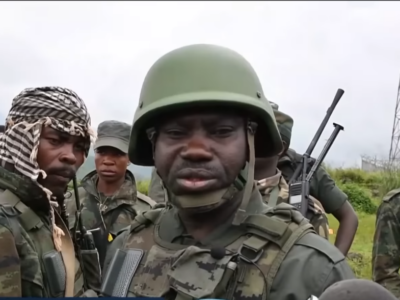
Instability in North Kivu, DRC, has significant impacts on the country’s political future Originally published on Global Voices M23 rebels during the Kibumba withdrawal. Screenshot the video “M23 Rebels Withdraw from Kibumba” on the TV5Monde YouTube Channel. Editor’s note: Since Jean Sovon first published this article on November 24, 2023, incumbent President Félix Tshisekedi was re-elected with 73 percent of the vote in the December 20, 2023 elections. The conflict has also worsened. In early 2025, M23 rebels launched new offensives, taking complete control of Goma and Bukavu, the capitals of North and South Kivu, pushing the number of internally displaced persons above 7 million. In the eastern Democratic Republic of the Congo (DRC), an armed group known as the March 23 Movement (M23) imposes its authority on local communities through violence, sexual assault , and terror. But what is the history behind this movement? And what impact did its offensives have on the December 2023 general elections? What is the M23? The M23 emerged from renewed tensions following the Kivu Conflict . This localized conflict in the eastern DRC, along the border with Rwanda, began in 2004. The Armed Forces of the Democratic Republic of the Congo (FARDC) faced opposition from several armed groups. These groups included the National Congress for the Defense of the People (CNDP), founded in 2006 by the politician and Tutsi militia leader Laurent Nkunda. The DRC is a multi-ethnic country , and the Tutsis are an ethnic group primarily living in the Kivu region. After five years of conflict, the DR Congolese state and the CNDP signed a peace agreement on March 23, 2009. Under the agreement, the rebel group agreed to transform into a political party in exchange for the release of its imprisoned members, improved living conditions for Tutsi communities, and three ministerial posts in government after the 2011 presidential election . The DRC authorities’ failure to comply with the agreement terms led former CNDP rebels, who had integrated into the national Congolese army under the peace agreement, to revolt. In April 2012, they consequently formed the M23 to mark the agreement signing date, March 23, 2009 . This TV5Monde report explains the origins of this movement: The rebel movement thereby resumed its armed campaign. According to officials in Kinshasa, the DRC capital, both Rwanda and Uganda supported the M23. Both countries, however, denied any involvement. An anonymous DR Congolese officer, who was involved in the 2013 conflict, explained further in this article by online media outlet Afrique XXI : Kigali niait, mais nous,au front, il nous arrivait de capturer des combattants rwandais ou des soldats du M23 qui étaient passés par le Rwanda, explique, sous le couvert de l’anonymat, un gradé congolais ayant pris part au conflit en 2013. Le message, c’était d’anéantir le M23, point! Il ne s’agissait absolument pas de mener la guerre jusqu’au Rwanda, même si, avec les informations qu’on avait, on savait parfaitement d’où et de qui venait cette guerre. Le Rwanda est dirigé par des Tutsi, le M23 est une mutinerie de soldats congolais tutsi, ils sont frères et parlent la même langue, ils avaient même souvent des liens familiaux au Rwanda. Kigali, the capital of Rwanda, denied everything, but on the frontline, we would often capture Rwandan fighters or M23 soldiers who had passed through Rwanda. Our orders were to wipe out the M23, period! Although we knew perfectly well who was behind this war and where it came from, based on the information we had, taking the war to Rwanda was never our intention. Tutsis lead Rwanda, and the M23 is a mutiny of Congolese Tutsi soldiers. They are brothers who speak the same language and often have family connections in Rwanda. Four years after signing the peace agreement, the M23 rebellion appeared to end. Backed by UN peacekeepers, on November 5, 2013, the FARDC won a historic victory against M23 troops. Silenced, they fled to neighboring countries, such as Uganda and Rwanda . This video provides a detailed overview of the FARDC victory: M23 makes a comeback However, in March 2022, almost a decade after its defeat, the M23 made a military comeback. According to UN experts , with Rwanda’s ongoing support, the movement took up arms once again in the region, launching offensives against the DR Congolese army’s strategic positions. The motivation behind this resurgence remained unchanged: The DRC authorities’ failure to comply with the 2009 peace agreement. On March 25, 2022, Bertrand Bisimwa , the current M23 leader, explained his desire to avoid another war on X: Nous avons tout fait pour éviter une nouvelle guerre dans ce pays. Cependant le gouvernement congolais a fait ses choix. pic.twitter.com/LoKwZYSaPM — Bertrand Bisimwa (@bbisimwa) March 25, 2022 We have done everything to avoid another war in this country. However, the DR Congolese government has made its choices. pic.twitter.com/LoKwZYSaPM — Bertrand Bisimwa (@bbisimwa) March 25, 2022 The text in the picture reads: The violence currently inflicted upon us by the Congolese army (FARDC) in the Rutshuru territory is a deliberate choice by the government. The state has chosen to wage war against citizens who surrendered unconditionally. We did this in response to the President’s appeal at the start of his term [DRC President Félix Tshisekedi’s January 2019 inaguration address], calling on the country’s sons and daughters to unite and rebuild the nation. In response, our organization sent several letters to the President of the Republic and the Coordinator of the National Monitoring Mechanism of the Addis Ababa Framework Agreement (MNS). In these documents, we offered our unconditional surrender and put ourselves at the Head of State’s service. Subsequently, on our own initiative, we sent delegates to Kinshasa to speed up this surrender. Copies of these letters are attached to this press release: Letter from January 26, 2019: Sent to the President, congratulating him on taking office. Our movement offered its full support, backing his national reconciliation program and helping bring peace to eastern DRC. Explanatory Note from March 9, 2019: Sent to the President regarding the peace process stemming from the Nairobi Declarations of December 12, 2013. Letter from June 15, 2019: Sent to the newly appointed Coordinator of the National Monitoring Mechanism of the Addis Ababa Framework Agreement (MNS), Mr. Claude Ibalanky Ekolomba, requesting updates on the 2013 peace declarations signed between the DRC government and the M23. Letter from July 12, 2019: Sent to the Coordinator of the National Monitoring Mechanism of the Addis Ababa Framework Agreement (MNS), expressing our full support for the 2017 Brazzaville regional agreement, specifically regarding plans to return M23 fighters home unconditionally. Letter from September 21, 2020: Sent to the President to once again confirm ou surrender and verify that all M23 political and military personnel were following his orders. Mission Order from September 30, 2020: After receiving no response to our letters, our movement sent a delegation to Kinshasa to speed up the surrender process. Our delegates remained in Kinshasa for 14 months. They held multiple working sessions with state authorities, who eventually told them to return to their base and wait for the surrender operations to begin. Much to our surprise, just two weeks later, the FARDC launched an offensive, putting our fighters on the defensive. Official Record from October 24, 2020: Documenting the formal recognition of the General Staff of the Congolese Revolutionary Army. Letter from February 12, 2021: Following the Kinshasa meetings, the Deputy Prime Minister and Minister of the Interior, Mr. Gilbert Kankonde, wrote to the President, informing him of a complete M23 stand-down. He requested funds to execute the disarmament operation, but to no avail. The military operations that the national army has launched against our fighters clearly show that the government has chosen to fight the M23 rather than accept our unconditional surrender. Our organization has been tirelessly awaiting the implementation of the peace process for nine years. We deeply deplore this choice of violence, whose hidden objective is to maintain instability and underdevelopment in eastern DRC. Signed in Sarambwe on March 25, 2022 By the March 23 Movement Willy NGOMA Spokesperson for the Congolese Revolutionary Army Interviewed by TV5Monde in April 2022, Pierre Boisselet , Violence Research Director at Ebuteli, a Congolese research institute , elaborated further on the M23 comeback: Far from weakened, the M23 gained territory and expanded its influence in North Kivu a year after the renewed hostilities. This was a major setback for the Kinshasa government, which sought to regain and secure these territories ahead of the upcoming general elections. Instability risks during elections In late December 2023, as the DRC prepared to hold its general elections, the electoral roll revision process went smoothly throughout the country. However, voter enrollment was extremely challenging in the east, prompting some political figures and civil society organizations to request an extension in these areas. Read more: General election preparations continue despite growing insecurity in DRC. During the electoral process, the M23 comeback had a major impact, including increasing insecurity in the province with the second-largest voter count. Forced to flee, the number of internally displaced persons continues to increase in the DRC. Quoted in a TV5Monde article on November 19, 2023, the United Nations Office for the Coordination of Humanitarian Affairs (OCHA) reported: La reprise des combats début octobre a déjà fait plus de 450 000 déplacés supplémentaire. Les provinces du Nord-Kivu, du Sud-Kivu et de l’Ituri abritent à elles seules plus de 5,5 millions de personnes déplacées. The renewed hostilities, beginning in October, have already displaced an additional 450,000 people. The North Kivu, South Kivu, and Ituri provinces alone host more than 5.5 million displaced persons. In addition to the M23, other rebel groups also operate in the same region. These include the Allied Democratic Forces (ADF), a predominantly Muslim group affiliated with the Islamic State, which often attacks civilians. Another is the Cooperative for the Development of Congo (CODECO), a group committed to protecting the Lendu community from the Hema ethnic group and FARDC in the northeastern Ituri Province . Lastly is the rebel branch of the Burundian National Forces of Liberation (FNL), based in the Mwenga Territory , South Kivu Province . These groups, therefore, pose a security challenge for the Kinshasa government, which has yet to find a solution to the M23 rebellion. The general elections on December 20, 2023, were ultimately held amid high tensions and escalating violence throughout the region. According to Bob Kabamba, Professor of Political Sciences at the University of Liège, the risk of spillover effects was not limited to the DRC’s borders . In a TV5Monde interview, he warned: Il faut souligner l’inquiétude de toute la région : l’est de la RDC, l’Afrique centrale, la Communauté de développement d'Afrique australe… tous tirent la sonnette d’alarme sur la situation au Congo, sur la persistance d’une insécurité qui pourrait impacter d’autres pays comme le Congo Brazzaville, la République centrafricaine et le Sud Soudan si le Congo se trouvait déstabilisé. We must highlight the concerns felt across the region. For eastern DRC, Central Africa, and the Southern African Development Community (SADC), alarm bells are ringing about the situation in the Congo and its ongoing insecurity. If the Congo were to become destabilized, this could ultimately impact other countries, such as Congo-Brazzaville, the Central African Republic, and South Sudan. Written (Français) by Jean Sovon Translated (English) by Laura View original post (Français)

Download options
16 Aug 2026, 18:14 GMT Laura

Between December 2025 and February 2026, more than 1,100 rape cases were recorded in South Kivu, eastern DRC Originally published on Global Voices Photo of a woman who has survived violence. Photo by Cédrick Tambwe Bendera. Used with permission Icicongo originally published this article by Cédrick Tambwe Bendera on July 28, 2026. Global Voices republished the article as part of a content partnership agreement. In the eastern Democratic Republic of the Congo (DRC), violence against women has become increasingly alarming. Statistics from the first quarter of 2026 expose a major gender-based violence (GBV) crisis. Although the fight is mounting amid security vulnerabilities, social taboos, and citizen mobilizations, victims still suffer the consequences while the problem persists. In just three months, healthcare professionals recorded more than 1,100 rape cases in the Uvira health zone, an administrative and operational health district located in South Kivu, eastern DRC. Behind this chilling statistic lies an all-too-familiar reality. Violence has become an everyday occurrence, severely impacting women and girls. Chronic insecurity, mass population displacement, and persistent discriminatory norms fuel this physical, psychological, sexual, and economic violence. Despite several years of awareness-raising campaigns, victims seldom report such incidents. A fear of reprisal, stigmatization, and family rejection forces many into silence, hampering prevention and care efforts. A statistic urging authorities to act For civil society actors, these statistics are alarming. Mapenzi Manyebwa, a coordinator for the Uvira Civil Society for Sustainable Development (Dynamique de la Société Civile pour le Développement Durable, DSCDD), warns: Cette statistique est un cri d’alerte. Les agresseurs frappent de jour comme de nuit. Face à la multiplicité des facteurs favorisants, nous demandons aux autorités d’accélérer la mise en place de stratégies efficaces pour enrayer ce taux qui augmente chaque semaine. This statistic is a stark warning. Abusers strike both day and night. Given the multitude of contributing factors, we urge the authorities to expedite effective strategies to curb this rate, which rises week to week. Read more: Eastern DRC: Conflict-displaced persons fall victim to sexual violence Faced with an institutional response he considers insufficient, his organization deploys community-based prevention mechanisms. Alert networks, community liaisons, and civil protection groups now operate in the heart of the community, encouraging women to promptly report all acts of violence and harness the available means of redress. He stated: Nous poursuivons la sensibilisation sur le terrain et collaborons avec certains services de l’État afin que la population sache anticiper et lutter contre toutes les formes de violences. We raise community-level awareness and collaborate with government services, helping people anticipate and combat all types of violence. Effective legislation remains largely inaccessible Beyond citizen mobilization, the fight is now moving into the legal arena. According to Attorney François Igilima, the DR Congolese legal framework now offers victims greater safeguards. He noted: Depuis 2023, la RDC applique un Plan national de lutte contre les VBG, articulé autour de la prévention, de l’assistance holistique et de l’accompagnement psychologique. Since 2023, the DRC has implemented a national GBV action plan, centered on prevention, holistic care, and psychological support. The country also has Law No. 22/065 of December 26, 2022, which sets out the fundamental principles for combating gender-based violence. The attorney emphasized: Désormais, une victime n’a plus besoin de l’autorisation de son conjoint pour saisir la justice. Elle peut engager elle-même une procédure, se constituer partie civile et réclamer réparation du préjudice subi, sans payer de caution. Today, a victim no longer requires her spouse’s permission to take legal action. She can initiate proceedings herself, file a civil lawsuit, and seek redress for the injury suffered without any court fees. However, a lack of community awareness of this legal progress limits its practical impact. Survivors’ paths to healing extend beyond physical injuries The impact of sexual violence far exceeds physical trauma. According to the Women Future Life Coordinator, Dr. Nerval Songolo Mutambala, psychological care is the cornerstone of healing. The practitioner primarily employs active listening, non-judgmental support, and emotion-regulation techniques in a trusting environment. He continues: Si une victime ne souhaite pas s’exprimer immédiatement, personne ne doit la forcer. Nous devons scrupuleusement respecter son rythme. If a victim isn’t ready to speak straight away, no one should pressure her. We must always go at her pace. Dr. Nerval Songolo Mutambala also warns against social stigmatization. This sad reality compounds the initial trauma and drives some victims into isolation or even acts of desperation. Essential media involvement In Uvira, female journalists face deep-rooted prejudices, yet they play a vital role in raising collective awareness. For Joséphine Mungubi, Coordination of the Union of Women in the Media for Peace (Union des Femmes des Médias pour la Paix, UFMP), women must be directly involved in news production. On ne peut pas défendre les droits des femmes sans que les premières concernées ne portent elles-mêmes cette parole. We cannot defend women’s rights unless those most affected lead the conversation themselves. Her organization has scaled up its awareness-raising efforts on social media, the radio, and in displaced persons and disaster victim reception sites, hammering home a key message. They remind all sexual assault victims of the critical importance of attending a health facility within 72 hours. This timeframe is crucial for receiving emergency prophylactic treatment and tailored medical and legal support. Shattering the silence barrier In Uvira, these statistics reflect only a small part of a much deeper crisis. Behind every official case file lies a shattered trajectory, a destabilized family, and a community confronting its own failures. Civil society commitments, legal developments, and healthcare worker efforts offer tangible solutions. However, as long as fear silences victims and impunity safeguards abusers, violence will continue to escalate. Today, the main battle is no longer keeping a record of these incidents, but rather, building a society where reporting rape isn’t considered an act of bravery, but a right exercised in absolute security. Written (Français) by IciCongo Translated (English) by Laura View original post (Français)

Download options
13 Aug 2026, 18:18 GMT Laura

Most rape victims stay silent Originally published on Global Voices Image of a woman displaced by war at the Don Bosco camp in Nyiragongo in North Kivu, eastern DRC. Photo by Katembo Mbuto Victoire. Used with permission. This article by Katembo Mbuto Victoire was originally published on Icicongo on December 12, 2024. It has been republished on Global Voices as part of a content partnership agreement. Since the 1990s, the Democratic Republic of the Congo (DRC) has been rocked by continuous armed conflicts stemming from various factors, including internal tensions, regional instability, and a legacy of colonialism. Today, more than 100 active armed groups operate in this country. The conflict currently marring eastern DRC first began in 2012. Rebels from the March 23 Movement (M23) took up arms in the North Kivu Province, claiming that the central DRC government had failed to honor the 2009 peace agreement it had signed with the M23 predecessor, the National Congress for the Defense of the People (CNDP). Read more: Who are the M23 rebels in eastern DRC? In areas gripped by armed conflict, sexual violence against women is prevalent. However, the perpetrators are not only soldiers or armed rebels. Civilians also take this opportunity to abuse and rape women seeking domestic work in their homes. This is precisely what happened to Charline, a young woman in her twenties. Staring blankly ahead as tears streamed down her face, her sadness was evident. She recalled: C’était un mercredi. Pendant que je faisais le tour des parcelles à la recherche de l’emploi, une maman m’avait demandé de lessiver les habits de ses enfants pour me payer 5000 franc congolais, puis elle est partie au bouloPendant que je lessivais, un de ses fils, un peu costaud, m’avait appelée dans la maison. Je croyais que c’était pour me donner d’autres habits à laver. Quand suis entrée, comme on était seulement deux dans la parcelle, il m’a plaqué sur le sol et m’a violé. J’avais peur de le dire à sa mère. Les images de cette scène me reviennent souvent. It was a Wednesday. As I went around the neighborhoods looking for work, a mother asked me to wash her children’s clothes for 5,000 Congolese francs (USD 2.19), and then she left for work. As I washed, one of her sons, who was a bit stocky, called me into the house. I presumed it was to give me more clothes to wash. However, when I went inside, as we were the only two people on the property, he pinned me down on the floor and raped me. I was scared to tell his mother. Images of this incident frequently come to mind. Like Charline, many women displaced by war also fall victim to sexual violence when looking for odd jobs to support their families. They are easy targets for predators who exploit their vulnerability. A mother of two, interviewed at the Don Bosco refugee camp in Ngangi , DRC, explains: Nous vivons la misère au camp. On n’arrive pas à survivre. Chaque jour, je me réveille pour aller en ville afin de chercher où travailler. Mais certains profitent de ce temps pour abuser de nous. Nous avons du mal à dénoncer vu que nous cherchons les moyens pour nourrir nos familles et répondre à nos besoins vitaux. At the camp, we live in squalor and struggle to survive. Every morning, I set off into town, looking for work. However, some men take advantage of this to abuse us. As we are constantly looking for the means to feed our families and meet our basic needs, we find it difficult to report these incidents. According to Semu Sikulimwenge, Clinical Psychologist at the HEAL Africa Hospital in Goma, the capital of the North Kivu Province, DRC, sexual violence reinforces skewed power dynamics between survivors and perpetrators. He explains: Il est essentiel de développer des moyens de subsistance, notamment par des activités génératrices de revenus, afin de favoriser l’autonomie économique des victimes et de renforcer la résilience des communautés affectées. Developing means of survival, especially through income-generating activities, is essential for fostering the victims’ economic independence and the affected communities’ resilience. Fear of reprisals In response to the rising tide of rape cases involving displaced persons, Attorney Patrick Musambali stresses that such acts of sexual violence are gross violations of Article 170 of the Congolese Penal Code . This article stipulates: Est puni d'une servitude pénale de cinq à vingt ans celui qui aura commis un viol, soit à l'aide de violences ou menaces graves, soit par ruse, soit en abusant d'une personne qui, par l'effet d'une maladie, par l'altération de ses facultés ou par toute autre cause accidentelle, aurait perdu l'usage de ses sens ou en aurait été privée par quelque artifice. A person who commits rape, either through serious violence, threats, deception, or by abusing a person who, as a result of an illness, impaired faculties, or any other accidental cause, has lost the use of their senses or had them stripped by deceptive means, shall be punished with 5 to 20 years of penal servitude . Most rape victims fail to report their abuse out of fear of reprisal from the perpetrators. However, through awareness-raising campaigns, some now want to see their perpetrators behind bars. Eugénie Wimana, a leader at the Don Bosco displaced persons camp, stated: Nous sensibilisons des femmes et des jeunes filles d’avoir une conscience collective pour arriver à lutter contre les violences sexuelles. Grâce aux soutiens de quelques organisations humanitaires, certains déplacés entreprennent des petites activités génératrices de revenus. We raise collective awareness among women and young girls to effectively combat sexual violence. With the support of humanitarian organizations, some displaced persons have begun small-scale income-generating activities. What’s more, Sikulimwenge highlighted: Le soutien psychosocial est crucial pour créer un espace sécurisé où les victimes peuvent exprimer leurs émotions Psychosocial support is vital for creating a safe space where victims can express their feelings. The women’s rights organization Women Power also offers its assistance. As part of its “Emergency Response to Gender-Based Violence and Sexual and Reproductive Health” project, the NGO raises awareness about respect for human dignity and advocates to ensure the perpetrators are punished by law. Small businesses for survival According to Aurélie Maliro, Women Power Communications Assistant, around 70 percent of women from the Kashaka Shabindu refugee camp in northern Goma are at risk of various forms of violence. This results in unwanted pregnancies, unsafe abortions, and sexually transmitted infections (STIs). Nous intervenons dans la prise en charge psycho médicale pour apporter de l’espoir aux victimes. Nous demandons à notre gouvernement de soutenir ces femmes victimes de violences sexuelles car leurs vies socioéconomiques chutent après ces abus. We provide psychological and medical care, offering the victims hope. As their socioeconomic lives collapse around them following this abuse, we call on our government to support female victims of sexual violence. Some displaced persons set up small businesses to survive. Photo by Victoire Katembo Mbuto. Used with permission To avoid sexual abuse, some displaced women, who are also survivors of sexual violence, rape, and other types of violence, gradually start small businesses. One displaced woman from the Don Bosco camp anonymously explained: Je fais le commerce. Je prends de produits vivriers chez une vendeuse qui vit aux alentours du camp pour les revendre ici. De cette manière je gagne mon pain et je subviens à d’autres besoins. I run a small business. I buy food products from a vendor who lives near the camp to resell here. This way, I can make a living and meet other needs. To see lasting change, officials and advocates must foster an environment where survivors can speak out and report their abusers. If these perpetrators go unpunished, they will only continue to commit these heinous crimes. Read more: IciCongo: Portrait of a young online channel that wants to “Tell the story of Congo differently” Written (Français) by IciCongo Translated (English) by Laura View original post (Français)

Download options
13 Jul 2025, 01:00 GMT Adesewa Olofinko

Seven African countries are among the ten lowest-ranked nations worldwide in terms of gender parity Originally published on Global Voices The cover art for the World Economic Forum's Global Gender Gap Report 2025. Image from WEF at Wikipedia . License CC BY-SA 3.0 The World Economic Forum (WEF) has released its Global Gender Gap Report 2025, and seven African countries are among the ten lowest-ranked nations worldwide in terms of gender parity. In this latest edition , Pakistan sits at the very bottom — 148th out of 148 economies covered, with a gender parity score of 56.7 percent. Just above it are Sudan (57.0 percent, 147th), Chad (57.1 percent, 146th), and Iran (58.3 percent, 145th). Other African countries in the bottom 10 include Guinea (59.5 percent, 144th), the Democratic Republic of the Congo (60.1 percent, 143rd), Niger (61.3 percent, 142nd), Algeria (61.4 percent, 141st), and Mali (61.7 percent, 140th). The Global Gender Gap Index The Global Gender Gap Index annually benchmarks the current state and evolution of gender parity across four key dimensions : economic participation and opportunity, educational attainment, health and survival, and political empowerment. These four indicators offer a data-driven lens on the structural inequalities women face globally. In terms of gender gap rankings, Sub-Saharan Africa ranks sixth globally (of eight surveyed regions), with a gender parity score of 68.0 percent. Namibia leads the continent, achieving 81.1 percent gender parity and placing eighth globally. On the other hand, Sudan remains one of the worst performers, with a score of 57.0 percent and one of the world’s lowest levels of female political representation and labor force participation. In economic participation and opportunity, Sub-Saharan Africa comes fifth , with a regional average of 67.5 percent — a 4.8 percentage-point improvement since 2006. However, disparities persist. Chad records the lowest global score in this subindex at 44.4 percent, while Botswana tops the world at 87.3 percent. Liberia (86.5 percent), Eswatini (85.6 percent), Zambia , and Nigeria (76.2 percent) also rank among the top 25 globally in this economic category, at 2nd, 3rd, and 24th, respectively, while South Africa places 98th. Conversely, Sudan (31.3 percent) and Egypt (40.6 percent) are among the bottom five globally, with extremely low earned-income ratios and minimal representation of women in leadership roles. Sub-Saharan Africa ranks eighth in educational attainment with a score of 85.6 percent, up 5.2 percentage points since 2006. This improvement, according to the report, is largely driven by improved enrolment parity at all levels of education. In line with other regions, women surpass men in tertiary enrolment rates. Botswana, Lesotho , and Namibia are among the 41 countries globally that have reached full parity in educational attainment. In the health and survival subindex, Cape Verde , Eswatini, Lesotho, Mauritius , Namibia, and Uganda are among the 17 countries that share the top global position with a parity score of 98 percent. While Liberia (95.5 percent) and Algeria (95.4 percent) fall within the bottom 10 globally on this metric. On political empowerment, Sub-Saharan Africa ranks fifth globally, scoring 22.2 percent. Ethiopia leads the continent in this subindex, placing 12th worldwide with 48.9 percent . By contrast, Nigeria (3.6 percent), Eswatini (3.6 percent), and Sudan (3.0 percent) ranked among the lowest globally, occupying the 143rd, 144th, and 146th positions, respectively. Notably, Rwanda remains the only African economy to have achieved full parliamentary gender parity, with women holding 50 percent or more of legislative seats . South Africa and Ethiopia have also reached gender parity in their ministerial cabinets. Across the continent, women now occupy 40.2 percent of ministerial positions and 37.7 percent of parliamentary seats. Spotlight on the DRC Even though many African countries face gender challenges, the situation in the Democratic Republic of the Congo (DRC), ranked 143rd with a score of 60.1 percent on the Global Gender Gap Index, deserves particular attention. Despite being blessed with vast natural resources and being home to the world's second-largest rainforest , the DRC remains one of the five poorest nations in the world, according to the World Bank Group (WBG). It also ranks 175th out of 182 countries on the Human Development Index. According to a UN policy brief , inequalities permeate different areas of society in the Democratic Republic of Congo (DRC), with very few women having access to decent jobs, and girls are less likely to have access to education than boys. “In the DRC, women are underrepresented in parliament, local governments, political parties, and leadership roles across nearly every sector,” says Byobe Malenga , a multimedia journalist and media entrepreneur based in Kinshasa, in an interview with Global Voices. He notes that women remain largely marginalised in decision-making spheres due to social norms and structural inequalities. Some of the biggest barriers to political inclusion include lack of funding, sexism, political violence, and limited access to education. “In the country's provinces, there is only one woman at the head of government, as governor, despite the country being headed by a woman as prime minister,” Byobe adds. “And it’s the same story in many other spaces where decisions are made.” Though articles 5, 14, and 15 of the DRC constitution establish a legal basis for equality and equity policies, women currently occupy only 7.2 percent of positions at the highest level of decision-making at the national level in the parliament and government. Climate shocks are also deepening the divide. Women, who make up around 73 percent of the country’s agricultural workforce, are hit hardest by floods and droughts that wipe out crops and income. “Women are not always entirely ignored in such situations,” Byobe says, “but they are often relegated to secondary or symbolic roles, without real decision-making power.” According to the World Bank Group (WBG), 16.8 percent of Congolese women complete secondary school, half the rate of men. “We must empower one another,” Byobe says. “That way, we strengthen our communities,” but without urgent interventions, the country’s gender ranking will continue to mask the everyday hardships the country is facing. Most significant trends According to the report , Benin recorded the most significant improvement on the continent, gaining 4.6 percentage points and climbing 21 places to reach the 113th position. Zambia also made notable progress, jumping 13 places to 79th. However, not all trends were positive. Togo and Sierra Leone declined by 5.3 and 3.1 percentage points, placing 121st and 112th, respectively. Mozambique dropped 26 places to 53rd. Nigeria, meanwhile, climbed one step to rank 124th, even as Kenya fell 23 places to 98th. Compared to 2024, the global gender gap has narrowed slightly , from 68.4 percent to 68.8 percent in 2025. Among the 145 economies tracked consistently across both years, the modest progress is primarily driven by improvements in Political Empowerment (up 0.7 percentage points to 23.2 percent) and Economic Participation and Opportunity, which increased by 0.4 percentage points (from 60.3 percent to 60.7 percent). At the global level, Iceland (92.6 percent) continues to lead the Global Gender Gap Index, holding the top position for 16 consecutive years , and remains the only economy to have closed more than 90 percent of its gender gap since 2022. The 2025 Global Gender Gap Index highlights that no economy has yet achieved full gender parity, and at the current pace, it will take 123 years to reach it globally . Written by Adesewa Olofinko

Download options