Please log in to access this page.

US Agency for Global Media USAGM

News and Information from Around the World

Items
26 Aug 2026, 06:57 GMT GV Sub-Saharan Africa

In Cameroon, ‘bals dansants’ are annual community dance gatherings organized during the holidays Originally published on Global Voices From children to elders, bals dansants bring generations together through music and dance. Photo by Julienne Honba. Used with permission By Julienne Honba Every holiday season, young people from Ebolowa in southern Cameroon and surrounding villages gather for community dance nights that combine entertainment, socializing, and economic activity . In Ebolowa, Cameroon, it’s already late when the music finally gets loud — loud enough to draw people toward the dance floor. The village of Olem , in the Mvila Department, in the South region of Cameroon, is usually quiet at this hour. But on July 26, the night of their annual dance gathering, the atmosphere is different. Young people have traveled from nearby communities, some coming directly from Ebolowa, for a night that many have been looking forward to for months. These events are commonly known in French as “ bals dansants ”; community dance gatherings organized during the holidays. They are not necessarily formal festivals — there is no elaborate program, official ceremony, or institutional backing. However, year after year, people show up. Dylan Akono, 23, lives and studies in Ebolowa. For him, returning to the village during the holidays for the bals dansants has become an annual tradition. “What I really enjoy about these evenings is the lively atmosphere. You get to meet and connect with so many people,” he shared in an interview with Global Voices. “Approaching people at the dance when you don’t know them can be difficult, so it’s easier to stick with your own group of friends.” People from all over the region converge for the event. That’s the case for Alice Ateba, 21, who lives in Yaounde, the political capital of Cameroon. This was the first time she had attended the gathering in Olem. “This is a friend’s village. She told me about it, and I decided to make the trip out of curiosity. The evening has been really nice. It’s been a great experience,” she beams. “ If I get the chance to come again, I will.” The dance floor is the focal point of the event. It is little more than a patch of green ground, but after dark, it takes on the feel of a village discotheque. Low lights cast a soft glow over the space, while four sticks planted in the ground mark the boundaries of the dance floor. One opening serves as both the entrance and exit. Beyond it, the night continues around the dancers. Groups of young people stand chatting, while temporary bars and small stalls cater to the crowd. Inside the makeshift enclosure, the music takes over. The event is open to anyone willing to participate, although young villagers make up much of the crowd. The informality may be part of the reason the gatherings have endured across generations. No invitation system is needed. The date is set. Word spreads. People come. But informality does not mean lack of organization. At 23, Julius Embolo, a member of the organizing team, says the dances have been part of village life for as long as he can remember. “These dances were already there when I was born,” he told Global Voices. Each village has its own predetermined date for the gathering. Once the holidays begin, members of the organizing committee meet to discuss the practical details, including where the dance will take place and what safety measures need to be put in place. “The discussions are informal,” he adds. The organizers simply sit together and agree on what needs to be done. “The date is already known, but the location can change depending on the availability of spaces in the villages,” he continues. This means that organizers sometimes have to approach village chiefs to secure a suitable space for the night. “We make arrangements with the chiefs of certain villages so that we can have access to some spaces.” The result is a gathering that appears spontaneous to those arriving for the music, but relies on a small network of people working behind the scenes to make it happen. There is no formal festival committee, no elaborate program, and no fixed venue. Yet the dance parties remain a community touchstone and a rare treat — a place where people can gather and socialize in person, away from the pressure of modern devices. More than dancing The dance floor is only one part of the story. Around it, small businesses appear, representing a thriving informal economy. Temporary bars are set up for the night, while vendors sell drinks and other refreshments. The longer people dance and talk, the more they need something to drink. Jacqueline Mendomo, popularly known as Mama Jackie, is one of many vendors who sees an opportunity in the crowds. She sets up a small drink stand for the night, taking advantage of the gathering to make some extra money. “After hours of dancing and talking, people get thirsty,” Mama Jackie says. “Nights like these usually bring in more customers because people spend several hours at the celebration, moving between the dance floor,” she adds. For anyone coming from Ebolowa or elsewhere, however, reaching the village can be a challenge. By the time these dances get underway, daytime transport has largely wound down. To get to Olem, one must go to the transport terminal in Newbell, Ebolowa. The terminal is much quieter than it is during the day, and with many people already asleep and fewer transport options available, fares can increase. Motorcycle taxis become one of the main options. Sometimes three or four passengers share a motorcycle, depending on the circumstances. A journey that might cost around CFA francs 500 (USD 0.89) per person during the day can rise to about CFA francs 1,000 (USD 1.8) at night, according to people traveling to the gatherings. The transport problem is not merely about price. It is also about safety. A community that still wants to meet Cameroon is becoming increasingly digitally connected . However, connectivity does not necessarily mean that young people have stopped looking for physical spaces to meet. The question is not whether young people still enjoy dancing. The harder question is whether gatherings like these will keep the same appeal as entertainment becomes more digital . For now, the evidence at Olem suggests that they still have something to offer. Perhaps the most interesting thing about these dances is what they reveal about young people’s relationship with community. A phone can connect someone to hundreds of people without requiring them to leave their room. A village dance demands the opposite. You have to go in person. You have to see people. You have to speak to them, dance with them, laugh with them, or simply stand beside them while the music plays. That physical interaction matters. UNESCO’s work on intangible cultural heritage ⁠ highlights how community participation can help sustain cultural practices and collective identities. In Cameroon, UNESCO has recognized cultural traditions associated with Ebolowa’s ethnic Ekang community , including Mvet Oyeng ⁠, a tradition involving music, epic storytelling, and dancing. The village dances around Ebolowa show that culture lives beyond museums and official festivals. It can also live in ordinary gatherings where communities continue to meet across generations. At a time when young people spend hours scrolling , the village dance offers a different kind of experience. For the young woman attending her first village dance, the experience was enough to make her promise to return. For the regular participant, there is no novelty left to discover, only a familiar tradition he says he will never tire of. Perhaps that simplicity is precisely what keeps the bals dansants alive. The music still brings people out of their houses, the temporary bars open, and when the holidays come, the villages around Ebolowa have a reason to stay awake. Written by GV Sub-Saharan Africa

Download options
18 Aug 2026, 06:06 GMT Laura

In the eastern Democratic Republic of the Congo (DRC), an armed group known as the M23 imposes its authority on local communities. But what is the history behind this movement?

Global Voices logo
Video
Credit: Laura
18 Aug 2026, 06:06 GMT Laura

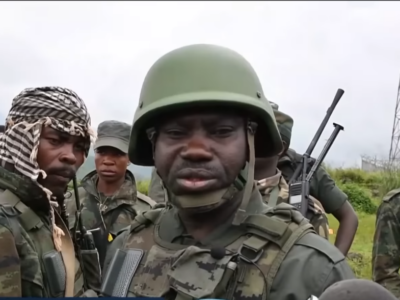
Instability in North Kivu, DRC, has significant impacts on the country’s political future Originally published on Global Voices M23 rebels during the Kibumba withdrawal. Screenshot the video “M23 Rebels Withdraw from Kibumba” on the TV5Monde YouTube Channel. Editor’s note: Since Jean Sovon first published this article on November 24, 2023, incumbent President Félix Tshisekedi was re-elected with 73 percent of the vote in the December 20, 2023 elections. The conflict has also worsened. In early 2025, M23 rebels launched new offensives, taking complete control of Goma and Bukavu, the capitals of North and South Kivu, pushing the number of internally displaced persons above 7 million. In the eastern Democratic Republic of the Congo (DRC), an armed group known as the March 23 Movement (M23) imposes its authority on local communities through violence, sexual assault , and terror. But what is the history behind this movement? And what impact did its offensives have on the December 2023 general elections? What is the M23? The M23 emerged from renewed tensions following the Kivu Conflict . This localized conflict in the eastern DRC, along the border with Rwanda, began in 2004. The Armed Forces of the Democratic Republic of the Congo (FARDC) faced opposition from several armed groups. These groups included the National Congress for the Defense of the People (CNDP), founded in 2006 by the politician and Tutsi militia leader Laurent Nkunda. The DRC is a multi-ethnic country , and the Tutsis are an ethnic group primarily living in the Kivu region. After five years of conflict, the DR Congolese state and the CNDP signed a peace agreement on March 23, 2009. Under the agreement, the rebel group agreed to transform into a political party in exchange for the release of its imprisoned members, improved living conditions for Tutsi communities, and three ministerial posts in government after the 2011 presidential election . The DRC authorities’ failure to comply with the agreement terms led former CNDP rebels, who had integrated into the national Congolese army under the peace agreement, to revolt. In April 2012, they consequently formed the M23 to mark the agreement signing date, March 23, 2009 . This TV5Monde report explains the origins of this movement: The rebel movement thereby resumed its armed campaign. According to officials in Kinshasa, the DRC capital, both Rwanda and Uganda supported the M23. Both countries, however, denied any involvement. An anonymous DR Congolese officer, who was involved in the 2013 conflict, explained further in this article by online media outlet Afrique XXI : Kigali niait, mais nous,au front, il nous arrivait de capturer des combattants rwandais ou des soldats du M23 qui étaient passés par le Rwanda, explique, sous le couvert de l’anonymat, un gradé congolais ayant pris part au conflit en 2013. Le message, c’était d’anéantir le M23, point! Il ne s’agissait absolument pas de mener la guerre jusqu’au Rwanda, même si, avec les informations qu’on avait, on savait parfaitement d’où et de qui venait cette guerre. Le Rwanda est dirigé par des Tutsi, le M23 est une mutinerie de soldats congolais tutsi, ils sont frères et parlent la même langue, ils avaient même souvent des liens familiaux au Rwanda. Kigali, the capital of Rwanda, denied everything, but on the frontline, we would often capture Rwandan fighters or M23 soldiers who had passed through Rwanda. Our orders were to wipe out the M23, period! Although we knew perfectly well who was behind this war and where it came from, based on the information we had, taking the war to Rwanda was never our intention. Tutsis lead Rwanda, and the M23 is a mutiny of Congolese Tutsi soldiers. They are brothers who speak the same language and often have family connections in Rwanda. Four years after signing the peace agreement, the M23 rebellion appeared to end. Backed by UN peacekeepers, on November 5, 2013, the FARDC won a historic victory against M23 troops. Silenced, they fled to neighboring countries, such as Uganda and Rwanda . This video provides a detailed overview of the FARDC victory: M23 makes a comeback However, in March 2022, almost a decade after its defeat, the M23 made a military comeback. According to UN experts , with Rwanda’s ongoing support, the movement took up arms once again in the region, launching offensives against the DR Congolese army’s strategic positions. The motivation behind this resurgence remained unchanged: The DRC authorities’ failure to comply with the 2009 peace agreement. On March 25, 2022, Bertrand Bisimwa , the current M23 leader, explained his desire to avoid another war on X: Nous avons tout fait pour éviter une nouvelle guerre dans ce pays. Cependant le gouvernement congolais a fait ses choix. pic.twitter.com/LoKwZYSaPM — Bertrand Bisimwa (@bbisimwa) March 25, 2022 We have done everything to avoid another war in this country. However, the DR Congolese government has made its choices. pic.twitter.com/LoKwZYSaPM — Bertrand Bisimwa (@bbisimwa) March 25, 2022 The text in the picture reads: The violence currently inflicted upon us by the Congolese army (FARDC) in the Rutshuru territory is a deliberate choice by the government. The state has chosen to wage war against citizens who surrendered unconditionally. We did this in response to the President’s appeal at the start of his term [DRC President Félix Tshisekedi’s January 2019 inaguration address], calling on the country’s sons and daughters to unite and rebuild the nation. In response, our organization sent several letters to the President of the Republic and the Coordinator of the National Monitoring Mechanism of the Addis Ababa Framework Agreement (MNS). In these documents, we offered our unconditional surrender and put ourselves at the Head of State’s service. Subsequently, on our own initiative, we sent delegates to Kinshasa to speed up this surrender. Copies of these letters are attached to this press release: Letter from January 26, 2019: Sent to the President, congratulating him on taking office. Our movement offered its full support, backing his national reconciliation program and helping bring peace to eastern DRC. Explanatory Note from March 9, 2019: Sent to the President regarding the peace process stemming from the Nairobi Declarations of December 12, 2013. Letter from June 15, 2019: Sent to the newly appointed Coordinator of the National Monitoring Mechanism of the Addis Ababa Framework Agreement (MNS), Mr. Claude Ibalanky Ekolomba, requesting updates on the 2013 peace declarations signed between the DRC government and the M23. Letter from July 12, 2019: Sent to the Coordinator of the National Monitoring Mechanism of the Addis Ababa Framework Agreement (MNS), expressing our full support for the 2017 Brazzaville regional agreement, specifically regarding plans to return M23 fighters home unconditionally. Letter from September 21, 2020: Sent to the President to once again confirm ou surrender and verify that all M23 political and military personnel were following his orders. Mission Order from September 30, 2020: After receiving no response to our letters, our movement sent a delegation to Kinshasa to speed up the surrender process. Our delegates remained in Kinshasa for 14 months. They held multiple working sessions with state authorities, who eventually told them to return to their base and wait for the surrender operations to begin. Much to our surprise, just two weeks later, the FARDC launched an offensive, putting our fighters on the defensive. Official Record from October 24, 2020: Documenting the formal recognition of the General Staff of the Congolese Revolutionary Army. Letter from February 12, 2021: Following the Kinshasa meetings, the Deputy Prime Minister and Minister of the Interior, Mr. Gilbert Kankonde, wrote to the President, informing him of a complete M23 stand-down. He requested funds to execute the disarmament operation, but to no avail. The military operations that the national army has launched against our fighters clearly show that the government has chosen to fight the M23 rather than accept our unconditional surrender. Our organization has been tirelessly awaiting the implementation of the peace process for nine years. We deeply deplore this choice of violence, whose hidden objective is to maintain instability and underdevelopment in eastern DRC. Signed in Sarambwe on March 25, 2022 By the March 23 Movement Willy NGOMA Spokesperson for the Congolese Revolutionary Army Interviewed by TV5Monde in April 2022, Pierre Boisselet , Violence Research Director at Ebuteli, a Congolese research institute , elaborated further on the M23 comeback: Far from weakened, the M23 gained territory and expanded its influence in North Kivu a year after the renewed hostilities. This was a major setback for the Kinshasa government, which sought to regain and secure these territories ahead of the upcoming general elections. Instability risks during elections In late December 2023, as the DRC prepared to hold its general elections, the electoral roll revision process went smoothly throughout the country. However, voter enrollment was extremely challenging in the east, prompting some political figures and civil society organizations to request an extension in these areas. Read more: General election preparations continue despite growing insecurity in DRC. During the electoral process, the M23 comeback had a major impact, including increasing insecurity in the province with the second-largest voter count. Forced to flee, the number of internally displaced persons continues to increase in the DRC. Quoted in a TV5Monde article on November 19, 2023, the United Nations Office for the Coordination of Humanitarian Affairs (OCHA) reported: La reprise des combats début octobre a déjà fait plus de 450 000 déplacés supplémentaire. Les provinces du Nord-Kivu, du Sud-Kivu et de l’Ituri abritent à elles seules plus de 5,5 millions de personnes déplacées. The renewed hostilities, beginning in October, have already displaced an additional 450,000 people. The North Kivu, South Kivu, and Ituri provinces alone host more than 5.5 million displaced persons. In addition to the M23, other rebel groups also operate in the same region. These include the Allied Democratic Forces (ADF), a predominantly Muslim group affiliated with the Islamic State, which often attacks civilians. Another is the Cooperative for the Development of Congo (CODECO), a group committed to protecting the Lendu community from the Hema ethnic group and FARDC in the northeastern Ituri Province . Lastly is the rebel branch of the Burundian National Forces of Liberation (FNL), based in the Mwenga Territory , South Kivu Province . These groups, therefore, pose a security challenge for the Kinshasa government, which has yet to find a solution to the M23 rebellion. The general elections on December 20, 2023, were ultimately held amid high tensions and escalating violence throughout the region. According to Bob Kabamba, Professor of Political Sciences at the University of Liège, the risk of spillover effects was not limited to the DRC’s borders . In a TV5Monde interview, he warned: Il faut souligner l’inquiétude de toute la région : l’est de la RDC, l’Afrique centrale, la Communauté de développement d'Afrique australe… tous tirent la sonnette d’alarme sur la situation au Congo, sur la persistance d’une insécurité qui pourrait impacter d’autres pays comme le Congo Brazzaville, la République centrafricaine et le Sud Soudan si le Congo se trouvait déstabilisé. We must highlight the concerns felt across the region. For eastern DRC, Central Africa, and the Southern African Development Community (SADC), alarm bells are ringing about the situation in the Congo and its ongoing insecurity. If the Congo were to become destabilized, this could ultimately impact other countries, such as Congo-Brazzaville, the Central African Republic, and South Sudan. Written (Français) by Jean Sovon Translated (English) by Laura View original post (Français)

Download options
13 Aug 2026, 18:18 GMT Laura

Most rape victims stay silent Originally published on Global Voices Image of a woman displaced by war at the Don Bosco camp in Nyiragongo in North Kivu, eastern DRC. Photo by Katembo Mbuto Victoire. Used with permission. This article by Katembo Mbuto Victoire was originally published on Icicongo on December 12, 2024. It has been republished on Global Voices as part of a content partnership agreement. Since the 1990s, the Democratic Republic of the Congo (DRC) has been rocked by continuous armed conflicts stemming from various factors, including internal tensions, regional instability, and a legacy of colonialism. Today, more than 100 active armed groups operate in this country. The conflict currently marring eastern DRC first began in 2012. Rebels from the March 23 Movement (M23) took up arms in the North Kivu Province, claiming that the central DRC government had failed to honor the 2009 peace agreement it had signed with the M23 predecessor, the National Congress for the Defense of the People (CNDP). Read more: Who are the M23 rebels in eastern DRC? In areas gripped by armed conflict, sexual violence against women is prevalent. However, the perpetrators are not only soldiers or armed rebels. Civilians also take this opportunity to abuse and rape women seeking domestic work in their homes. This is precisely what happened to Charline, a young woman in her twenties. Staring blankly ahead as tears streamed down her face, her sadness was evident. She recalled: C’était un mercredi. Pendant que je faisais le tour des parcelles à la recherche de l’emploi, une maman m’avait demandé de lessiver les habits de ses enfants pour me payer 5000 franc congolais, puis elle est partie au bouloPendant que je lessivais, un de ses fils, un peu costaud, m’avait appelée dans la maison. Je croyais que c’était pour me donner d’autres habits à laver. Quand suis entrée, comme on était seulement deux dans la parcelle, il m’a plaqué sur le sol et m’a violé. J’avais peur de le dire à sa mère. Les images de cette scène me reviennent souvent. It was a Wednesday. As I went around the neighborhoods looking for work, a mother asked me to wash her children’s clothes for 5,000 Congolese francs (USD 2.19), and then she left for work. As I washed, one of her sons, who was a bit stocky, called me into the house. I presumed it was to give me more clothes to wash. However, when I went inside, as we were the only two people on the property, he pinned me down on the floor and raped me. I was scared to tell his mother. Images of this incident frequently come to mind. Like Charline, many women displaced by war also fall victim to sexual violence when looking for odd jobs to support their families. They are easy targets for predators who exploit their vulnerability. A mother of two, interviewed at the Don Bosco refugee camp in Ngangi , DRC, explains: Nous vivons la misère au camp. On n’arrive pas à survivre. Chaque jour, je me réveille pour aller en ville afin de chercher où travailler. Mais certains profitent de ce temps pour abuser de nous. Nous avons du mal à dénoncer vu que nous cherchons les moyens pour nourrir nos familles et répondre à nos besoins vitaux. At the camp, we live in squalor and struggle to survive. Every morning, I set off into town, looking for work. However, some men take advantage of this to abuse us. As we are constantly looking for the means to feed our families and meet our basic needs, we find it difficult to report these incidents. According to Semu Sikulimwenge, Clinical Psychologist at the HEAL Africa Hospital in Goma, the capital of the North Kivu Province, DRC, sexual violence reinforces skewed power dynamics between survivors and perpetrators. He explains: Il est essentiel de développer des moyens de subsistance, notamment par des activités génératrices de revenus, afin de favoriser l’autonomie économique des victimes et de renforcer la résilience des communautés affectées. Developing means of survival, especially through income-generating activities, is essential for fostering the victims’ economic independence and the affected communities’ resilience. Fear of reprisals In response to the rising tide of rape cases involving displaced persons, Attorney Patrick Musambali stresses that such acts of sexual violence are gross violations of Article 170 of the Congolese Penal Code . This article stipulates: Est puni d'une servitude pénale de cinq à vingt ans celui qui aura commis un viol, soit à l'aide de violences ou menaces graves, soit par ruse, soit en abusant d'une personne qui, par l'effet d'une maladie, par l'altération de ses facultés ou par toute autre cause accidentelle, aurait perdu l'usage de ses sens ou en aurait été privée par quelque artifice. A person who commits rape, either through serious violence, threats, deception, or by abusing a person who, as a result of an illness, impaired faculties, or any other accidental cause, has lost the use of their senses or had them stripped by deceptive means, shall be punished with 5 to 20 years of penal servitude . Most rape victims fail to report their abuse out of fear of reprisal from the perpetrators. However, through awareness-raising campaigns, some now want to see their perpetrators behind bars. Eugénie Wimana, a leader at the Don Bosco displaced persons camp, stated: Nous sensibilisons des femmes et des jeunes filles d’avoir une conscience collective pour arriver à lutter contre les violences sexuelles. Grâce aux soutiens de quelques organisations humanitaires, certains déplacés entreprennent des petites activités génératrices de revenus. We raise collective awareness among women and young girls to effectively combat sexual violence. With the support of humanitarian organizations, some displaced persons have begun small-scale income-generating activities. What’s more, Sikulimwenge highlighted: Le soutien psychosocial est crucial pour créer un espace sécurisé où les victimes peuvent exprimer leurs émotions Psychosocial support is vital for creating a safe space where victims can express their feelings. The women’s rights organization Women Power also offers its assistance. As part of its “Emergency Response to Gender-Based Violence and Sexual and Reproductive Health” project, the NGO raises awareness about respect for human dignity and advocates to ensure the perpetrators are punished by law. Small businesses for survival According to Aurélie Maliro, Women Power Communications Assistant, around 70 percent of women from the Kashaka Shabindu refugee camp in northern Goma are at risk of various forms of violence. This results in unwanted pregnancies, unsafe abortions, and sexually transmitted infections (STIs). Nous intervenons dans la prise en charge psycho médicale pour apporter de l’espoir aux victimes. Nous demandons à notre gouvernement de soutenir ces femmes victimes de violences sexuelles car leurs vies socioéconomiques chutent après ces abus. We provide psychological and medical care, offering the victims hope. As their socioeconomic lives collapse around them following this abuse, we call on our government to support female victims of sexual violence. Some displaced persons set up small businesses to survive. Photo by Victoire Katembo Mbuto. Used with permission To avoid sexual abuse, some displaced women, who are also survivors of sexual violence, rape, and other types of violence, gradually start small businesses. One displaced woman from the Don Bosco camp anonymously explained: Je fais le commerce. Je prends de produits vivriers chez une vendeuse qui vit aux alentours du camp pour les revendre ici. De cette manière je gagne mon pain et je subviens à d’autres besoins. I run a small business. I buy food products from a vendor who lives near the camp to resell here. This way, I can make a living and meet other needs. To see lasting change, officials and advocates must foster an environment where survivors can speak out and report their abusers. If these perpetrators go unpunished, they will only continue to commit these heinous crimes. Read more: IciCongo: Portrait of a young online channel that wants to “Tell the story of Congo differently” Written (Français) by IciCongo Translated (English) by Laura View original post (Français)

Download options
23 Dec 2025, 01:00 GMT Cecilia Maundu

Online harm is shaping public life as strongly as offline violence Originally published on Global Voices Image by Chad Madden on Unsplash . ( Free to use ). For Kgomotso Modise, a South African journalist covering courts and criminal justice, online harassment has become a daily reality. “The insults are very sexual,” she explains to Global Voices in an interview, noting that her male colleagues expressing similar views never face comparable abuse. Her opinions are routinely sexualized and delegitimized. When she posted content criticizing extrajudicial killings in her country, the backlash escalated into a violation: trolls retrieved childhood photos from her Facebook account and posted them alongside threats of sexual violence against her and her underage niece. But the harm extends far beyond individual journalists. Cybercrime accounts for more than 30 percent of all reported crime in West and East Africa, according to Interpol’s 2025 Africa Cyberthreat Assessment Report . Two-thirds of African member countries surveyed said that cyber-related crimes accounted for a medium-to-high share of all crimes, with online scams, ransomware, business email compromise, and digital sextortion among the most reported threats. Digital threats now reach ordinary users, public institutions, and essential services, creating conditions where intimidation and harmful content can spread easily. Across Africa, Reporters Without Borders has documented sustained online harassment and surveillance targeting women journalists in Africa, noting that digital abuse has become an emerging barrier to press freedom. This year’s 16 Days of Activism (November 25 to December 10) against gender-based violence (GBV) comes at a time when online harm is shaping public life as much as offline violence. Women who comment on public issues, work in journalism, or engage in civic life face increasing hostility that limits their participation. Technology-facilitated violence as part of GBV When I launched the Digital Dada podcast , I wanted to create a space where women journalists could speak openly about their experiences. What I discovered through interviewing dozens of colleagues is that online violence has become one of the fastest-growing forms of gender-based harm in Kenya and across Africa. It manifests as threats, cyberstalking, impersonation, intrusive monitoring, and manipulated content designed to shame or silence women. Every single journalist I’ve interviewed has faced online abuse. The attacks range from targeted harassment and cyberbullying to coordinated trolling campaigns and deeply gendered assaults. Their visibility as women in the media makes them especially vulnerable, turning their online presence into a frequent site for hostility and misogyny. The escalation is terrifying. UN Women warns that what starts small on screens, a message, a comment, or a post, can spiral into a torrent of threats and violence in real life. Private photos are taken without consent, false claims spread within seconds, locations are tracked, and artificial intelligence tools are used to produce deepfakes aimed at shaming and silencing women. I've documented the toll. A television news anchor shared that she began to self-censor because of the fear of continued victimization. Another disclosed that she sought therapy following extreme trolling. Another reported that attacks escalated beyond her, extending to her husband and children. Several journalists have made the difficult decision to deactivate their social media accounts entirely to safeguard their mental well-being. When journalists self-censor, society loses. Freedom of information is jeopardized. These are not isolated incidents; they are systematic attacks designed to push women out of public discourse. Voices from the Luanda summit Digital safety featured prominently at the recent African Union-European Union Summit in Luanda, Zambia. In an interview during the meeting, Ambassador Liberata Mulamula , special envoy to the chairperson of the African Union Commission on Women, Peace and Security, described digital violence as a new threat to peace and security and noted that online spaces can be especially harsh for women in leadership. She spoke openly about the emotional strain caused by persistent abuse, and encouraged women to remain visible online. She stated, “We have mobilised women to use the media and not fear it, because our voices must be heard.” She added that the African Union has created a network of women media professionals to counter misinformation and support survivors of online harm. She also pointed to the African Union’s adoption of its first convention on ending violence against women and girls. She said that implementation must place cybersecurity at the centre and noted that the African Union Women, Peace and Security Forum in Tunisia, which was held on Dec 9 and 10, would address digital violence directly. Ambassador Henriette Geiger , ambassador of the European Union to Kenya and permanent representative to UNEP and UN-Habitat, highlighted the need for stronger cybersecurity capacity as countries digitize essential services. She said the European Union and Kenya are engaged in a data adequacy dialogue to align Kenya’s data protection standards with those of the EU. If successful, she added, Kenya could become a trusted digital hub capable of processing sensitive data securely. Together, the remarks showed a shared recognition that safer digital spaces are essential for women’s participation, equality, and the future of digital cooperation between Africa and Europe. Why the crisis is growing and what must change The rapid expansion of internet access has increased exposure to harmful content. Interpol warns that online threats now target ordinary users and public institutions, making harmful narratives difficult to control. Local reporting shows similar trends. A recent report in Kenya found that many Kenyan women have withdrawn from digital platforms after experiencing harassment linked to political and social discussions. Survivors described feeling unsafe even offline, noting that digital abuse often follows them into their homes. Women seeking political office face the same pressures. A briefing by the Westminster Foundation for Democracy found that candidates face impersonation, doxxing, cyberstalking, and image manipulation intended to discourage them from entering public life. Weak reporting systems and inconsistent policy enforcement add to the problem. Although Kenya has data protection and cybercrime laws , many survivors do not receive timely support, and this is the norm in most African countries. Platforms often remove harmful content slowly, and clear reporting pathways remain limited. These gaps allow online violence to spread even as more services move online. Improving cybersafety requires stronger support services, better platform responses, and clearer mechanisms for reporting incidents. Digital literacy programmes can help users understand safer practices, particularly in rural and low-income communities. Platforms must strengthen their tools for identifying abuse and responding more effectively. Policy frameworks in most African nations provide foundations, but consistent enforcement and adequate resources are needed. Regional cooperation can also support better cybersecurity standards and shared knowledge of emerging threats. This year’s 16 Days of Activism highlighted the need to recognise digital violence as real violence, and remind the public that there is #NoExcuse for online abuse. Written by Cecilia Maundu

Download options
1 Aug 2025, 15:00 GMT Cecilia Maundu

A United Nations Women poll found that 58 percent of girls and young women have experienced at least one form of online harassment, often before they turn twenty-five.

Download Video
Global Voices logo
Video
Credit: Cecilia Maundu
1 Aug 2025, 15:00 GMT Cecilia Maundu

‘Technology-facilitated gender-based violence isn’t a side effect of digital growth. It’s the price women pay for being online.’ Originally published on Global Voices Women using social media. Image by cottonbro studio on Pexels ( Free to use ). In early 2025, researchers tracking African elections uncovered a wave of AI-generated deepfake videos targeting women journalists and female candidates in Ghana, Senegal, and Namibia — synthetic clips designed to humiliate and discredit them, and drive them offline. The attack was chillingly effective, echoing a broader pattern in which technology-facilitated gender-based violence (TFGBV) silences women’s voices at precisely the moments they most need to be heard. A global survey released in April shows the scale of the problem. More than half of women entrepreneurs in low- and middle-income countries report online harassment, and four in ten have pulled back from public life to protect themselves. Among women journalists, the picture is worse, with nearly three-quarters saying they have endured abuse that is often tied to disinformation and deepfakes. Yet most digital platforms still act on safety only after harm has spread, treating protection as an upgrade instead of a core function. Safety by design flips that script by embedding privacy, consent, and abuse detection into code and business rules from the start. What exactly is TFGBV — and why does “Safety by Design” matter? Technology-facilitated gender-based violence ( TFGBV ) is “any act that is committed, assisted, aggravated, or amplified through digital tools and ICTs that results in, or is likely to result in, physical, sexual, psychological, social, political, or economic harm.” It ranges from image-based abuse, deep-fake pornography, and sextortion to doxxing, cyber-stalking, hate speech, and gendered disinformation. Because the content can be replicated, searched, and shared indefinitely, the harm is portable across platforms and persistent over time, blurring the boundary between “online” and “offline” abuse. A United Nations Women poll found that 58 percent of girls and young women have experienced at least one form of online harassment, often before they turn twenty-five. In Kenya, a 2024 study of university students found that almost 90 percent witnessed technology-facilitated abuse on campus timelines, and nearly four in ten had been targets themselves. These numbers point to a crisis where victims frequently respond by self-censoring, stepping back from public life, and losing economic or political opportunities, which in turn suppresses diverse voices in civic discourse. Support Global Voices as we publish more articles like this one For more information about this campaign, please go here. And that’s why Safety by Design matters. The Australian eSafety Commissioner frames Safety by Design as putting “user safety and rights at the center of product development,” encouraging companies to anticipate, detect, and eliminate online harms before they occur rather than “moving fast and breaking things.” Safety by Design provides a common vocabulary and measurable benchmarks for safety. In short, it moves TFGBV prevention from an afterthought to a design requirement, the digital equivalent of fitting seatbelts in every car. Responsibility spans the entire ecosystem, encompassing platforms, regulators, developers, and civic groups, rather than resting on engineers alone. The role of technology developers and civil society Civil society is often the first place survivors turn and the last line of accountability when companies or states fall short. Across Africa, feminist tech collectives, digital-rights NGOs, and faith-based survivor networks are converting lived experience into data, tools, and hard policy wins, while plugging into global coalitions for bigger leverage. East African trainers from the Safe Sisters network travel from market towns to radio stations, teaching women journalists how to spot spyware and store evidence in the cloud. South African coders behind the GRIT mobile app are demonstrating what safety-first engineering looks like in practice. After conversations with survivors of domestic violence, the team built an encrypted vault that lets users record evidence and store court details in a cloud space that only they can unlock. The feature has pushed downloads of the app past 10,000 , and prosecutors say the secure files are already strengthening cases in Johannesburg courts. In Kampala , Uganda, a feminist civic tech group called Pollicy has taken a different route. It's Digital Safe Tea game walks players through a choose-your-own-adventure story in which online harassment and doxxing emerge as plot twists. Every decision a player makes is logged anonymously, and the data set is shared with local start-ups so they can close design gaps before the product ships. Ugandan university clubs now use the game in digital safety workshops. These local experiments draw on a global handbook. Australia’s eSafety Commissioner publishes an open-access Safety by Design toolkit that guides developers through risk reviews and privacy by default settings. Kenyan regulators cite t he same resource in a draft rule that would require all new social apps to file safety assessments before launch. As African coders adopt the framework, the hope is that every upload button and contact list will carry built-in defenses long before threats appear. The role of social media platforms Social networks say they are building safer feeds, yet the spotlight has now shifted to what they do for African users specifically. TikTok took a public step last year when it launched a Sub-Saharan Africa Safety Advisory Council in Nairobi and asked lawyers, journalists, and digital rights advocates from Kenya, Ghana, Senegal, and South Africa to critique every policy tweak before code changes go live. Council members meet quarterly and publish minutes so watchdog groups can track whether recommendations turn into product updates. Regional apps are following suit. Ayoba, the chat and content service backed by MTN, has updated its servers to screen every photo against a list of banned images supplied by domestic gender rights groups. Engineers say the check runs in milliseconds and blocks non-consensual intimate pictures before anyone can forward them. Users who flag missed material now see faster takedowns as the filter learns from each report. African survivors are also plugging into a global safety net. Stop NCII , a tool developed by an alliance led by Meta , lets a victim create a digital fingerprint of an intimate photo without uploading the file. That fingerprint travels to dozens of platforms, which then block any upload that matches it. The role of governments Ghana has been on the cutting edge of preventing TFGBV since its Cybersecurity Act took effect in 2020, turning the sharing of intimate images without consent into a criminal offence that can draw a three-year sentence. South Africa soon followed with its Cybercrimes Act, which makes revenge pornography illegal and applies the same duty of care to anyone who reposts the material. Kenya is now in public hearings on draft child online safety rules that would force every social platform and messaging app to file a safety impact assessment before launch. Regional bodies want those national moves to add up. The African Union (AU) Child Online Safety and Empowerment Policy , adopted last year, calls on all member states to write corporate duties into law and to publish public dashboards that track takedown speeds and language coverage. Criminal statutes set the floor, but design mandates and transparency hooks raise the ceiling. When African legislatures pair Ghana-style image-abuse laws with Kenya-style risk-assessment duties and measure progress against AU benchmarks, platforms have no wiggle room to treat TFGBV safeguards as an optional add-on. Borrowing proven mechanisms from Australia’s Online Safety Act can accelerate the process, ensuring every new feature that ships is safe by default, no matter which continent codes it. Technology-facilitated gender-based violence isn’t a side effect of digital growth. It’s the price women pay for being online. The good news is that every piece of Africa’s safety-by-design puzzle is finally on the table. From Lagos to Nairobi, developers are hard-coding privacy safeguards, platforms are inviting African experts into the engine room, governments are embedding design mandates into licenses and AU policy, and civil society networks are feeding survivor data directly into product sprints and policy drafts. It is only th rough such continental collaboration and follow through that Africa might be able to reduce online gender-based-violence. Written by Cecilia Maundu

Download options