After 2025’s wildly lucrative reunion, the Gallagher brothers will tour the UK, Ireland and US, and revisit the Hertfordshire site of their greatest live triumph Oasis have finally confirmed new tour dates for 2027, including their long-rumoured return to Knebworth for a run of shows 30 years after they played a historic two nights at the Hertfordshire venue in 1996. “Come witness the fitness,” Noel and Liam Gallagher said in a new statement. “It shall be a sight to behold.” Continue reading...
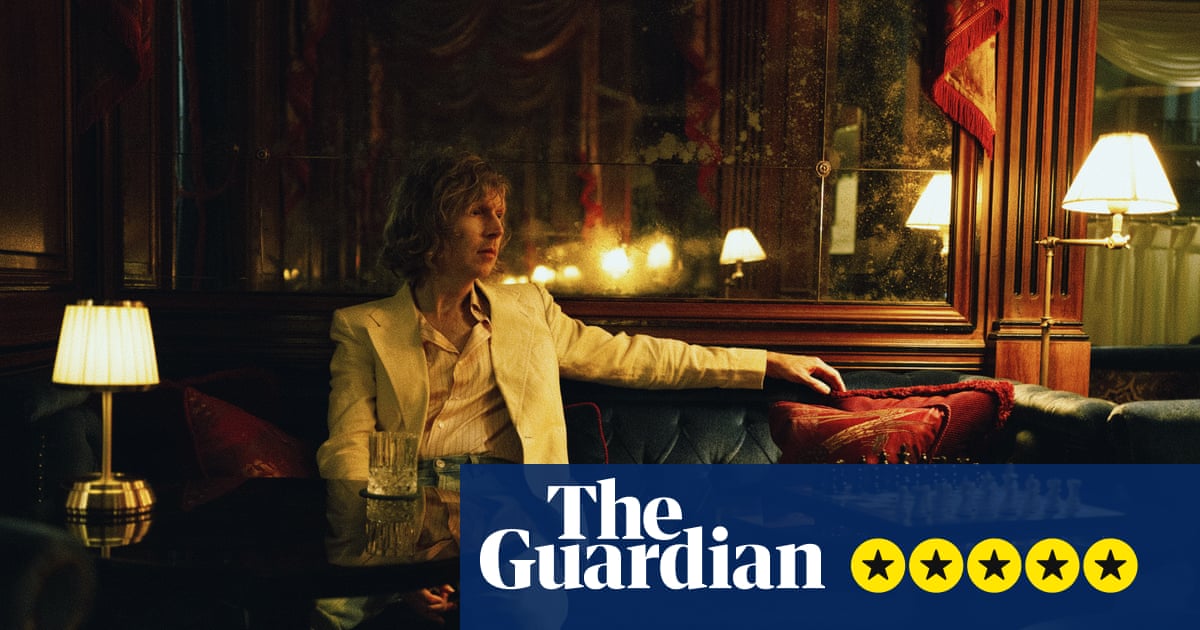
(Iliad/Capitol) On his first album in seven years, Beck keeps the quality control extremely high as he surveys mid-50s malaise in the wake of divorce The last time Beck released an album it was 2019 and the singer-songwriter found himself in a strange and unenviable position. In some quarters, the arrival of Hyperspace was eagerly anticipated precisely because his personal life was in turmoil. Nine months before its release, his 15-year marriage to actor Marissa Ribisi had ended in divorce, an experience he understandably described as heartbreaking. Unfortunately for him, there exists a pervasive argument that Beck’s greatest work is born out of misery. His beloved 2002 album Sea Change featured a set of disconsolate acoustic songs written in the wake of a break-up with his long-term girlfriend Leigh Limon that Beck had initially thought were too personal for public consumption. They were certainly very different from the knowing, postmodern approach with which he’d made his name, but no matter: Sea Change went on to become a huge critical and commercial success. It wasn’t entirely clear what prompted the gloomy mood of 2014’s Morning Phase, but it very much seemed to be cut from similar musical and lyrical cloth. Some critics suggested it was the best album of his career; it subsequently won three Grammys, including album of the year. Given the circumstances, there was much pre-release speculation that Hyperspace would be a companion piece. Continue reading...
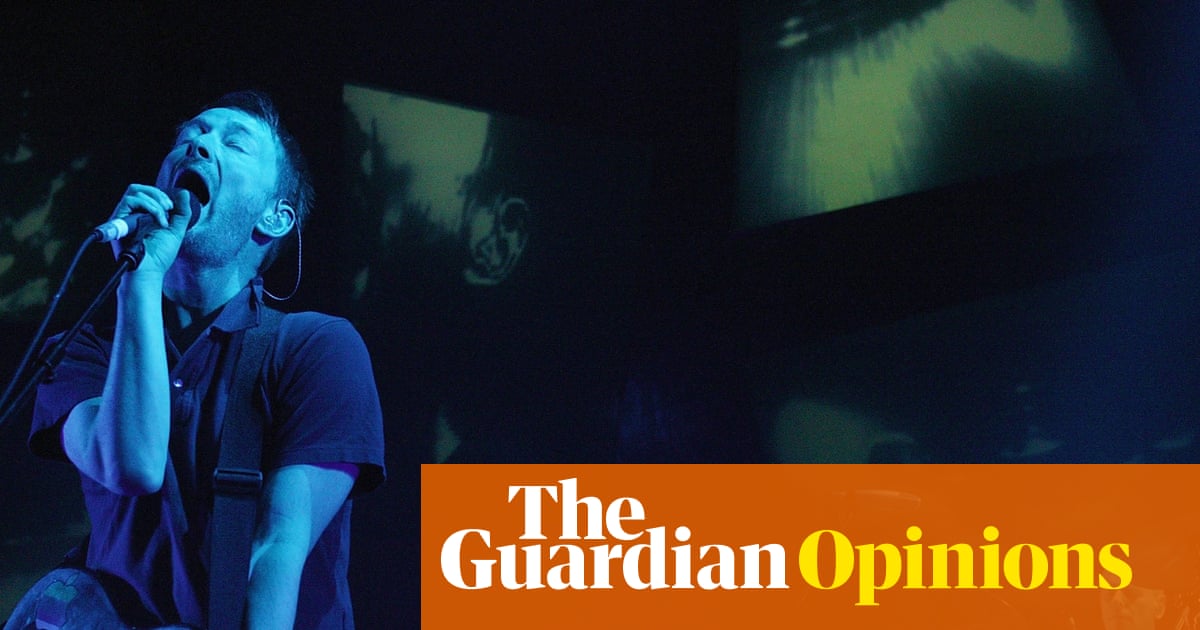
I know from our early days how high-pressure road life can be. While big tours often hire therapists, grassroots acts can’t afford it. I’m pleased to back a new scheme that aims to change that When Radiohead started touring, it was hugely exciting, but we got signed when we had been going for five or six years and had only really played in Oxford. Suddenly you’re entering a new world: the first flush of fame, being compared to everyone else, the furnace-like experience when a band takes off and a whole new routine of late nights, bad food and everything else that goes on around live music. Everything is heightened and it can be very isolating. In 1992 we were playing small venues in a van and then suddenly in 1993 we were spending the second half of the year in the US. On our second long tour that year, everything caught up with me. I kind of withdrew into myself. Something about being in the US made me feel “impostor syndrome”. I really did feel a very long way from home. All that anxiety has to come out somewhere – for some it’s drink and drugs – but for me it came out in my playing. There was one particular show where we were opening for Tears for Fears and another band who had [Blondie’s] Clem Burke on drums. Clem was my absolute drummer hero but I just hit peak overwhelm, and my drumming went off a cliff. Every limb seemed to be going at its own speed. The kick drum became like trying to open a heavy door. Continue reading...
It was “All By Myself,” the song the Quebec superstar’s voice has been measured against since 1996, saved for the encore of her first full concert in more than six years
Call Me Maybe made the singer-songwriter famous – but also confused. Who was she? Who was her music for? Fourteen years later, about to release the double album Day and Night, she finally has some answers Carly Rae Jepsen is as bubbly as ever as she comes down for breakfast at Manhattan’s Hotel Chelsea. She’s one of those pop princesses, like Kylie Minogue, whose voice and demeanour remain unchanged whatever the situation. And she feels at home at this New York landmark where, last year, she married the musician and producer Cole MGN. That a wedding at the Chelsea would need to be kept to about 100 people was an immediate selling point. “I loved that it was smaller,” she says. “It felt big to me! I didn’t even get time with all the people that were there.” We’re here to talk about her new album, though, which comes out 14 years after the song that made her world-famous. Born and raised in the city of Mission in British Columbia, Jepsen had come third on Canadian Idol in 2007, and then released a low-key folk album called Tug of War in 2008, before dropping Call Me Maybe four years later. It became the bestselling global single of 2012; her second album, Kiss, came out in the same year. Now, at the age of 40, she has six more studio albums under her belt. The latest, Day and Night, is her take on marriage and motherhood. And, in its own way – which is to say, a bit coy, a bit breathy – it might also be Jepsen’s horniest album to date. Continue reading...
A cultural boom built on unstable, undocumented work Originally published on Global Voices Band performing live at Le Backstage. Photo by Le Backstage, used with permission. It’s 7:00 p.m. on a Tuesday night. Beer mugs clatter and conversations fill the timeworn hall of an old brasserie in downtown Casablanca , Morocco. Walid Rakik, a 28-year-old musician, sits in the back booth, speaking to the house pianist. Rakik is the headliner, accompanied by a young darbouka player. For Rakik, this means a three-way split of tonight’s tips, the only form of payment they will receive. At 11:00 p.m., Rakik finishes his first set and makes the quick dash to a Spanish-themed late-night spot for his second set. Rakik’s daily reality, like that of many musicians in Casablanca, remains barely visible behind the polished façades of the city’s nightspots. A labor force of ambience, part artisan, part gig-worker, operates at the periphery of the city’s cultural landscape. For Rakik, however, live music is not his only occupation. Like many musicians in Casablanca, he fits performances around other work, treating nightlife gigs as a secondary source of income and a way to remain active professionally. As live music is folded further into Casablanca’s cultural appeal, its musicians remain in a grey zone, caught between the allure of the stage and the conditions of a fierce yet barely evolving sector. Gnawa music live at Le Backstage. Photo by Le Backstage, used with permission. Historical overview Casablanca’s nightlife took root at the onset of the 20th century, when colonial urban planning turned the city’s coastal wedge into the mythical Corniche, the city’s leisure hub. By the 1960s and ’70s, several nightclubs began popping up around Ain Diab and the city centre. Club 84, Balcon 33 and La Notte provided an early showcase of talent, hosting local musicians versed in jazz, blues and rock. As venues branched out, they formed distinct segments: hotel lounges more attuned to jazz, blues or soul; higher-end cabarets staging Tarab or Maghrebi music; with restaurants and pubs catering to a more casual clientele. Morocco’s economic liberalization at the turn of the millennium coincided with a burgeoning middle class and an emerging consumer culture, spurring new nightlife concepts. Even some of the iconic venues had to innovate to stay competitive. Around the same time, the nascent music movement inspired a generation of young musicians and established some of the new professional norms for artistic and performance work in Morocco. Live music quietly became a significant part of Casablanca’s cultural cachet. A repertoire in the hundreds The circuit’s growth hinges on musicians with extensive repertoires and enough versatility to move between scales, registers and genres on demand. A performer may be expected to master three to five sets ranging from Oriental Tarab and Moroccan Chaabi to Western music, with some eventually building repertoires numbering in the hundreds. Aymane Fattal performing. Photo courtesy of Aymane Fattal. As a synth player, Aymane Fattal is accustomed to the demands of anchoring a band. “The work itself is quite exhaustive and challenging. You have to be familiar with different keys and scales, and be able to play along even if you don’t know the particular number. A singer might request a specific song, and you have to perform it.” At the higher end, technical proficiency is only part of what venues seek. Hani Hilali, a guitarist who broke out with Moroccan reggae band Ganga Vibes before moving into live music art direction after nearly 20 years of experience, sees the core task as “creating an osmosis between the musicians.” Hilali explains: “They rehearse and perform together almost daily, so disagreements happen. What matters is a genuine bond. Technique and nuance can be taught, but not who someone is as a person.” This depends on the band’s ability to sustain different registers and diverse sets night after night. A city of aficionados Casablanca lends its cultural weight to a largely homegrown scene. Unlike Marrakech or Agadir, which rely heavily on tourists, Casablanca’s circuit built its appeal by catering to local aficionados. Chaabi and other popular genres remain most in demand, followed by Tarab, while Western styles draw different audiences. Hilali observes, “Audiences in Casablanca tend to be connoisseurs, more open and more demanding musically. Our patrons come specifically for the music.” Mehdi Harit, musician and founder and art director of restaurant and music hall, L’Octave, echoes this: “People in Casablanca are certainly more attuned to music. Customers ask specifically for the live band when making a reservation.” For decades, the closed circuit relied on word-of-mouth and known performers, with work organized through cachets — a flat-rate payment — or contracts. Over the last decade, however, it has become a significant outlet for a growing workforce of musicians beyond the studio and festival circuit. Yassir Bezzi, a Casablanca-based musician, describes the shift: “Things are much different now. Opportunities are more available, although the overall trend is that cachets have decreased. But new venues have integrated live music as the audience itself grew.” Yassir Bezzi, Atlantic Beach Chez Serge 2022. Photo courtesy of Yassir Bezzi. For Rakik, who works across different types of establishments, conditions vary sharply. “A well-known cabaret pays well and steadily but demands a lot of experience. A restaurant can pay even more for less playing time. A lesser-known cabaret or bar pays less predictably; some can actually pay quite well. That’s where you start building experience.” Precarious zone The allure of live music on a regular night out is more ingrained than before. The growing number of venues creates more opportunities for musicians, but this momentum also exposes the gaps of a precarious model as supply expands. Hilali sees rising demand eroding the form itself. Overused repertoires and formulaic sets risk flattening the live experience. “I find the actors less engaged than they used to be. There are more venues now, but very few are trying to innovate. The bare minimum and catering to trends have become more accessible.” Harit sees a parallel tension: “For some venues, the business model may not naturally align with a selective and culturally significant art direction. Creating these spaces requires making them sustainable business-wise, but that only matters if the cultural vision is preserved.” Tips, contracts and grey areas Working conditions for musicians animating Casablanca’s nightlife still border on the precarious. While venues like Le Backstage and L’Octave offer structured contracts and cachets, these remain competitive and out of reach for many. Elsewhere, compensation follows less formal arrangements, with some cabarets relying on opaque, tip-based systems. Live band at L'Octave. Photo by L'Octave, used with permission. “Tip-based payment is mainly common in the mid-tier, and its spread is relatively recent. Contracts at this level are rare; most arrangements are verbal, with cash payments,” explains Fattal. “But conditions vary, for better or worse; it ultimately depends on the manager and how well you negotiate with them.” Yassine Filali, a singer and musician with over 20 years in the field, founded the Association Jeunesse pour la Culture l'Art et l'Education (A.J.C.A.E) to help budding musicians find opportunities and apply for an Artist’s Card. The Ministry’s Artist Card offers easier administrative procedures and travel-expense reductions. The Auto-Entrepreneur status allows musicians to pay taxes, access medical insurance, and contribute to a retirement fund, but requires transparent invoicing, difficult to produce from undetermined fees and tips. “Musicians have become relatively easy to replace. The offer is growing, but demand isn’t keeping pace,” Filali says. “Some venues offer proper contracts, but in many, compensation is still largely tip-based, often with little transparency. Many artists live almost entirely off tips, with little stability or protection.” Future perspective As the number of venues and performers has grown, the sector requires changes in management and programming practices. Live Band at Le Backstage, used with permission. Le Backstage Even as structural challenges persist, the scene remains active. For Hilali, much depends on the renewed engagement of committed actors: “Cultural programming is often the first to suffer from budget cuts, but I think it should be the main appeal. You can find the best salmon fillet anywhere, but cultural programming is different. I would like to see more art directors understand that the cultural experience of an establishment is as important as the overall offer.” Casablanca’s live music circuit has sustained its economic viability through an appeal rooted mainly in local audiences. As it grows, the gap between those foundations and the way the sector operates becomes harder to ignore. More consistent frameworks, particularly around standardization, could give it the stability it currently lacks. Written by Badr Sellak
Céline Dion wept tears of joy on Saturday night as she fulfilled her dream of returning to the stage after years battling a rare neurological disorder, with a sold-out concert in Paris.
The singer’s triumphant return to the stage comes after health problems forced her to take a lengthy break Céline Dion wept on stage in Paris as she performed her first live show in more than six years after taking an extended break to deal with her health. Addressing the sold-out crowd on Saturday, a visibly emotional Dion told them that it was “amazing we are all together”. Continue reading...
The Swedish electro-pop singer-songwriter on eloping to Vegas, checking cupboards for murderers and her spooky party trick What’s been your most memorable interaction with a fan? The one that comes to mind is a fan in Austin who I met on one of my first tours there. He ran up to me and said, “SIGN MY ARM!” I signed his arm and then when he came back to the show the next night he had it tattooed – there was plastic over it. I remember saying, “I would have done a better job if I knew you were going to get it tattooed.” Then we took a picture of us, with me pointing at the tattoo. Continue reading...
With Music Hall of Williamsburg ending its run this year, a cartoonist and recent arrival to the city recalls the blissfully buzzed shows she saw there and elsewhere for the price of a matcha.
10 Sep 2026, 16:33 GMTAdam Nagourney and James Estrin
“This is not a job — it is a mission,” the new conductor of the New York Philharmonic said, starting a month of performances before taking the orchestra on a European tour.