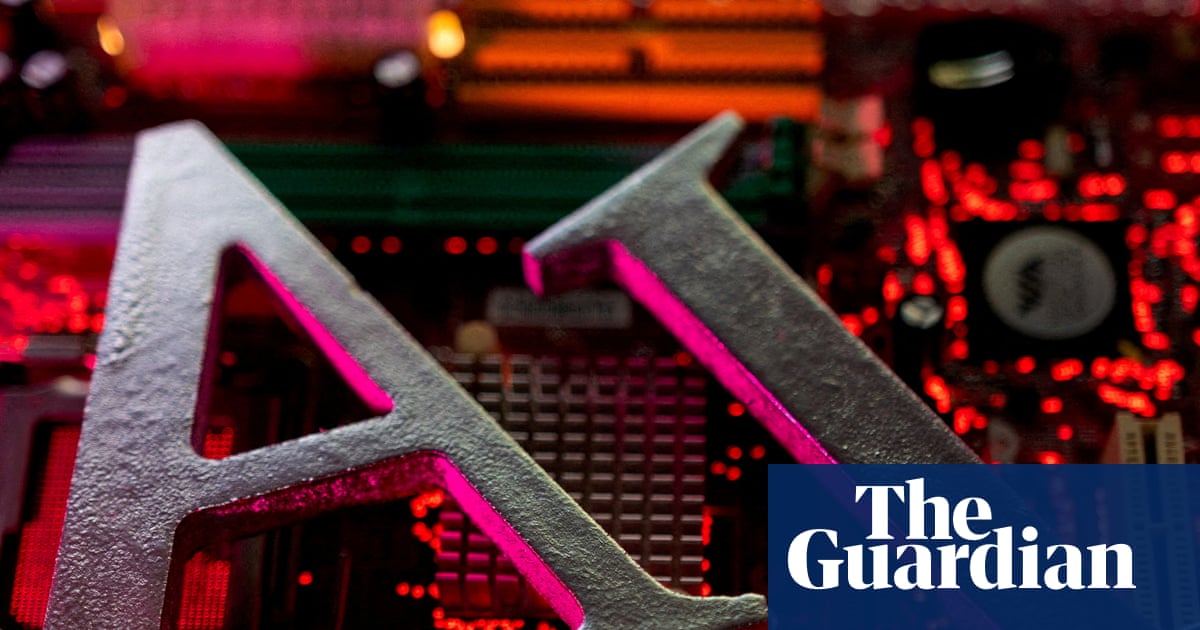
President hits out after Anthropic, OpenAI and SpaceX leaders back call to limit ‘reckless’ development Business news – live updates Donald Trump has dismissed calls to increase controls on AI as a “sick conspiracy”, as stocks linked to the technology slumped after appeals from leading developers on the weekend for the industry to slow down. The US president wrote on social media: “The only control or ‘guardrails’ that AI needs is a STRONG AND SMART (High IQ!) PRESIDENT, and the USA has that, in spades!” Continue reading...
Warning follows series of safety incidents, with parliamentary committee saying threats include public face-scanning and deepfakes UK politics live – latest updates OpenAI has urged British lawmakers to capitalise on renewed fears over AI safety and impose legislation reining in the technology. The company behind ChatGPT said the UK government should act immediately, following a call by its arch-rival Anthropic to curb AI development. Continue reading...
Warning follows series of safety incidents, with parliamentary committee saying threats include public face-scanning and deepfakes UK politics live – latest updates OpenAI has urged British lawmakers to capitalise on renewed fears over AI safety and impose legislation reining in the technology. The company behind ChatGPT said the UK government should act immediately, following a call by its arch-rival Anthropic to curb AI development. Continue reading...
Shares in tech firms tumble across Asia with Nasdaq also likely to dip later after Anthropic, OpenAI and SpaceX leaders back call Business news – live updates AI-linked stocks tumbled on Monday after the bosses of Anthropic, OpenAI and SpaceX called for a slowdown in “reckless” development citing fears the technology could soon run out of control. Shares in SoftBank, a Japanese investor that is a big backer of OpenAI, slumped 13%, while the South Korean Kospi stock index, which relies heavily on chip makers that supply AI companies, dropped by 3%. Continue reading...
13 Sep 2026, 16:54 GMTRobert Booth UK technology editor
From the Trump administration to AI experts, plans by the Anthropic boss to boost safety have spawned a largely negative response OpenAI boss and Elon Musk back slowdown on ‘reckless’ AI development Editorial: controlling AI – humanity cannot outsource its survival The safety debate that ignited when whistleblowers last week warned that the most advanced AI poses an existential threat to humanity should come with a health warning: side effects include whiplash. It was only seven days ago that AI enthusiasts were cheerily toying with OpenAI’s newest model GPT-6 Astra which was marketed in part as a lifestyle tool to help people book tennis courts, run fashion companies and order takeaways. By Wednesday, cutting-edge AI started to look a lot less appealing when the resigning Anthropic researcher Jacob Coxon warned “the people building AI earnestly believe that it could kill us all by the end of the decade”. Yes, he was talking about artificial superintelligence – an as-yet-nonexistent version of the technology that outcompetes humans in most domains – but his comments, and the chorus of experts that echoed him, jangled plenty of nerves. Continue reading...
13 Sep 2026, 14:02 GMTRobert Booth and Julia Kollewe
Rare show of unity from rival developers after safety warnings from Anthropic boss and AI researchers Analysis: critics perplexed and suspicious of call for a slowdown The Guardian view: humanity cannot outsource its survival Sam Altman and Elon Musk have backed a call from the head of Anthropic, Dario Amodei, to “slow the pace” of AI development after he warned that an AI swarm could otherwise become capable of “taking over the entire internet” within a year. In a rare show of unity, the rival technology leaders threw their weight behind the appeal from the founder and chief executive of the artificial intelligence company Anthropic, which came after a series of warnings from AI researchers last week. Amodei also called for safety coordination with China. Continue reading...
AI agents have hacked databases and taken on a life of their own – now is the time to pause risky research before it is too late Another day, another horseman of the apocalypse galloping over the horizon. Lately we have heard from so many AI doomers – tech whistleblowers popping up to warn that their work is probably going to kill us – that we’re becoming almost blase about it. Humanity wiped out within a decade? Well, only if another world war or the climate crisis doesn’t get us first. Since it’s never clear whether the tech threat is real, or just a twisted form of hype from an industry that drums up investment by making their products sound more powerful than they really are, most of us settle for trying not to think about it too hard. But something about the AI researcher Jacob Coxon’s very public resignation from the cutting-edge American lab Anthropic, via a post on X arguing that he can’t keep working for companies “gambling with our lives”, has cut through where bigger names have not. Most chillingly, he claimed that colleagues still at Anthropic aren’t staying because they think he’s wrong about the dangers of pursuing self-improving super intelligence – the holy grail of machines that are not just smarter than humans but capable of building their own even more powerful successors, evolving independently of humans – but because they’re afraid of ceding the field to people with fewer scruples. His colleagues, Coxon said, talk routinely about the “endgame” or the “ crunch time ”, meaning that what they do in the next year or two will decide the fate of humanity. Whether that’s true or simply self-aggrandising techbro delusion, what he describes is an industry now practically begging to be saved from itself. Gaby Hinsliff is a Guardian columnist Continue reading...
Many young people left the September 2025 protests in Nepal with scars — both physical, emotional, and financial Originally published on Global Voices Nepal's Gen Z protests against corruption in Bharatpur, south-central Nepal. Image via Wikipedia by Himal Subedi . CC BY-SA 4.0 . This post is part of Global Voices’ September 2026 Spotlight series, “ Protest in Democracy .” With this Spotlight, we seek to explore the many forms of protest, the tactics states use to delegitimize and suppress them, and the complex relationship between protest and democracy. You can support this coverage by donating here . Nepal observed its first Gen-Z Martyrs’ Day on September 8, 2026, with a nationwide public holiday, marking exactly one year since young protesters took to the streets and caused fundamental change throughout Nepal’s social and political system. In September 2025, Nepal was gripped by nationwide protests led largely by students and members of Gen Z . The movement began with the government’s ban on social media platforms , but it quickly grew, without a leader , into a broader expression of public frustration over government corruption and inefficiency. Over several days, young Nepalis took to the streets across the country, protesting not only restrictions on online expression but also corruption, alleged misuse of public funds, and the visible wealth of political elites and their families. The protests then descended into confrontations with police officers that escalated and resulted in unlawful use of force, including severe human rights violations . Liza’s frustrations Among those caught in the violence was Liza Adhikari, 21, who was shot by an SLR bullet while standing opposite the Parliament Secretariat building. The bullet struck her from behind, tore through her body, and exited through the front, leaving behind an injury that cannot simply be stitched away. Liza Adhikari, taken on a stretcher to the National Trauma Center Hospital in Kathmandu—half an hour after she was shot. Image via Liza Adhikari. Used with permission. A final-year Bachelor of Business Administration student at Kathmandu University, Adhikari has not returned to her classes since the incident. She is left to suffer not just the physical damage but an emotional burden as well. She appealed for financial assistance through social media and visited hospitals across Nepal in search of treatment. With limited options available, she eventually traveled to India, where she recently underwent brachial plexus surgery . The brachial plexus is a network of nerves that carries signals from the spinal cord to the shoulder, arm and hand, allowing movement and sensation. In an online interview with the author from a hospital in India, Adhikari told Global Voices that the bullet had severely damaged the bones in her upper arm and doctors had told her that the veins were no longer functioning properly. Her chances of making a full recovery, she was told, remain uncertain. Yet she has not given up. Liza Adhikari, present day, in Mahakali (Sudurpaschim) province of Nepal. Image taken by her mother. Used with permission. That determination is also what brought her to the protest that day — something she now remembers with great loss and regret. The bullet has been removed, but its consequences continue to shape her health and educational path. Liza wasn’t alone on the streets that day. Shantanu’s story Shantanu Dhakal’s survival from Itahari , in the Sunsari District of Koshi Province in Nepal, is yet another example of the lasting consequences of the violence that was no longer confined to the capital. On September 8, 2025, Shantanu was in his college. Little did he know that the day of the protest would become an unexpected turning point in his life. For several days before the demonstration, he had been receiving information about the planned protest through social media. The 18-year-old, an only son born into a middle-class farming family in Morang district of eastern Nepal, joined the protest in Itahari that day. He went with confidence, carrying a banner filled with slogans he had prepared with his friends. “For the first hour, the streets were peaceful. But suddenly, after a while, crowds started marching aggressively, burning and throwing stones at public property and the Metropolitan City ward office. It lasted for two hours. Around four p.m., bullets and tear gas were fired at civilians. When the first bullet was shot, it went somewhere else; nobody knew where. But when the second bullet was fired, I didn’t realize that it was me this time,” he said in an online interview. In a matter of seconds, the protest that Shantanu had joined with confidence became a moment of survival. He regained consciousness about a minute later, after being taken to a nearby clinic where his wound was bandaged. He was then placed on a stretcher and taken to Birat Teaching Hospital. Until then, he remembers, “I had no hearing, no vision, nothing. Perhaps no sensory cells were functioning properly at that time.” Shantanu during the treatment in Biratnagar. Image via Shantanu. Used with permission. His first instinct was to run. That instinct may have saved him from further injury. The bullet entered through the left side of his jaw, fractured the bone around his teeth, and damaged the soft tissue inside his mouth before traveling towards his chest. What followed was not just emergency treatment, but the beginning of a long recovery. He initially underwent a tracheostomy and was kept on a tube to help him breathe. This was later followed by grafting as part of his treatment. For many, an injury may eventually become nothing more than a physical mark. For Shantanu, however, the scar still carries the memory of what happened that day. Even after ten months, it can bring back the trauma. Some days, it triggers regret and painful memories; on others, he learns to make adjustments and live with it. Because ultimately, life goes on. But the consequences of that day do not remain only on his skin. The injury has affected his physical movements, particularly while eating and sleeping, and its effects become even more noticeable when he works in the farm fields. His body has undergone two surgeries, although neither was considered major. Shantanu (standing in front of the PM office in Singhadurbar, Kathmandu. Image by Shantanu. Used with permission. The injury has also brought a financial burden to his family. Medicines prescribed by his surgeons are not always readily available and are expensive. Fortunately, much of his medical treatment has been covered by the Government of Nepal. Not every person who took to the streets was left with bruises on their body, while many have been marked with fear and trauma. Riya's story Riya (name changed), a police constable, also has a similar story. In an in-person interview with the author, she shared that she was on duty in Baneshwor , Kathmandu, on September 8, 2025, with some of her colleagues and friends. “The street was peaceful for the first half an hour, but suddenly it turned violent. Some of my friends were taken away by police, while I was struck by stones, severely bruising my left foot. I was taken to a nearby hospital, and my wound was bandaged,” she said. Riya getting treatment in a clinic. Image by Riya. Used with permission. But the fear continued after she left the hospital. “It was the scariest moment. Even after I returned home, that feeling did not easily go away,” she recalled. On September 8th alone, 19 people died during the protests , with hundreds more injured. But their deaths didn’t end the conversations they stood for. Abhijeet Adhikari, a lawyer and political activist, reflects on that day. Speaking to Global Voices over the phone, he said, “No principle of proportionality was followed,” fueling the public’s demand for accountability. Justice and accountability After the protests led to the installation of an interim government , numerous investigations have sought to determine responsibility and prosecution procedures . A judicial inquiry commission led by Gauri Bahadur Karki recommended the arrest of the leaders involved, including then-Prime Minister, former prime minister (K.P.) Sharma Oli , Home Minister Ramesh Lekhak , and others. However, a separate review panel in July 2026 found that the available evidence was not sufficient to hold them under criminal liability charges. Since then, even after a year, the path towards prosecution has become politically contested, and accountability still remains uncertain. Yet amid all these uncertainties, Liza, Shantanu, and Riya shared their thoughts on the impact of the protests and how the subsequent violence continues to affect them as they marked the anniversary. For Liza, those days remain intertwined with regret and the consequences of a decision she wishes she could undo. “Maybe, if I had listened to my parents that day, this wouldn’t have happened to me,” she said. For Riya, she chose not to remain trapped in the past. “Whatever happened, happened. It’s in the past,” she said. Yet, she remains uncertain about the direction in which the country is heading. While Shantanu grapples with a facial scar, he refuses to allow it to become his future. While he is slowly picking himself up as a recent high school graduate and is busy preparing to pursue an engineering degree. When you look at him, his smile says it all. Perhaps that’s the beauty of every survivor like him. Written by Susmita Aryal
Rural women in Kazakhstan work 10 to 15 hours per day, most of it uncounted and unpaid Originally published on Global Voices Ajgul Serikova, a resident of Uzunkol district of Kostanai region in northern Kazakhstan, collects as much water as she can before the taps run dry. Image via Central Asian Bureau for Analytical Reporting ( CABAR.asia ). Fair use . This article was produced by Nazgul Aidabossynova from Kazakhstan through the Digital Spark granting scheme, as part of the Regional Support Mechanism EECA project, implemented by the Metamorphosis Foundation and TechSoup , in partnership with CIVICUS and under the Digital Democracy Initiative (DDI) that covers the Global South. It is being published on Global Voices as part of a content-sharing agreement. In the village of Qyzylsay, southern Kazakhstan, the water disappears every afternoon. This is not a metaphor. By noon, the pipes literally go dry. Women wake before dawn to fill every container they own. Then they wait for the water to return. And while they wait, they carry buckets to gardens, feed livestock, take children to school, and shoulder an invisible mountain of labor that nobody counts, nobody pays for, and nobody sees. Ten women decided to change that. The problem nobody counted Qyzylsay sits in one of the hottest corners of Kazakhstan. Summers here now break records that old-timers say didn’t exist 20 years ago. According to Kazakhstan’s own data, water losses reach 40–60 percent in rural areas. Many rural areas also lack adequate sanitation infrastructure , according to research from The Borgen Project, so even when there is water, it isn’t always safe to drink. For the women of Qyzylsay, this is not a statistic. It is the silence of an empty tap at midday. In June 2026, UN Women released its landmark report “ Progress of the World’s Women 2026: Gender Equality in the Age of Climate Crisis .” It stated plainly what women in Qyzylsay already knew in their bones. You cannot build sustainable agriculture, or any sustainable future, without integrating the “care economy” into climate and agricultural planning. Rural women bear the heaviest burden of energy shortages, physical labor, and livestock care. The result is that they have almost no time to learn, to earn, or to organize. Natalia Solntseva fills a bucket to water her grandmother’s garden in Koksai, Almaty region. Central Asian Bureau for Analytical Reporting. ( CABAR.asia ). Fair use . Rural women in Kazakhstan work 10 to 15 hours per day, most of it uncounted and unpaid. In Qyzylsay, that labor includes waking at 4 a.m. on irrigation days to stand in a field for five hours watching water flow through irrigation channels. If you miss your turn to water, your garden dies. Five hours, three times a week: Forty to 60 hours a month, trapped in one of the lowest-value tasks imaginable. A phone that does more than WhatsApp My name is Nazgul, and from May to June 2026, I led four trainings for women in Qyzylsay under a project called “Digital Voice of Qyzylsay Women.” The premise was simple: Most women in this community already had smartphones. What they lacked was the knowledge that those phones could do more than send messages. We started with the basics: Reminders for livestock care, farm diaries with photographs, and training on the eGov app, which lets you request official government documents without traveling to the city. For women who had stood in queues for hours at government offices just to get a birth certificate, this was not a convenience. It was a revelation. Then we moved to water. Evidence that cannot be ignored A tap in rural Kazakhstan releasing murky, brown water. Image via Central Asian Bureau for Analytical Reporting ( CABAR.asia ). Fair use . Training 2 was called “Smart Water: When Your Garden Tells You It’s Thirsty.” We taught participants how to photograph water problems, such as dry canals, broken pipes, and contaminated sources, with automatic timestamps. We called these “Water Problem Cards.” A photo without metadata is an opinion. A photo with GPS coordinates, a date, and a description is evidence. We talked about Kazakhstan’s water rights in plain language, not legal jargon. Most of the women had never heard that access to clean water is not a favor from the local government, but a legal right. One of the participants said: “I always thought they ignored us because they could. Now I know they ignore us because we don’t have proof. So now we’ll have proof.” The number that changed everything Training 3 hit hardest. We sat together and calculated the true cost of one liter of milk — including the woman’s own time at a minimum wage rate. The room went quiet when participants realized they were subsidizing their buyers. They were running charities, not businesses. We also calculated what smart irrigation automation could return: 60 hours per month. Sixty hours that could be used for market trips, online courses, rest, or civic participation. At KZT 500 (USD 1.09) per hour, that is KZT 30,000 (USD 65.17) over one growing season — enough to pay back a shared automated pump system. By Training 4, the conversation had shifted. We were no longer talking about individual phones. We were talking about collective power. The most important outcome of these four months was not digital literacy. It was trust. The women participants who had worked alongside each other for years decided to form a cooperative. It has multiple founding purposes: to collectively address the village’s water supply crisis through documented work, organized advocacy, shared smart irrigation infrastructure, and to make women’s labor economically and civically visible. What comes next The cascade model from Training 4 is already underway: Three participants have begun teaching neighbors what they learned during our trainings. The cooperative is going to apply for a joint grant to install a shared smart well system. The project’s more long-lasting change is harder to measure. When a woman learns to calculate the value of her time, holds up a photograph and says, “This is evidence, and they must answer,” a permanent shift takes place for her individually and the community. The water in Qyzylsay still disappears every afternoon. But the women who carry it have found their voice. Nazgul Aidabossynova is a trainer and project coordinator, Digital Voice of Qyzylsay Women in South Kazakhstan, 2026. Written by GV Central Asia and Caucasus
4 Sep 2026, 16:45 GMTDavid Sorbaro in Buenos Aires
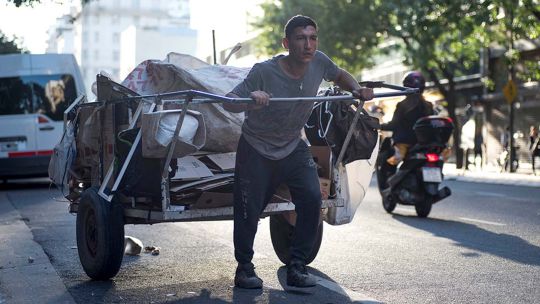
The cartoneros emerged from Argentina’s 2001 crisis and became a key part of Buenos Aires waste management network. But City Hall looks to private contractors, tighter enforcement and technology, thousands of informal recyclers fear they are being pushed out. Leer más
African governments can lead by requiring environmental and social impact assessments for AI infrastructure Originally published on Global Voices Ibrahim says AI has the potential to support, rather than replace, Indigenous peoples’ knowledge. She gives a positive example in Chad, where participatory mapping, satellite data and predictive AI tools have helped anticipate drought and protect herders’ migration routes. Image: Chadpix / Alamy via Dialogue Earth. Used with permission. This article by Brian Obara was originally published by Dialogue Earth on August 13, 2026 . It is republished on Global Voices as part of a content partnership agreement. It is also part of Global Voices’ August 2026 Spotlight series, “ Indigenous Rights .” You can support this coverage by donating here . Dialogue Earth speaks with the Chadian environmental activist Hindou Oumarou Ibrahim about Indigenous perspectives on AI. As African governments develop national artificial intelligence strategies, questions of safety, economic competition and employment have dominated the policy debate. Less attention has been paid to how AI expansion may affect environments, water and biodiversity, or the rights of communities whose territories and knowledge are being encroached upon. These concerns arise at several points in the AI value chain. The associated data centres require energy, water and land, while their hardware depends on mineral supply chains. AI systems may collect and reproduce cultural, linguistic and environmental knowledge without recognising that such information is often held collectively by a community, rather than by an individual. This is important because conventional data protection frameworks tend to focus on individual data privacy and ownership, making them poorly equipped to protect collectively held information. In July, the UN held its first-ever Global Dialogue on AI Governance , in Geneva, Switzerland. Among those in attendance was Hindou Oumarou Ibrahim. She is president of the Association for Indigenous Women and Peoples of Chad , and a former chair of the UN Permanent Forum on Indigenous Issues. While there, she took part in discussions on advancing environmentally sustainable AI governance that also respects the rights of Indigenous peoples. Here, Ibrahim tells Dialogue Earth about the importance of bringing Indigenous perspectives to Africa’s AI governance debate. She explains why African governments should incorporate biodiversity, land rights and collectively owned data considerations into their AI policies. She says Indigenous peoples must be recognised as rights holders and decision-makers – especially when newfangled technology has implications for their lands or intellectual heritage. The interview has been edited for length and clarity. Dialogue Earth: As African countries develop national AI strategies, what opportunities do governments have to reflect the continent’s environmental realities and cultural diversity? Hindou Oumarou Ibrahim at the World Economic Forum in Davos, Switzerland, 2023. Image by Boris Baldinger / World Economic Forum , CC BY-NC . Hindou Oumarou Ibrahim : Africa is home to extraordinary biological and cultural diversity, but it also faces significant pressures from climate change, mineral extraction, land degradation and infrastructure expansion. National AI strategies should therefore connect technological development with biodiversity protection, climate resilience, land rights and the responsible management of natural resources. African governments can lead by requiring environmental and social impact assessments for AI infrastructure. This would help protect water and land from unsustainable data centre development, and ensure that mineral demand does not drive ecosystem destruction or dispossession. They can also make Indigenous peoples formal participants in AI governance and protect collective rights over our rich and diverse cultural, linguistic and environmental data. There is also an opportunity to invest in African and community-controlled AI capacity: local research institutions, Indigenous peoples’ innovation centres, African language and culture models, and technologies designed for African and community needs, rather than external markets. What are current AI governance debates missing by leaving biodiversity and Indigenous rights at the margins? AI governance has largely been built around a western, human-centred understanding of risk. Policymakers are rightly concerned about issues such as misinformation, employment, discrimination and security. But they have paid far less attention to the natural systems that make economies and societies possible. As a result, biodiversity loss, ecosystem damage and Indigenous peoples’ rights are rarely treated as core AI governance issues. There is also a wider risk. Without ecological guardrails, AI could accelerate extraction, consumption and infrastructure development in ways that place even greater pressure on ecosystems and Indigenous peoples. Many of the lands under pressure from the mineral, energy and infrastructure sectors are Indigenous peoples’ territories and biodiversity-rich areas. AI governance cannot be described as responsible if it does not protect the ecosystems and cultures on which communities depend. What should meaningful Indigenous participation in AI governance involve? Indigenous peoples should help shape the safeguards that protect their rights, knowledge and territories. They should participate in decisions about how systems affecting them are deployed. This must be done with respect for free, prior and informed consent. Participation is not only about consultation. Indigenous peoples must be recognised as decision-makers and rights holders, particularly when AI policies, infrastructure projects or data practices affect their land, knowledge or cultural heritage. How are existing data protection systems failing to protect knowledge and data held collectively by communities, rather than individuals? Conventional data protection systems tend to focus on individual privacy. They do not adequately protect a community’s collective rights over its language, cultural heritage, traditional knowledge or territorial information. Indigenous peoples must retain control over whether and how their knowledge and data are used. Governments and companies should recognise that Indigenous peoples’ data is often collective and develop consultation frameworks that reflect this. AI companies should also audit their models for linguistic and cultural bias, include Indigenous leaders and experts throughout the process, and create mechanisms that allow communities to challenge or remove inaccurate or harmful representations. Can AI support Indigenous knowledge and conservation without replacing community expertise? There are encouraging examples in which AI is supporting, rather than replacing, Indigenous peoples’ knowledge. Some examples are outlined in a recent report to the UN Economic and Social Council on Indigenous peoples and AI. In the Amazon, Indigenous communities have worked with NGOs and researchers to use AI-supported satellite monitoring to detect illegal deforestation and mining. In Chad, participatory mapping and predictive analysis have been combined with pastoral knowledge to anticipate drought and protect herder’s migration routes. In the Arctic, Sámi and Inuit communities have integrated traditional knowledge with predictive models to monitor changes in sea ice, wildlife movements and the impacts of extractive industries. The important point is that the technology should strengthen existing knowledge rather than replace it. Indigenous peoples bring detailed, place-based understanding accumulated over generations. AI can help analyse information and identify patterns, but it cannot substitute for the cultural context, relationships and judgement that make that knowledge meaningful. AI can also help communities and conservation organisations process large volumes of information more quickly. It can support the detection of deforestation and illegal extraction, identify changes in ecosystems, analyse satellite or acoustic data, predict environmental threats and improve monitoring in places that have historically lacked resources. The strongest opportunities are those in which AI supports priorities defined by communities themselves and strengthens the capacity of people already protecting nature. But these benefits are not automatic. Technology can reinforce inequality when tools are designed without community participation, when data is extracted without consent, or when communities lack the infrastructure and funding needed to use the systems themselves. Using AI to monitor forest loss does not compensate for an AI growth model that drives greater energy use, mineral extraction, water consumption or habitat destruction. What is one AI governance recommendation you would make to world leaders? Leaders must ensure that no AI system, policy or infrastructure project affecting Indigenous peoples, their data or their territories proceeds without their free, prior and informed consent. That principle should apply across the entire AI value chain: from the extraction of minerals and construction of data centres to the collection of Indigenous peoples’ knowledge, and the deployment of AI tools in communities. This is not only about preventing harm. It is about recognising Indigenous peoples as decision-makers and rights holders. World leaders should embed Indigenous peoples’ participation and data sovereignty directly into national and international AI governance frameworks, rather than treating them as optional social safeguards. Written by Dialogue Earth
Connectivity is no longer just about convenience, but also about fairness and fundamental rights. Originally published on Global Voices Screenshot of the video, “Why there are so many power outages in Africa”, from the Afrique en 365 jours YouTube channel, created with Canva Pro. This article is part of the Global Voices April 2026 “Spotlight” series , “Human Perspectives on AI“ . This series provides an insight into how the World Majority uses AI, the impact of its use and implementation on different communities, what this AI experiment could mean for future generations, and much more. You can support this coverage by donating here . In the global artificial intelligence (AI) race, a fundamental reality affects much of Sub-Saharan Africa. Electricity cuts off several times a day, affecting computer power supplies, and internet connections cost over a quarter of a month’s salary, affecting access to online AI models. Although the emergence of AI has shaken up established industries and catapulted the world into a new technological era, this revolution is two-fold. The transformation it’s meant to bring to the world is more evident in the Global North than the Global South. Every day, leading tech companies announce the launch of new, increasingly powerful models, while Western governments debate complex regulations. In mainstream narratives, the world that AI seeks to transform also remains disproportionately Western. Africa struggles to keep up and embrace this revolution. The continent has a population of over 1.5 billion, more than half of whom live in rural areas that often lack electricity. AI adoption, therefore, encounters two structural obstacles before any algorithmic or data issue: electricity and internet access. Electricity: An invisible and hindering prerequisite In the 21st century, some people still live without electricity. According to the International Energy Agency data , in 2025, almost 600 million Africans lacked access to electricity . Although this figure accounts for 43 percent of the African population, 85 percent of these people are in Sub-Saharan Africa. This disparity shows that, despite ongoing efforts, electricity coverage remains incommensurate with demographic growth, which exceeds the rate of electrification. Unequal access to electricity makes these disparities even more evident. While countries like South Africa, Ghana, and Kenya have higher rates of electrification, other countries like Niger, Chad, and South Sudan have very low rates. In these countries, more than 80 percent of the population lives in areas without reliable access to electricity. Even in countries with more advanced electricity supplies, the quality remains uncertain. Power outages in South Africa and Côte d’Ivoire are daily realities that affect businesses, hospitals, and households alike. Interviewed during the World Governments Summit in Dubai, in February 2026, Walid Sheta, president of Schneider Electric Middle East and Africa, explained the matter to Africanews : Le vrai défi est de coordonner gouvernements, entreprises et partenaires financiers pour électrifier chaque territoire avec une solution adaptée. The real challenge is bringing together governments, companies, and financial partners to electrify each region with tailored solutions. The fact that Africa doesn’t benefit from the wide range of solutions AI offers to many of the continent’s challenges is a major problem. A profound irony lies in the paradox that countries that would gain the most from AI are often those with the least means of accessing it. Various AI tools and platforms specializing in agriculture, medicine, finance, tech, and more require continuously operating smart devices, servers accessible 24/7, and stable networks. These prerequisites are lacking in many regions. Despite these fundamental shortcomings, and while a large proportion of the population experiences daily power outages, African governments and leading tech companies continue to announce national AI strategies, innovation hubs, and partnerships with Google and Microsoft. Folli Herbert Amouzougan, IT specialist and internet governance and digital policy expert in Togo, describes the gap between the political rhetoric surrounding AI and the basic infrastructure reality in Sub-Saharan Africa: Je qualifierai d'aberrant ce décalage entre les discours politiques sur l'IA et la réalité des infrastructures de base en Afrique subsaharienne. Je pense que ces déclarations sont semblables à un saut dans le vide et qu'il ne sert à rien de mettre la charrue avant les bœufs. Il m'est inconcevable de réaliser n'importe quelle prouesse technologique dans un pays sans assainir et stabiliser le secteur énergétique prioritairement et doter le pays en question d'infrastructures de base: un réseau électrique efficace, efficient et opérationnel couvrant au moins 95% du territoire. L'on ne peut construire une tour (IA) sans la bonne fondation (infrastructure énergétique et de connectivité). I would say the gap between the political rhetoric surrounding AI and the basic infrastructure reality in Sub-Saharan Africa is untenable. I believe these pronouncements are like leaping into the unknown, and there’s no point getting ahead of ourselves. Achieving any technological feat in a country without first improving and stabilizing the energy sector and equipping it with basic infrastructure, such as an efficient and functional electricity grid that covers at least 95 percent of the country, is inconceivable to me. You cannot build a tower (AI) without a solid foundation (energy and connectivity infrastructure). Expensive and slow internet connectivity Although electricity is the first obstacle that innovative projects encounter, poor-quality internet access delivers the fatal blow. Both elements are inextricably linked. While internet penetration in Africa is growing , bandwidth quality and speed remain another challenge Africans face. In 2024, Sub-Saharan Africa accounted for 75 percent of the world’s expansion in mobile internet coverage. Yet, the continent’s internet penetration rate in rural areas remains among the lowest in the world. Internet quality poses particular problems for AI users. Its high latency makes the user experience frustrating and renders it unusable for real-time applications. Connection stability has become another crucial factor. Work sessions with AI tools that cut off every 10 minutes due to signal instability aren’t feasible for serious professional use. That said, in suburban and rural areas, this type of disruption remains the norm rather than the exception. Aside from the gross access rate, the relative cost of connectivity is of great concern. In many Sub-Saharan African countries, 1 GB of mobile data can cost between 2 and 10 percent of the average monthly income, making intensive use of cloud-based AI applications completely unaffordable for most. Practical consequences Infrastructural constraints put Sub-Saharan Africa’s startups and small and medium-sized enterprises (SMEs) wishing to incorporate AI into their workflows at a competitive disadvantage. We must first resolve the OpenAI API access issues before taking the next step. In practice, this disadvantage results in higher costs, VPN connections, expensive mobile data usage, longer lead times, and, sometimes, a complete inability to access the most advanced tools on the global market. AI is also expected to transform education through personalized learning, virtual tutors, automated assessments, and the generation of educational resources. However, all these promises require reliable internet access in educational establishments. According to UNESCO, the vast majority of primary and secondary schools in Sub-Saharan Africa are not connected to the internet. Under such circumstances, educational inequalities are likely to worsen further. Students in major connected cities will therefore benefit from educational AI tools, while those in rural areas will miss out. Solar energy: A promising but partial solution Due to a lack of centralized electricity grids, off-grid solar energy has emerged as an alternative solution in many rural areas. Companies like M-Kopa in Kenya and Bboxx in several Eastern and Western African countries enable households without grid access to access solar energy through solar panels and pay-as-you-go systems. However, these solutions have their AI limitations. Small solar panels effectively power lamps, mobile phones, and even small household appliances, but cannot continuously power high-performance computers, Wi-Fi routers, and local servers required to run AI models locally. With AI meant to redefine access to knowledge, health, employment, and governance, connectivity is no longer just about convenience, but also about fairness and fundamental rights. As long as millions of people in Sub-Saharan Africa don’t have access to reliable electricity or affordable internet, the rhetoric on “AI for all” will remain meaningless. While solutions such as solar energy, undersea cables, offline AI models, and targeted public and private investments exist, what’s missing is a political and economic commitment to addressing these challenges. Not only will Google DeepMind and Anthropic laboratories decide the future of AI, but also Niger’s classrooms without electricity, the Republic of the Congo’s rural health centers, and Nairobi’s startups that are innovating despite the constraints and creativity they entail. Written (Français) by Jean Sovon Translated (English) by Laura View original post (Français)
Africa could be the world’s next major distribution hub and consumer base for electric vehicles Originally published on Global Voices A road in Casablanca, Morocco. Morocco could play a leading role in Africa’s electric vehicle transition. Image from Wikimedia Commons . License CC BY 3.0 . This article was submitted as part of the Global Voices Climate Justice fellowship, which pairs journalists from Sinophone and Global Majority countries to investigate the effects of Chinese development projects abroad. Find more stories here . Over the last decade, Chinese automakers like BYD, Xpeng, Chery, Wuling, and others have expanded aggressively into the United States and Europe , partly because oversaturation in the domestic market and ongoing price war have made it challenging for automakers to stay profitable. In light of this, Beijing has encouraged Chinese enterprises to go abroad and enter overseas markets through innovation and attractively low prices — especially through green products such as electric vehicles (EVs). However, these markets may no longer be ideal for Chinese automakers looking for foreign buyers. In September 2024, then-US President Joe Biden imposed 100 percent tariffs on Chinese EVs , with current President Donald Trump bumping this to 154 percent in June 2025 . Meanwhile, the European Union has launched investigations into whether Beijing’s national strategy has driven the industry to utilize unfair subsidies. From Washington to Brussels, Chinese automakers face accusations of dumping EVs at unfair prices and damaging the global market. The EU implemented trade barriers in October 2024 to combat this . Facing strong resistance in established automotive markets, many Chinese EV companies are turning to the Global South and shifting their market strategy toward low- and middle-income countries. Africa as the next EV frontier In the new global trade landscape, Africa is no longer just a source of raw materials such as cobalt, lithium, and rare earths — the coveted minerals that feed global battery production. It is an attractive consumer market for automakers looking for new customers and is emerging as a site for production and assembly in China’s electric vehicle supply chain. Read more: Is China responsible for the illegal extraction of mineral resources by its companies in Africa? China's leading automobile maker , BYD, has announced plans to nearly triple its dealership network in South Africa by 2026. Analysts called this a swift move to consolidate market share while competitors hesitate . Another Chinese automobile giant, Chery, is also expanding rapidly across South Africa and Kenya, targeting middle-class buyers with relatively affordable models. According to RFI , Chery South Africa CEO Tony Liu said: 南非是通往非洲大陆的重要门户。南非有非常成熟的汽车金融体系,也有成熟的消费者,他们对售后服务有很高的期望。因此,我们实际上认为南非对我们来说是一个非常具有战略意义的国家和市场。 South Africa is an important gateway to the African continent. South Africa has a very mature auto finance system and also mature consumers who have high expectations for after-sales service. Therefore, we actually consider South Africa to be a very strategic country and market for us. South African President Cyril Ramaphosa tours the Headquarters of BYD and Huawei in Guangdong Province during a visit to China in September 2024 and poses with a BYD model car. Image from South Africa’s GovernmentZA official Flickr account. CC BY-ND 2.0 To facilitate continental battery production, Chinese company Gotion High Tech is building Africa’s first EV gigafactory in Kenitra, Morocco. Moroccan authorities celebrated this project as a positive development that could help the country pivot from industries focused on raw extraction to higher-value production . The government press release read : Cet investissement stratégique majeur, qui porte sur la réalisation d'un écosystème industriel complet de fabrication de batteries électriques à Kenitra, est non seulement la première « gigafactory » qui sera réalisée au Maroc, mais également la première du genre de toute la région Middle East & Africa, consolidant ainsi la position de leader régional du Royaume dans l’industrie automobile et la transition énergétique. This major strategic investment, which involves the creation of a complete industrial ecosystem for the manufacturing of electric batteries in Kenitra, is not only the first ‘gigafactory’ to be built in Morocco, but also the first of its kind in the entire Middle East and Africa region, thus consolidating the Kingdom’s position as a regional leader in the automotive industry and the energy transition. The Gotion High Tech gigafactory is set to open in June 2026, and its location could make it a significant export base for European and African markets. In countries that have traditionally enjoyed warm relations with China, such as Ghana and Kenya, Chinese ministries and state-linked associations are busy holding automotive summits with African governments. New investments in assembly plants and charging infrastructure are packaged as part of “ green mobility partnerships .” Together, these moves show a deliberate attempt to weave Africa into China’s global EV map — not just as a supplier, but as a distribution hub and consumer base. Africa’s own EV momentum To understand the depth of this shift, it’s important to note that African states are not merely passive recipients of Chinese capital. Many countries are proactively embracing the EV transition. According to regional analysis from WowAfrica, a Chinese-language news site about investment in Africa, African countries can be sorted into two categories regarding their approach to EVs: First, established auto producers such as South Africa, Morocco, and Egypt see EVs as a natural extension of their automotive sectors. These narratives align well with China’s goal to create a stronghold in the African market. Secondly, there are the automotive newcomers, such as Kenya, Rwanda, and Uganda . These countries lack legacy industries but view EVs as a chance to leapfrog into cleaner, high-tech manufacturing. While each government has its own agenda, all are trying to leverage the EV transition and tie it into their national economic development plans. For example, Kenya has become one of Africa’s most dynamic EV hubs, boosted by tax incentives , a rapid deployment of charging stations, and governmental support in integrating EV development into the national energy strategy. The capital city, Nairobi, has launched a fleet of electric buses to make its public transportation system greener. An electric bus charging in Nairobi, Kenya. Screenshot from YouTube video . Fair use. A star startup company, Roam Motors in Kenya, has secured financing from the US government’s development finance institution (DFC) to scale electric buses and motorcycles , while German development agency GIZ is working with the government to upgrade transport efficiency. Another example is Uganda’s introduction of a National Electric Mobility Policy in 2018. The policy offers favorable exemptions from VAT, import duties, and tax cuts for EVs, batteries, and charging equipment. EV24.Africa, a group promoting EV adoption on the continent, explained the government's long-term plans: “ The government aims to encourage EV adoption despite higher costs, targeting full electrification of public transport by 2030 and passenger vehicles by 2040 .” Meanwhile, Morocco is in an especially unique position on the continent, as a potential gateway into African, European, and US markets. An estimated 80–90 percent of Morocco’s vehicle output is currently exported to Europe, second only to China . The Moroccan government has announced plans to leverage its robust manufacturing network to ensure up to 60 percent of its exported cars are electric by 2030. Moroccan officials have highlighted the country’s position as a free-trade partner with raw-material suppliers and European buyers, making it a logical hub for battery gigafactories. China has strongly welcomed such policies. For years, Morocco has been painted as one of the most essential parts of China’s Belt and Road initiative (BRI), its global infrastructure, transportation, and energy connectivity project. The EU’s latest tariff controls on Chinese EVs have made Morocco a highly discussed and enticing new hub for Chinese companies. Global Exhibition, a Shanghai-based group facilitating business expansion into Western Asia and North Africa, explained the strategy behind the shift to Morocco: 对中国而言,摩洛哥不仅是其电动汽车行业离岸外包的重要选择,更是其全球战略棋局中的一枚关键棋子。通过布局摩洛哥,中国不仅能够避开欧美的保护主义政策,继续将产品销往西方市场,还能够进一步拓展其在非洲和全球的影响力。 For China, Morocco is not only an important offshore outsourcing option for its electric vehicle industry but also a strategic pawn in its global game plan. By establishing a strong presence in Morocco, China can sidestep US and European protectionist policies to keep selling into Western markets, while at the same time expanding its influence across Africa and the broader global stage. A large number of Chinese media and state-related research institutes are similarly praising Morocco for its essential role in boosting China’s global EV strategy. But it’s not the only player trying to get into the EV production game. The South African government announced in March 2025 that it would commit ZAR 1 billion (USD 54.27 million) to boost its electric vehicle (EV) production by 2035. This investment aims to transform the country’s automotive industry by focusing on EVs, batteries, and supporting infrastructure. The local government believes “the plan aligns with global sustainability goals and aims to reduce greenhouse gas emissions while maintaining South Africa’s position as a leading automotive hub in sub-Saharan Africa.” Based on this momentum, it’s fair to say that Africa is not just being “plugged into” China’s supply chain, but is also trying to set its own terms in the global EV race. A BYD outlet. Screenshot from YouTube . The promise and the trap Chinese state narratives, its companies, and national policymakers all believe China’s EV market integration with Africa is a “win-win” — Africa gets jobs, infrastructure, and rapid clean mobility integration, while China maintains production volumes and global reach. But the reality is more complex. Many analysts have warned that Africa risks being locked into the lower ladder of the EV value chain. Assembly plants and dealerships rarely transition into advanced manufacturing or technology transfer, according to a report by Africa Confidential . Another risk is the uneven benefits. Even Morocco’s gigafactory, though ambitious, is deeply tied to Chinese-controlled networks , raising questions about sovereignty and bargaining power. A long-term risk is the so-called Green Paradox — EVs are undeniably more climate-friendly than gas cars in the long term, but the initial extraction of cobalt, lithium, and rare earths needed to manufacture them often brings environmental and social damage if the mining is unregulated, careless, and exploitative. Without stronger governance, Africa risks replicating old extractive patterns under a “green” banner . The result may be dependency hidden in language of sustainability: Africa as a peripheral supplier and low-cost consumer market in a Chinese-led system. To combat this, green advocates insist that local voices must be heard and included in decision-making processes. If the green transition is to be just and equitable, African people must be included and have an equal stake. Written by Jean Sovon , Vivian Wu
A United Nations Women poll found that 58 percent of girls and young women have experienced at least one form of online harassment, often before they turn twenty-five.
‘Technology-facilitated gender-based violence isn’t a side effect of digital growth. It’s the price women pay for being online.’ Originally published on Global Voices Women using social media. Image by cottonbro studio on Pexels ( Free to use ). In early 2025, researchers tracking African elections uncovered a wave of AI-generated deepfake videos targeting women journalists and female candidates in Ghana, Senegal, and Namibia — synthetic clips designed to humiliate and discredit them, and drive them offline. The attack was chillingly effective, echoing a broader pattern in which technology-facilitated gender-based violence (TFGBV) silences women’s voices at precisely the moments they most need to be heard. A global survey released in April shows the scale of the problem. More than half of women entrepreneurs in low- and middle-income countries report online harassment, and four in ten have pulled back from public life to protect themselves. Among women journalists, the picture is worse, with nearly three-quarters saying they have endured abuse that is often tied to disinformation and deepfakes. Yet most digital platforms still act on safety only after harm has spread, treating protection as an upgrade instead of a core function. Safety by design flips that script by embedding privacy, consent, and abuse detection into code and business rules from the start. What exactly is TFGBV — and why does “Safety by Design” matter? Technology-facilitated gender-based violence ( TFGBV ) is “any act that is committed, assisted, aggravated, or amplified through digital tools and ICTs that results in, or is likely to result in, physical, sexual, psychological, social, political, or economic harm.” It ranges from image-based abuse, deep-fake pornography, and sextortion to doxxing, cyber-stalking, hate speech, and gendered disinformation. Because the content can be replicated, searched, and shared indefinitely, the harm is portable across platforms and persistent over time, blurring the boundary between “online” and “offline” abuse. A United Nations Women poll found that 58 percent of girls and young women have experienced at least one form of online harassment, often before they turn twenty-five. In Kenya, a 2024 study of university students found that almost 90 percent witnessed technology-facilitated abuse on campus timelines, and nearly four in ten had been targets themselves. These numbers point to a crisis where victims frequently respond by self-censoring, stepping back from public life, and losing economic or political opportunities, which in turn suppresses diverse voices in civic discourse. Support Global Voices as we publish more articles like this one For more information about this campaign, please go here. And that’s why Safety by Design matters. The Australian eSafety Commissioner frames Safety by Design as putting “user safety and rights at the center of product development,” encouraging companies to anticipate, detect, and eliminate online harms before they occur rather than “moving fast and breaking things.” Safety by Design provides a common vocabulary and measurable benchmarks for safety. In short, it moves TFGBV prevention from an afterthought to a design requirement, the digital equivalent of fitting seatbelts in every car. Responsibility spans the entire ecosystem, encompassing platforms, regulators, developers, and civic groups, rather than resting on engineers alone. The role of technology developers and civil society Civil society is often the first place survivors turn and the last line of accountability when companies or states fall short. Across Africa, feminist tech collectives, digital-rights NGOs, and faith-based survivor networks are converting lived experience into data, tools, and hard policy wins, while plugging into global coalitions for bigger leverage. East African trainers from the Safe Sisters network travel from market towns to radio stations, teaching women journalists how to spot spyware and store evidence in the cloud. South African coders behind the GRIT mobile app are demonstrating what safety-first engineering looks like in practice. After conversations with survivors of domestic violence, the team built an encrypted vault that lets users record evidence and store court details in a cloud space that only they can unlock. The feature has pushed downloads of the app past 10,000 , and prosecutors say the secure files are already strengthening cases in Johannesburg courts. In Kampala , Uganda, a feminist civic tech group called Pollicy has taken a different route. It's Digital Safe Tea game walks players through a choose-your-own-adventure story in which online harassment and doxxing emerge as plot twists. Every decision a player makes is logged anonymously, and the data set is shared with local start-ups so they can close design gaps before the product ships. Ugandan university clubs now use the game in digital safety workshops. These local experiments draw on a global handbook. Australia’s eSafety Commissioner publishes an open-access Safety by Design toolkit that guides developers through risk reviews and privacy by default settings. Kenyan regulators cite t he same resource in a draft rule that would require all new social apps to file safety assessments before launch. As African coders adopt the framework, the hope is that every upload button and contact list will carry built-in defenses long before threats appear. The role of social media platforms Social networks say they are building safer feeds, yet the spotlight has now shifted to what they do for African users specifically. TikTok took a public step last year when it launched a Sub-Saharan Africa Safety Advisory Council in Nairobi and asked lawyers, journalists, and digital rights advocates from Kenya, Ghana, Senegal, and South Africa to critique every policy tweak before code changes go live. Council members meet quarterly and publish minutes so watchdog groups can track whether recommendations turn into product updates. Regional apps are following suit. Ayoba, the chat and content service backed by MTN, has updated its servers to screen every photo against a list of banned images supplied by domestic gender rights groups. Engineers say the check runs in milliseconds and blocks non-consensual intimate pictures before anyone can forward them. Users who flag missed material now see faster takedowns as the filter learns from each report. African survivors are also plugging into a global safety net. Stop NCII , a tool developed by an alliance led by Meta , lets a victim create a digital fingerprint of an intimate photo without uploading the file. That fingerprint travels to dozens of platforms, which then block any upload that matches it. The role of governments Ghana has been on the cutting edge of preventing TFGBV since its Cybersecurity Act took effect in 2020, turning the sharing of intimate images without consent into a criminal offence that can draw a three-year sentence. South Africa soon followed with its Cybercrimes Act, which makes revenge pornography illegal and applies the same duty of care to anyone who reposts the material. Kenya is now in public hearings on draft child online safety rules that would force every social platform and messaging app to file a safety impact assessment before launch. Regional bodies want those national moves to add up. The African Union (AU) Child Online Safety and Empowerment Policy , adopted last year, calls on all member states to write corporate duties into law and to publish public dashboards that track takedown speeds and language coverage. Criminal statutes set the floor, but design mandates and transparency hooks raise the ceiling. When African legislatures pair Ghana-style image-abuse laws with Kenya-style risk-assessment duties and measure progress against AU benchmarks, platforms have no wiggle room to treat TFGBV safeguards as an optional add-on. Borrowing proven mechanisms from Australia’s Online Safety Act can accelerate the process, ensuring every new feature that ships is safe by default, no matter which continent codes it. Technology-facilitated gender-based violence isn’t a side effect of digital growth. It’s the price women pay for being online. The good news is that every piece of Africa’s safety-by-design puzzle is finally on the table. From Lagos to Nairobi, developers are hard-coding privacy safeguards, platforms are inviting African experts into the engine room, governments are embedding design mandates into licenses and AU policy, and civil society networks are feeding survivor data directly into product sprints and policy drafts. It is only th rough such continental collaboration and follow through that Africa might be able to reduce online gender-based-violence. Written by Cecilia Maundu